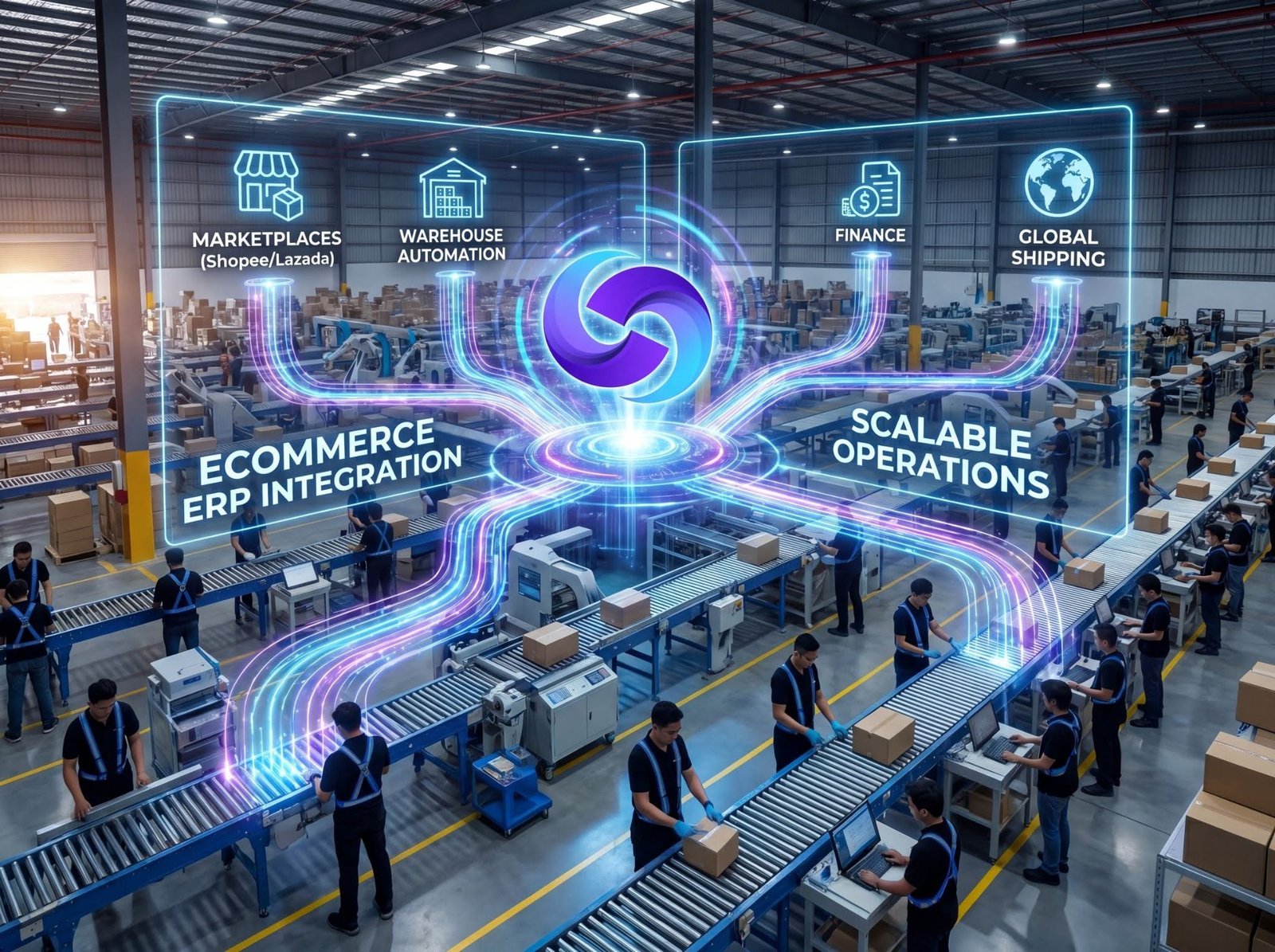
As e-commerce businesses grow, managing operations manually becomes increasingly difficult. From inventory tracking to order processing, fulfillment coordination, and financial reporting, multiple systems must work together seamlessly to support scale.
This is where ecommerce erp integration becomes essential. It connects different business functions into a unified system, allowing companies to manage operations more efficiently, reduce errors, and improve decision-making.
In fast-growing digital markets like the Philippines, where sellers operate across multiple platforms such as Shopee, Lazada, and independent online stores, ERP systems are becoming a critical backbone for scalable operations. Without integration, businesses often experience fragmented data, delayed reporting, and costly operational inefficiencies.
This article explores how ERP systems support e-commerce growth, why integration matters, and how businesses can use ERP to build scalable, efficient, and future-ready operations.
Ecommerce ERP integration refers to the process of connecting an e-commerce platform with an Enterprise Resource Planning (ERP) system. This connection allows real-time data synchronization across all business functions.
Instead of operating separate tools for inventory, accounting, orders, and logistics, ERP integration centralizes everything into one system.
This includes:
With integration in place, data flows automatically between systems, eliminating the need for manual encoding and reducing operational errors.
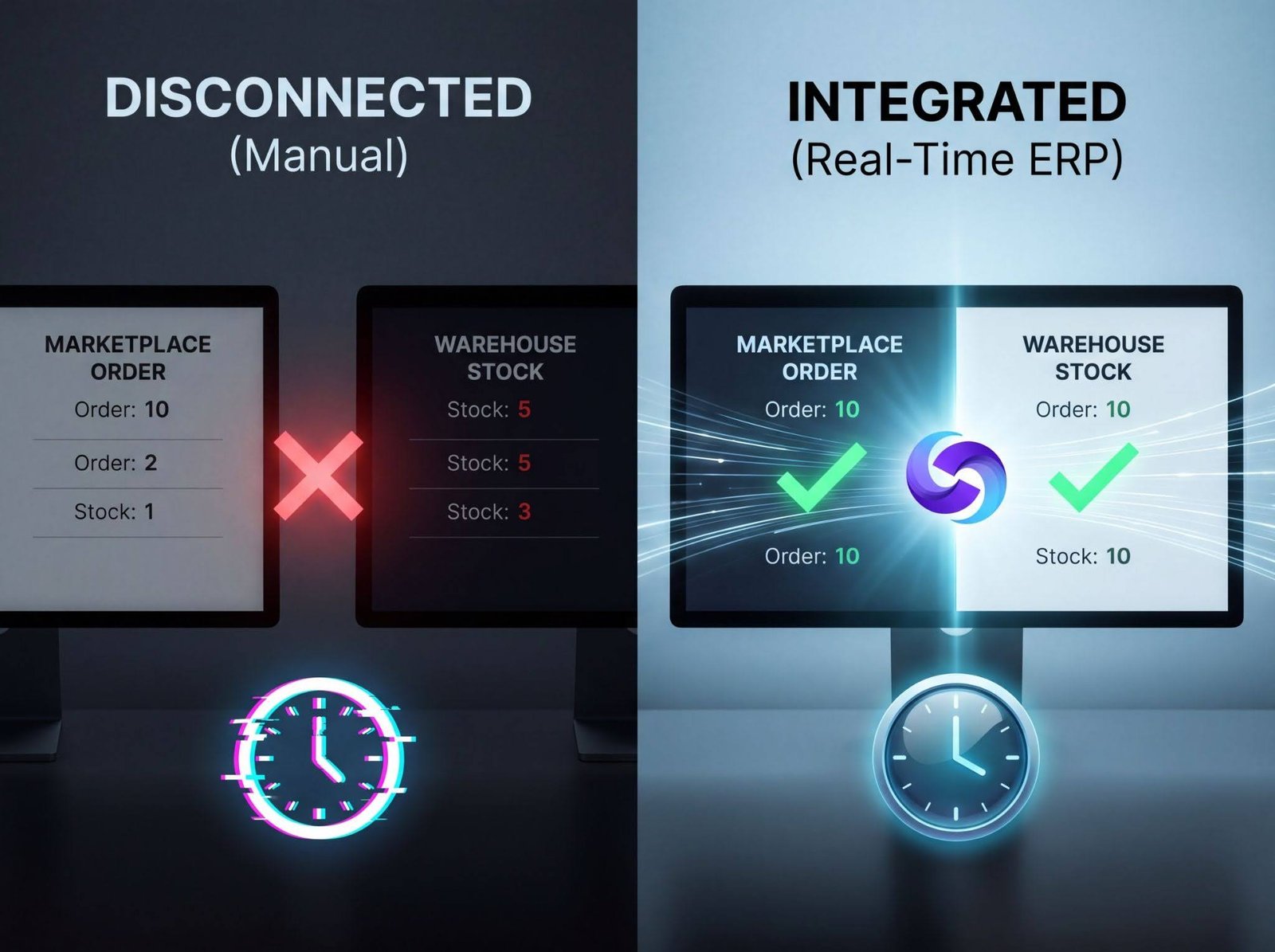
The importance of ERP in e-commerce lies in its ability to unify fragmented operations into a single system. As businesses scale, complexity increases, and manual coordination becomes unsustainable.
The importance of enterprise resource planning becomes clearer when businesses begin handling:
Without ERP systems, businesses often struggle with inconsistent data, slow processing, and a lack of visibility.
ERP helps solve these problems by ensuring that all departments operate using a single source of truth.
ERP ecommerce systems function as the operational brain of an online business. When a customer places an order, the ERP system automatically handles multiple processes behind the scenes.
This end-to-end automation reduces human intervention and ensures faster processing.
Without ERP systems, businesses rely heavily on manual updates, which increases the risk of errors such as overselling, delayed shipments, and incorrect stock counts.
Modern ecommerce ERP software is designed to handle complex, multi-channel operations. It supports growing businesses by automating and integrating key processes.
These systems allow businesses to operate more efficiently, even as order volumes increase significantly.
For example, during peak seasons like 11.11 or 12.12, ERP systems help prevent system overload by distributing and automating order processing tasks.
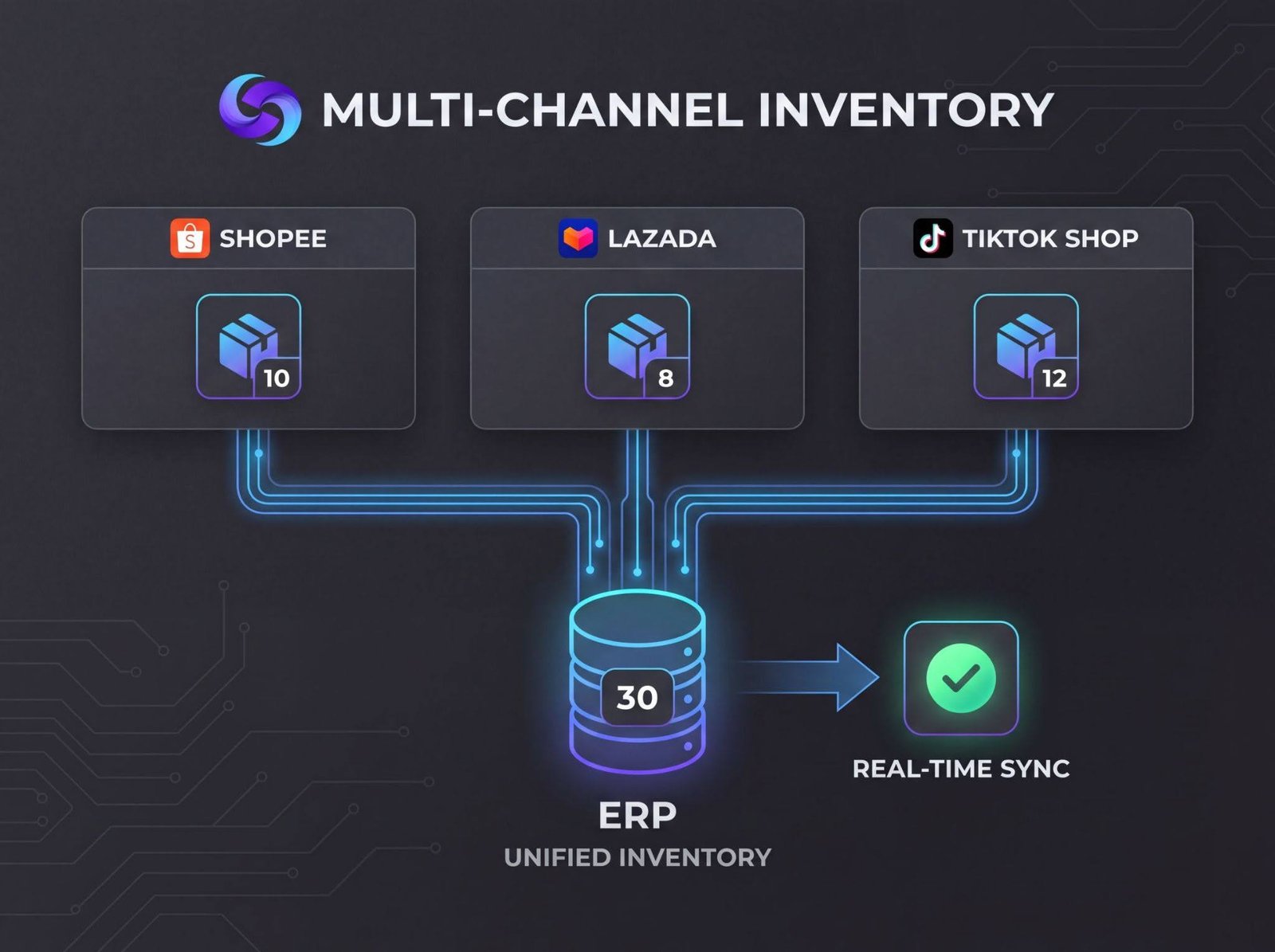
Today’s e-commerce businesses rarely rely on a single sales channel. Most sellers operate across multiple platforms simultaneously.
Without ecommerce ERP integration, businesses face:
With ERP integration, all sales channels are connected to a single system. This ensures:
This level of control is essential for businesses scaling across multiple marketplaces.
ERP systems deliver several key operational improvements that directly impact business performance.
ERP ensures real-time stock updates, preventing overselling and stockouts.
Orders are automatically routed to fulfillment teams without manual intervention.
All transactions are recorded instantly, improving accounting accuracy.
Real-time dashboards help businesses monitor performance metrics.
Automation reduces dependency on manual encoding and repetitive tasks.
Businesses operating without ERP integration often experience significant challenges, especially as they scale.
Common issues include:
These issues become more severe during peak sales periods, leading to lost revenue and reduced customer satisfaction.
Scalability is one of the biggest advantages of implementing ERP systems. As order volume increases, ERP systems ensure that operations remain stable and efficient.
With ecommerce ERP integration, businesses can:
ERP acts as a foundation that supports long-term growth without requiring proportional increases in manpower.
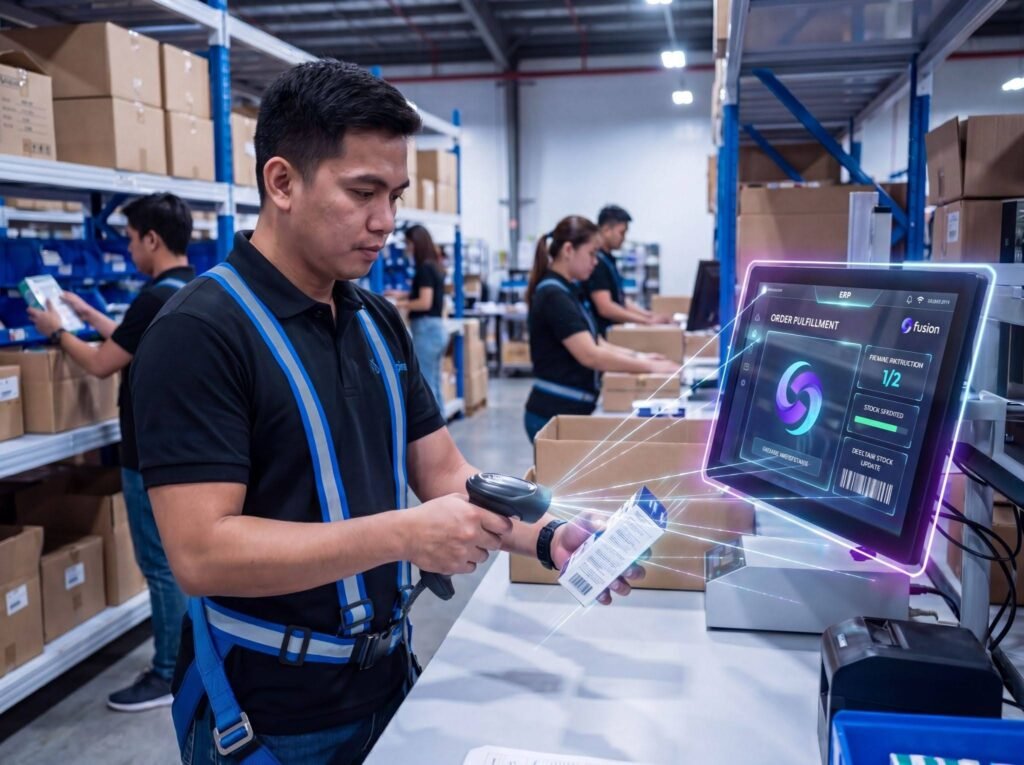
ERP systems also play a major role in supply chain optimization. They allow businesses to track inventory movement from suppliers to warehouses to customers.
This includes:
By connecting supply chain processes, ERP systems reduce delays and improve operational transparency.
In real-world applications, businesses that adopt ERP systems often experience:
For growing e-commerce sellers, especially in competitive markets like the Philippines, ERP systems can be the difference between operational chaos and structured growth.
Implementing ERP is not just a short-term operational upgrade. It is a long-term investment in scalability and efficiency.
Over time, businesses benefit from:
As e-commerce continues to grow, businesses without ERP systems will struggle to keep up with operational demands.
Ecommerce ERP integration is a critical foundation for scaling modern online businesses. It connects key operational areas such as inventory, orders, finance, and logistics into a unified system.
With the right ecommerce ERP software, businesses can eliminate inefficiencies, improve accuracy, and support sustainable growth. Understanding the importance of enterprise resource planning allows companies to transition from fragmented operations to fully integrated systems.
In today’s competitive digital marketplace, ERP is no longer optional. It is a necessity for scalability, efficiency, and long-term success.
Inspire E-Commerce Solutions Inc.
Warehouse 4 & 5, C Teknik Industrial, 143 P. Gregorio Street, Valenzuela,
1442 Metro Manila
inspiresolutions.asia