

Selling across multiple e-commerce platforms has become the standard for modern online businesses. Sellers often operate simultaneously on marketplaces such as Shopee, Lazada, TikTok Shop, Shopify stores, and even offline retail channels. While this multi-channel approach increases sales opportunities, it also introduces a major operational challenge: maintaining accurate and consistent inventory across all platforms.
When inventory data is not synchronized, businesses quickly run into stock discrepancies. A product may appear available on one platform but already be sold out on another. This leads to overselling, canceled orders, delayed fulfillment, and dissatisfied customers.
This is where inventory sync to eliminate multi-channel stock errors becomes essential. It ensures that stock levels remain consistent across all systems, reducing errors and improving fulfillment accuracy.
This article explores how inventory sync works, why it is critical for multi-channel operations, and how it helps businesses improve inventory accuracy, prevent overselling, and support better order orchestration across their entire e-commerce ecosystem.
Inventory sync refers to the process of automatically updating and aligning stock levels across multiple sales channels, systems, and platforms in real time or near real time.
Instead of manually updating inventory in each marketplace or system, inventory sync ensures that all connected platforms reflect the same accurate stock data.
This includes synchronization between:
The main goal is to ensure that all sales channels operate using a single, unified inventory source.
When inventory sync is properly implemented, it reduces human error, improves operational efficiency, and ensures consistent product availability across all platforms.
Multi-channel selling increases revenue potential, but it also multiplies operational complexity.
Each platform processes orders independently, which means inventory can change rapidly across different systems at the same time.
Common issues include:
Without synchronization, businesses lose control over real-time inventory visibility.
Even a few minutes of delay can lead to overselling or inaccurate stock listings.
At the core of any inventory sync system is inventory accuracy.
Inventory accuracy refers to how closely recorded stock levels match actual physical stock in the warehouse.
High inventory accuracy ensures that:
Low inventory accuracy, on the other hand, creates a chain reaction of operational problems, including fulfillment delays and order cancellations.
Inventory sync continuously updates stock data to maintain alignment between physical and digital inventory records.
This makes accuracy a continuous process rather than a one-time audit.

One of the most critical benefits of inventory sync is its ability to prevent overselling.
Overselling occurs when a product is sold even though it is no longer in stock. This usually happens when inventory updates are delayed or when systems are disconnected.
For example:
This creates a poor customer experience and damages the seller’s reputation.
Inventory sync solves this problem by:
By eliminating overselling, businesses reduce cancellations, protect ratings, and maintain customer trust.
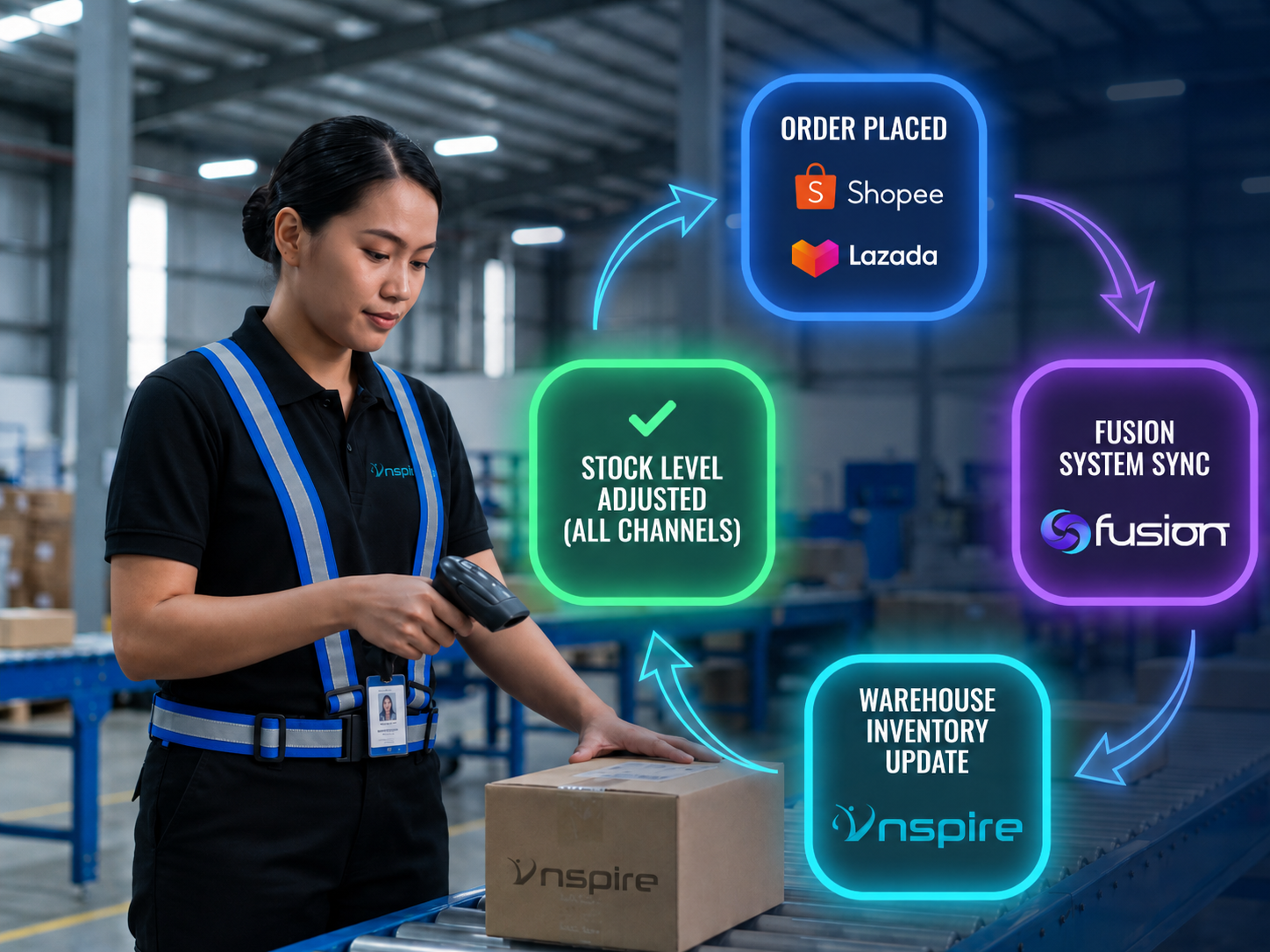
Modern inventory sync systems operate through continuous data exchange between platforms.
The process typically follows this flow:
A customer places an order on any connected sales channel.
The system immediately deducts stock from the central inventory database.
All connected platforms receive updated stock information.
Warehouse teams confirm inventory movement during picking and packing.
Inventory is updated again after fulfillment completion or returns processing.
This continuous cycle ensures that all systems reflect accurate stock levels at all times.
Inventory sync becomes even more powerful when combined with order orchestration.
Order orchestration determines how and where orders are processed within a fulfillment network.
It works alongside inventory sync to:
Without orchestration, inventory sync only updates stock. With orchestration, it actively improves fulfillment efficiency.
Together, they create a more intelligent and responsive e-commerce system.
Businesses that rely on manual inventory tracking often experience:
Different platforms show different stock levels for the same product.
Orders cannot be processed due to incorrect inventory data.
Orders must be canceled when products are no longer available.
Customers receive inaccurate product availability information.
Warehouse teams must manually reconcile inventory across systems.
These issues become more severe as sales volume increases.
During high-demand periods such as seasonal sales, flash deals, and marketplace events, order volume increases significantly.
Without inventory sync, systems struggle to keep up with rapid stock changes.
Inventory sync helps businesses:
This ensures operational stability even under heavy demand.

Inventory sync relies on integrated systems that communicate continuously through APIs and centralized platforms.
These may include:
These systems work together to ensure that all inventory updates are reflected instantly across all sales channels.
The result is a unified and reliable inventory ecosystem.
When combined with workflow automation, inventory sync becomes more efficient and scalable.
Automation enables systems to:
This reduces manual workload and ensures consistent accuracy across all channels.
Inventory sync has a direct impact on how customers perceive a brand.
When inventory is accurate:
When inventory is inaccurate:
Accurate inventory is essential for delivering a smooth and trustworthy shopping experience.

As businesses grow, managing inventory manually becomes impossible.
Inventory sync enables scalability by:
This allows businesses to handle higher order volumes without increasing operational complexity.
To maximize the benefits of inventory sync, businesses should follow these practices:
Ensure all sales channels are connected through ERP or OMS platforms.
Regularly audit physical stock against system data.
Use dashboards to track inventory changes across channels.
Reduce manual processes to minimize errors.
Ensure inventory flow supports fulfillment routing and allocation.
These practices help maintain consistent and reliable operations.
Inventory sync to eliminate multi-channel stock errors is essential for maintaining operational control in fast-moving e-commerce environments. It ensures that stock data stays aligned across all sales channels, helping businesses avoid inconsistencies that can disrupt fulfillment and planning.
When supported by reliable inventory accuracy, effective prevention of overselling, and structured order orchestration, inventory sync strengthens coordination between systems and reduces friction across fulfillment workflows.
Instead of reacting to stock issues after they occur, businesses with strong inventory sync systems gain the ability to manage inventory proactively, improving stability, efficiency, and decision-making across their entire e-commerce operation.
Inspire E-Commerce Solutions Inc.
Warehouse 4 & 5, C Teknik Industrial, 143 P. Gregorio Street, Valenzuela,
1442 Metro Manila
inspiresolutions.asia