

Modern businesses operate in environments where speed, accuracy, and coordination determine success. As organizations expand across multiple sales channels, warehouses, and digital platforms, managing operations becomes increasingly complex. Information is often spread across disconnected systems, leading to inefficiencies, delays, and inconsistent decision-making.
This is where Enterprise Resource Planning (ERP) systems become essential. An ERP system integrates core business functions into a unified platform, allowing organizations to manage operations more efficiently and with greater control.
The advantages of enterprise resource planning go beyond simple data management. ERP systems influence how businesses handle workflows, track inventory, manage orders, and coordinate teams across departments. When properly implemented, ERP becomes the operational backbone of a business.
This article explores the key advantages of ERP systems and how they improve efficiency through workflow automation, strengthen coordination through ecommerce ERP integration, and enhance operational accuracy through ecommerce inventory system connectivity.
Enterprise Resource Planning refers to a software system that connects and manages core business processes in a centralized platform. Instead of using separate tools for finance, inventory, sales, and logistics, ERP brings everything into one system.
A typical ERP system includes modules for:
By integrating these functions, ERP eliminates data silos and ensures that every department works with the same real-time information.
This unified structure is one of the primary reasons businesses adopt ERP systems as they scale.
One of the most important advantages of enterprise resource planning is centralized data management.
Without ERP systems, businesses often rely on multiple tools that store information separately. This creates inconsistencies and delays when teams try to access accurate data.
With ERP, all operational data is stored in a single system, allowing decision-makers to:
Centralized data improves clarity and reduces reliance on fragmented reporting systems.
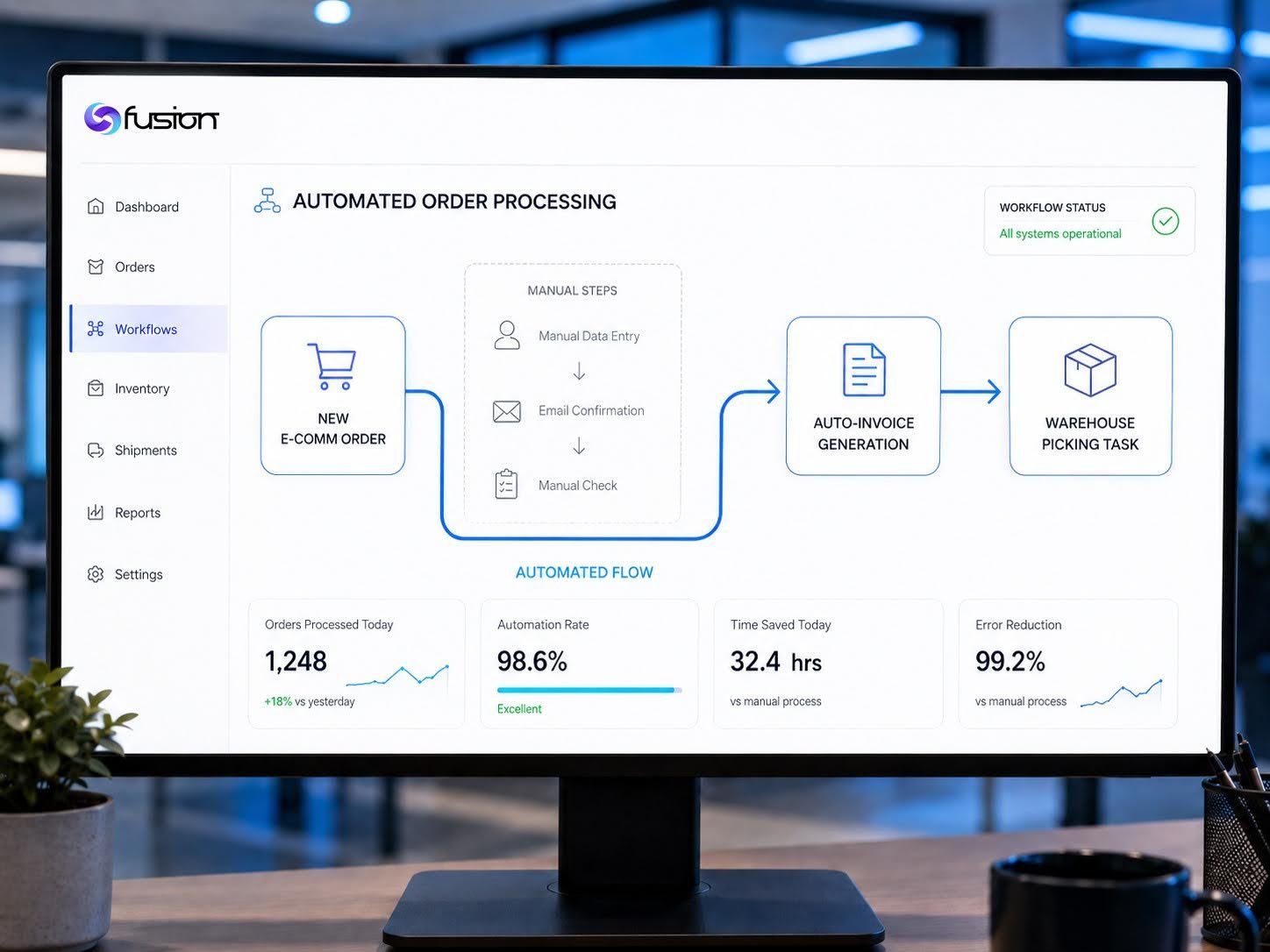
A major benefit of ERP systems is workflow automation, which reduces manual tasks and streamlines repetitive processes.
Instead of manually updating records or transferring data between systems, ERP automates key workflows such as:
This automation improves operational speed and reduces human error.
For example, when a customer places an order, the ERP system can automatically update inventory, generate an invoice, and trigger fulfillment processes without manual intervention.
This level of automation allows teams to focus on higher-value tasks rather than repetitive administrative work.

As businesses expand into digital sales channels, integration becomes critical. An ecommerce ERP system connects online platforms with backend operations, ensuring smooth coordination between sales, inventory, and fulfillment.
With ecommerce ERP integration, businesses can:
This integration is especially important for businesses operating on platforms like Shopee, Lazada, Shopify, or other e-commerce marketplaces.
Without ERP, managing these channels separately can lead to inconsistencies in inventory, order processing delays, and poor customer experience.

ERP systems also play a key role in improving inventory control. Through integration with an ecommerce inventory system, businesses gain better visibility into stock movement and availability.
This connection helps businesses:
Inventory accuracy is essential for maintaining operational stability. When inventory data is incorrect, it can lead to delayed orders, cancellations, and customer dissatisfaction.
ERP systems ensure that inventory updates are synchronized across all sales channels and warehouse locations.
ERP systems improve how businesses manage orders from placement to delivery.
Once an order is received, the system automatically:
This structured process reduces delays and ensures that orders are processed consistently.
By connecting order management with inventory and logistics systems, ERP improves overall fulfillment efficiency and reduces manual coordination errors.
Another major advantage of enterprise resource planning is improved financial visibility.
ERP systems integrate accounting and operational data, allowing businesses to:
This integration ensures that financial data reflects actual business activity rather than delayed or manually updated records.
It also improves compliance and audit readiness by maintaining structured financial records.
As businesses grow, operational complexity increases. Managing multiple systems becomes inefficient and difficult to maintain.
ERP systems support scalability by:
This scalability ensures that businesses can grow without losing operational control.
Instead of adding more disconnected tools, ERP allows organizations to expand within a unified system.
ERP systems indirectly improve customer experience by ensuring smoother internal operations.
Customers benefit from:
When internal systems are well-coordinated, customers experience fewer disruptions and better service consistency.
This leads to higher customer satisfaction and improved brand trust.
ERP systems provide real-time reporting capabilities that help businesses monitor performance continuously.
These reports can include:
With real-time insights, businesses can quickly identify problems and adjust strategies accordingly.
This improves responsiveness and supports data-driven decision-making.
ERP systems help reduce operational risks by improving visibility and control over business processes.
Common risks reduced by ERP include:
By standardizing processes and centralizing data, ERP reduces the chances of operational breakdowns.

Over time, ERP systems significantly improve business efficiency. By reducing manual work, improving data accuracy, and streamlining workflows, businesses can operate more effectively at scale.
The combination of automation, integration, and centralized control makes ERP a long-term strategic investment rather than just a software tool.
The advantages of enterprise resource planning extend across every major business function, from operations and finance to inventory and customer service. ERP systems create a unified structure where data flows seamlessly between departments, improving both efficiency and accuracy.
Through workflow automation, businesses reduce manual workload and improve speed. With ecommerce ERP integration, organizations gain better control over multi-channel operations. And with connectivity to an ecommerce inventory system, businesses maintain accurate stock levels and avoid costly fulfillment errors.
In a competitive business environment, ERP is not just an operational tool. It is a foundation for scalable, efficient, and data-driven business growth.
Inspire E-Commerce Solutions Inc.
Warehouse 4 & 5, C Teknik Industrial, 143 P. Gregorio Street, Valenzuela,
1442 Metro Manila
inspiresolutions.asia