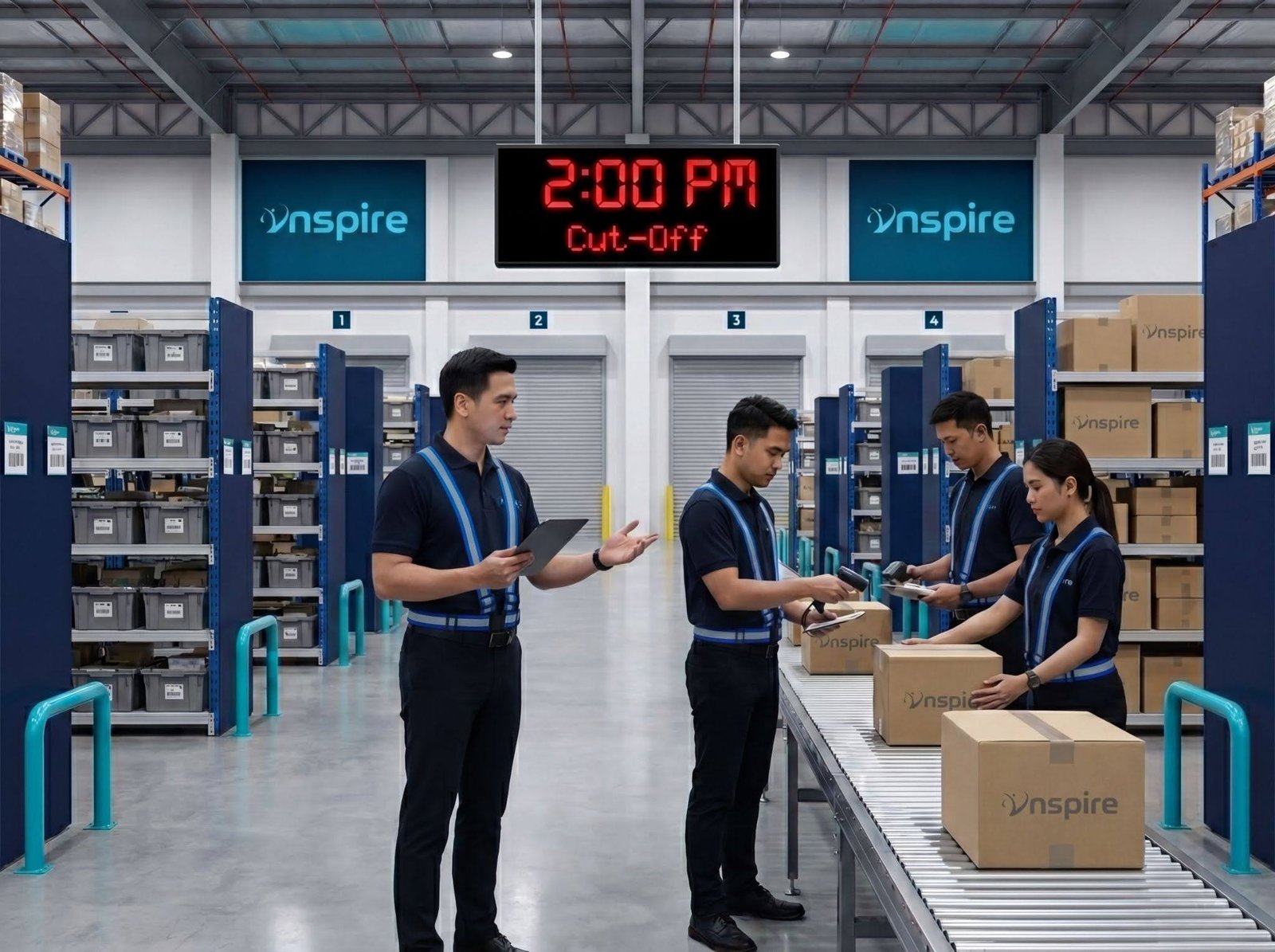
In e-commerce operations, speed and timing are just as important as accuracy. Customers expect fast order processing, same-day dispatch, and reliable delivery timelines. Behind all of this is a critical operational control point known as cut-off times.
Cut-off times define the deadline by which orders must be processed, packed, and prepared for dispatch within a specific operational cycle. These time boundaries ensure that fulfillment teams can manage workload efficiently and logistics partners can maintain consistent delivery schedules.
In high-volume e-commerce environments such as Shopee, Lazada, and other online marketplaces in the Philippines, cut-off times directly impact dispatch performance, delivery speed, and customer satisfaction.
This article explains what cut-off times are, why they matter, and how they improve fulfillment efficiency in modern e-commerce operations.
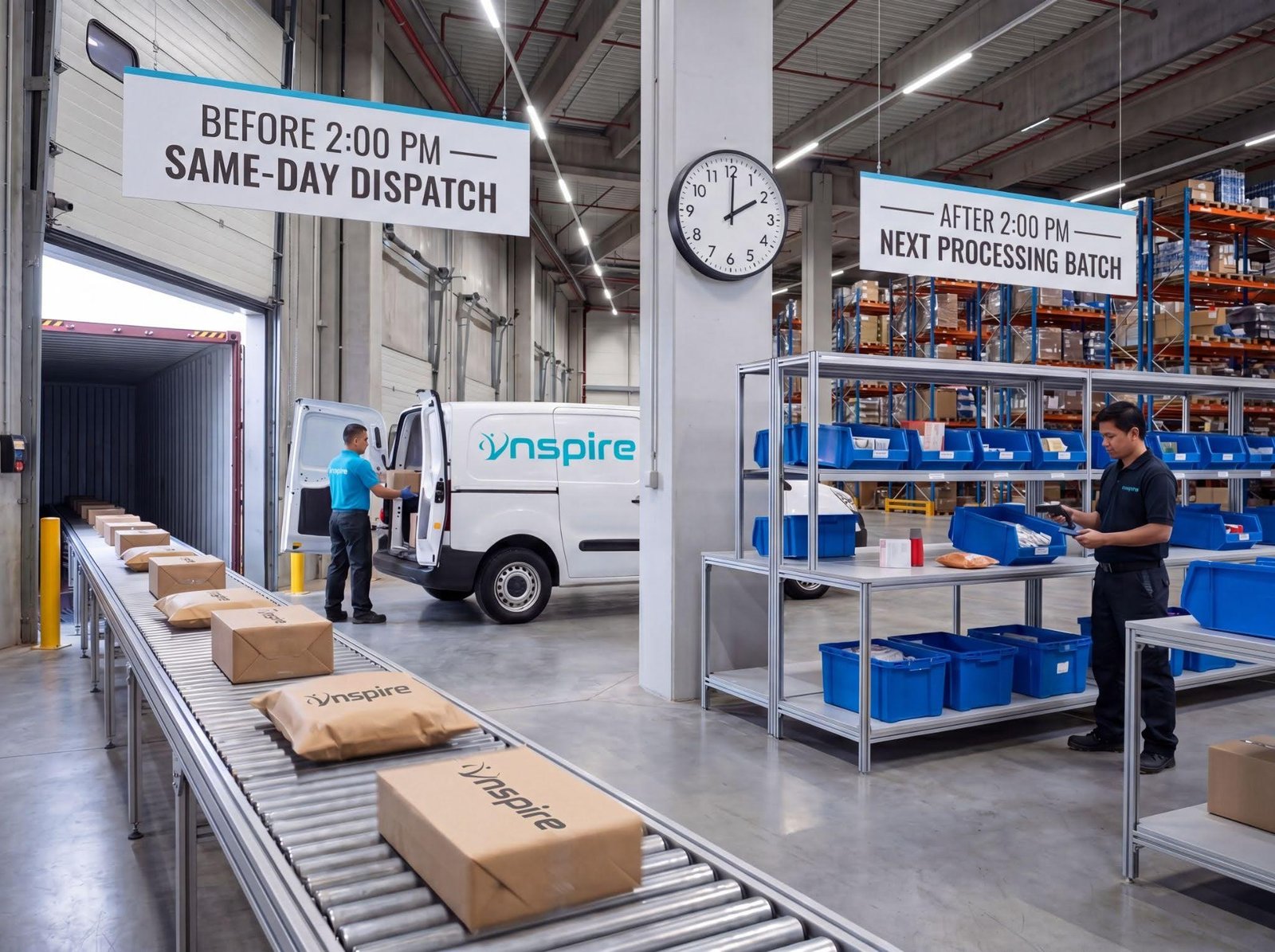
Cut-off times refer to the specific time limit set for processing orders within a fulfillment cycle. Once this deadline passes, orders are moved to the next processing batch or shipping schedule.
For example:
This system allows businesses to organize workflows in a structured and predictable manner.
Cut-off times are essential in coordinating:
Without defined cut-off times, fulfillment becomes chaotic and unpredictable.
Cut-off times play a crucial role in maintaining operational discipline. They ensure that all departments involved in fulfillment operate within a synchronized schedule.
Key benefits include:
In fast-moving marketplaces, even small delays in order processing can affect customer satisfaction and seller performance ratings.
One of the most direct effects of cut-off times is on dispatch performance.
Dispatch performance refers to how efficiently orders are prepared and sent out for delivery. When cut-off times are clearly defined, warehouse teams can prioritize tasks effectively.
This results in:
Without structured cut-off times, dispatch operations become inconsistent, leading to delays and missed shipping windows.

The pick pack process is closely tied to cut-off time management.
Pick pack refers to the process of:
When cut-off times are enforced properly, pick pack teams can:
Cut-off times essentially give structure to the pick pack workflow, ensuring smoother operations.
Modern e-commerce systems use order orchestration to manage how orders move through different stages of fulfillment.
Cut-off times act as a control point within this system.
With proper orchestration:
This ensures that every order follows a predictable and optimized path from purchase to delivery.
During peak shopping seasons such as 11.11, 12.12, and major sales events, order volumes increase significantly.
Without strict cut-off times, fulfillment systems can easily become overloaded.
Cut-off time strategies help businesses:
This is especially important for businesses handling large-scale e-commerce operations.
Cut-off times directly influence how fast customers receive their orders.
When cut-off systems are optimized:
This leads to better customer experience, fewer complaints, and improved seller ratings on platforms.
In contrast, poor cut-off management leads to delays and inconsistent delivery performance.
Businesses that do not implement structured cut-off times often face several issues:
These issues become more severe as order volume grows.
Cut-off times help prevent these operational bottlenecks by introducing structure and discipline.

Modern logistics systems use technology to manage cut-off times effectively.
These systems often include:
Technology ensures that cut-off rules are applied consistently without manual intervention.
This improves accuracy and reduces human error in fulfillment operations.
As e-commerce businesses grow, scalability becomes a major concern. Without structured processes, growth often leads to operational breakdown.
Cut-off times support scalability by:
They allow businesses to handle higher order volumes without losing control over operations.
Cut-off times also influence key logistics performance indicators such as:
When cut-off times are well-managed, these metrics improve significantly.
This makes cut-off management a key part of the overall logistics performance strategy.
Cut-off times are a critical element of e-commerce fulfillment strategy. They define operational boundaries that ensure orders are processed, packed, and dispatched efficiently within structured timeframes.
When combined with strong dispatch performance, effective pick pack processes, and optimized order orchestration, cut-off times significantly improve logistics efficiency.
In today’s fast-paced e-commerce environment, businesses that implement strict and well-managed cut-off systems gain a clear advantage in speed, reliability, and customer satisfaction.

Inspire E-Commerce Solutions Inc.
Warehouse 4 & 5, C Teknik Industrial, 143 P. Gregorio Street, Valenzuela,
1442 Metro Manila
inspiresolutions.asia
