

Selling across Shopee, Lazada, TikTok Shop, and Shopify opens significant opportunities for growth, but operational missteps can quietly drain profits and damage your reputation. Marketplace penalties, often triggered by poor ecommerce fulfillment SLA, late shipments, or high cancellation rates, can quickly escalate into recurring revenue losses and customer dissatisfaction.
Understanding the metrics that affect marketplace performance and taking action to control them is essential for scaling operations without compromising service quality. This guide breaks down the common penalties, their causes, and actionable strategies to maintain smooth fulfillment and protect your growth.
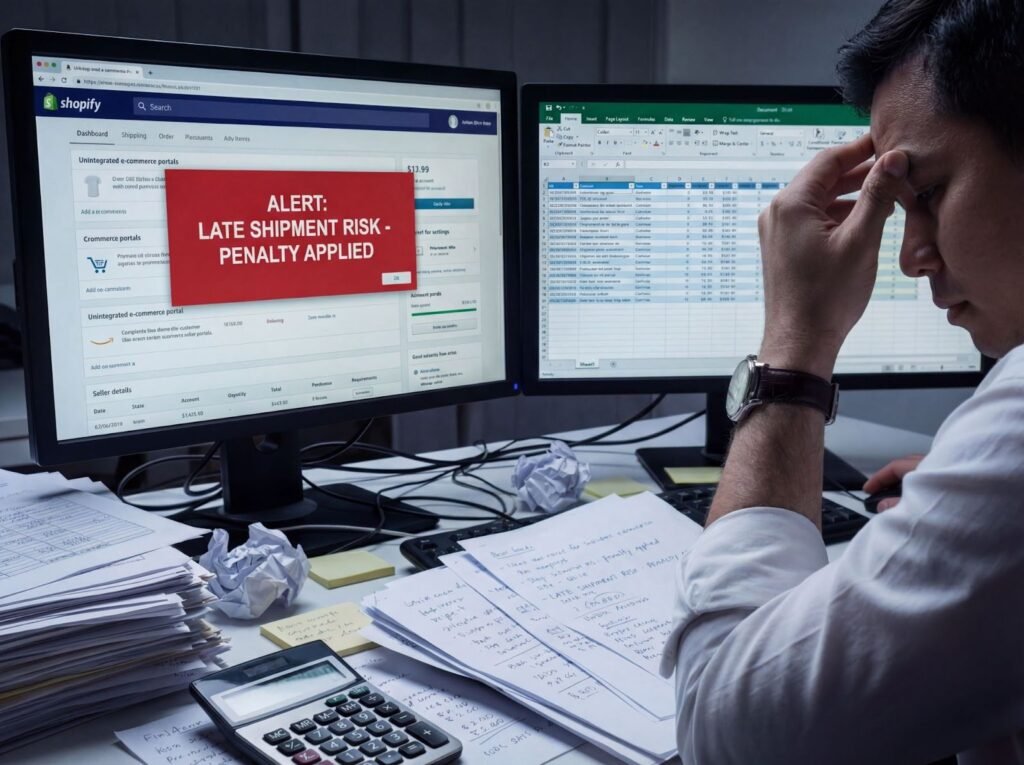
1. Late Shipment Rate
One of the most closely monitored metrics by marketplaces like Shopee and Lazada is the late shipment rate. Orders shipped past the promised cut-off date can:
Trigger fines or account warnings
Lower seller ratings
Reduce visibility on the marketplace
Common causes include:
Delays in inventory updates from warehouses
Manual processing errors during peak periods
Misaligned cut-off schedules across channels
2. Cancellation Rate
Frequent order cancellations can silently erode your growth. Cancellations may happen because:
Inventory is out of sync across platforms
Orders are taken before stock is physically available
Manual mismanagement of orders or exceptions
High cancellation rates affect seller credibility and often reduce the number of featured listings a seller receives.
3. RTS Rate (Return-to-Sender)
When orders cannot be fulfilled due to stock issues or failed deliveries, products are returned, increasing the RTS rate. Consequences include:
Wasted operational costs for repackaging and reshipping
Lost revenue and customer trust
Impact on fulfillment SLA adherence
4. Dispatch Performance
Timely order dispatch is critical to maintain SLA metrics. Delays can result from:
Manual orchestration errors
Inefficient warehouse processes
Lack of centralized visibility across all sales channels
Marketplace penalties are not just administrative and have real financial and operational implications:
By monitoring and controlling these metrics through disciplined workflows, brands can protect both revenue and reputation.
Even with advanced systems, penalties can occur due to operational weaknesses:

1. Omnichannel Inventory Management
Synchronizing inventory across all marketplaces ensures orders are only accepted when stock is available. Key practices include:
Real-time updates across Shopee, Lazada, TikTok Shop, and Shopify
Integration of WMS and OMS systems for automatic stock adjustments
Centralized dashboards to monitor inventory levels and order status
2. Workflow Discipline & Exception Handling
Operational discipline minimizes human errors:
Exception Queues: Orders flagged for discrepancies are reviewed before confirmation
Cut-Off Policies: Clear deadlines for processing daily and peak-period orders
Regular Audits: Cycle counts to reconcile inventory and adjust workflows proactively
3. Peak-Season Planning
Penalties spike during promotional periods like 11.11 or 12.12. Preventive strategies include:
Advanced demand forecasting to allocate stock per marketplace
Pre-assigned cut-off times and buffer for verification
Temporary workflow adjustments to handle increased volume
Define strict cut-off times to avoid late shipments
Use OMS/WMS integration to automatically update stock
Monitor RTS and cancellation patterns regularly
Set pre-defined inventory limits for flash sales
Pause campaigns automatically when stock reaches a threshold
Ensure SLA adherence with real-time dashboards
Sync inventory with APIs or apps to prevent overselling
Monitor platform-specific promotions separately
Enable automated backorder handling or order holding
Technology and warehousing form the backbone of preventing penalties:
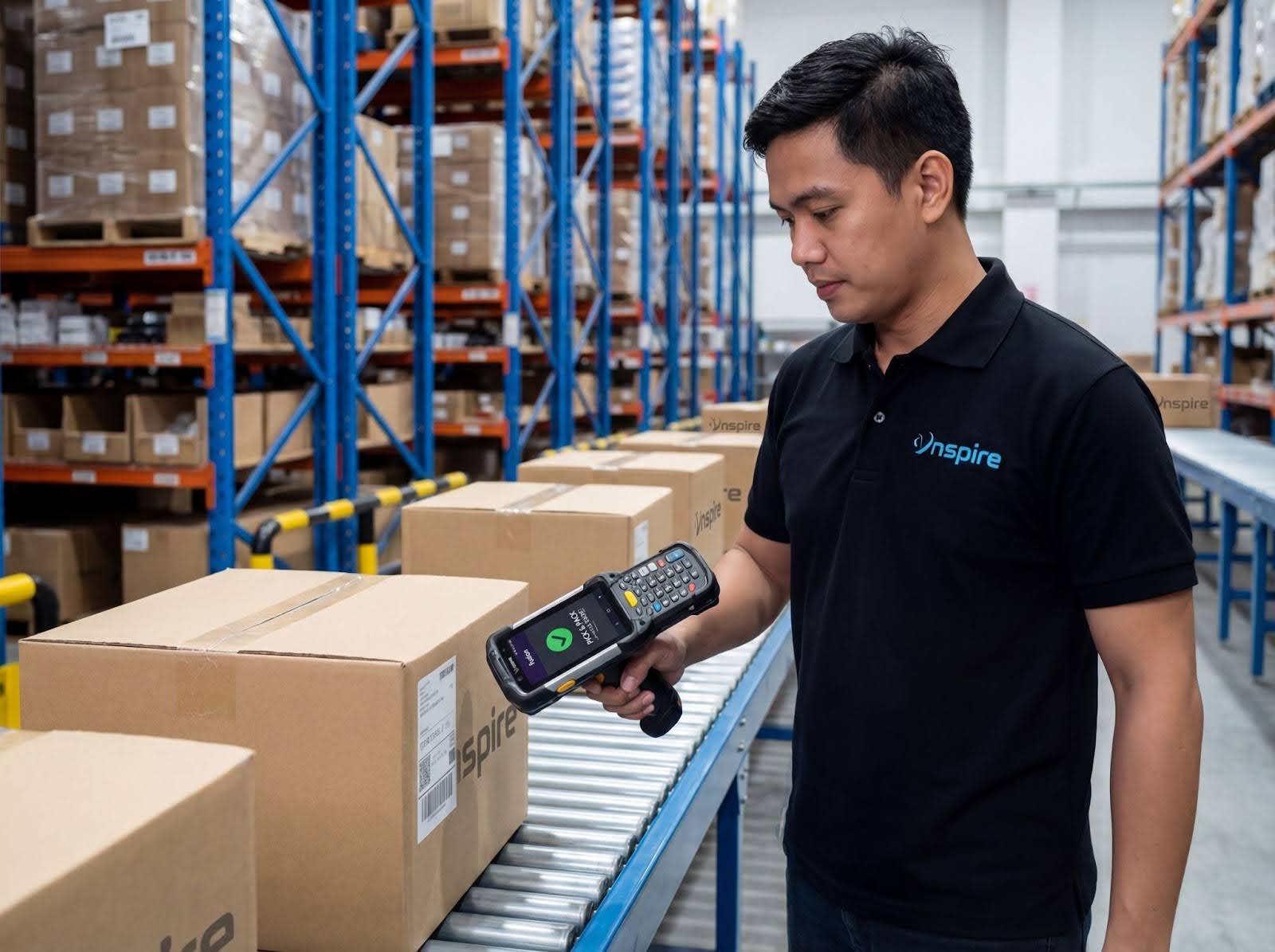
These layers collectively turn reactive problem-solving into proactive penalty prevention.
Tracking these KPIs helps maintain strong marketplace performance:
What is ecommerce fulfillment SLA, and why does it matter?
It defines the standard for processing and dispatching orders. Meeting SLA ensures timely deliveries, fewer penalties, and higher marketplace trust.
How can I reduce late shipments and cancellations?
Implement real-time inventory sync, automated alerts, and disciplined workflows with exception queues.
How often should inventory checks be done?
High-volume SKUs: weekly; slow-moving SKUs: monthly. Regular audits prevent discrepancies.
Can technology really reduce penalties?
Yes. Dashboards, automated alerts, and integrated OMS/WMS systems provide visibility to proactively manage orders and SLA adherence.

Marketplace penalties can quietly erode growth if ecommerce fulfillment SLA and operational metrics aren’t closely monitored. By combining:
Brands can prevent late shipments, cancellations, and RTS issues while maintaining strong dispatch performance and scaling efficiently across multiple marketplaces.
Get a consultation to see how expert 3PL solutions can keep your operations penalty-free and your growth on track.
Inspire E-Commerce Solutions Inc.
Warehouse 4 & 5, C Teknik Industrial, 143 P. Gregorio Street, Valenzuela,
1442 Metro Manila
inspiresolutions.asia