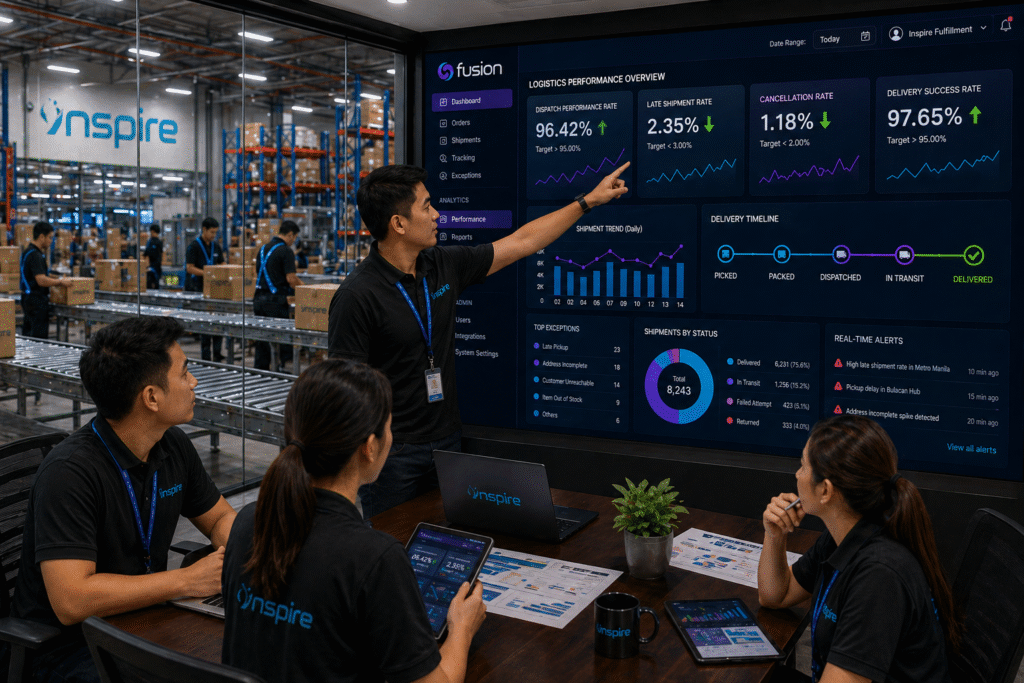
In e-commerce logistics, consistency is just as important as speed. Customers expect their orders to arrive on time, in good condition, and without delays. To meet these expectations, businesses rely on structured performance standards known as a service level agreement.
A service level agreement defines the expected level of service between a business and its logistics partners or internal operations teams. It sets clear performance benchmarks that help ensure deliveries are completed efficiently and reliably.
In fast-moving platforms like Shopee and Lazada, where competition is intense and customer expectations are high, service level agreements play a crucial role in maintaining operational discipline and delivery consistency.
This article explains how service level agreements influence logistics performance and how they connect to key operational metrics like dispatch efficiency, shipment delays, and cancellation rates.

A service level agreement is a formal agreement that defines performance expectations between two parties. In e-commerce logistics, it usually outlines the responsibilities of delivery partners, warehouses, and fulfillment teams.
It typically includes:
The goal of a service level agreement is to ensure accountability and consistency across the entire logistics process.
Service level agreements are essential because they establish clear performance standards in a complex logistics environment.
Without defined agreements, businesses often face:
With a service level agreement in place, businesses can measure performance objectively and ensure all parties meet agreed standards.
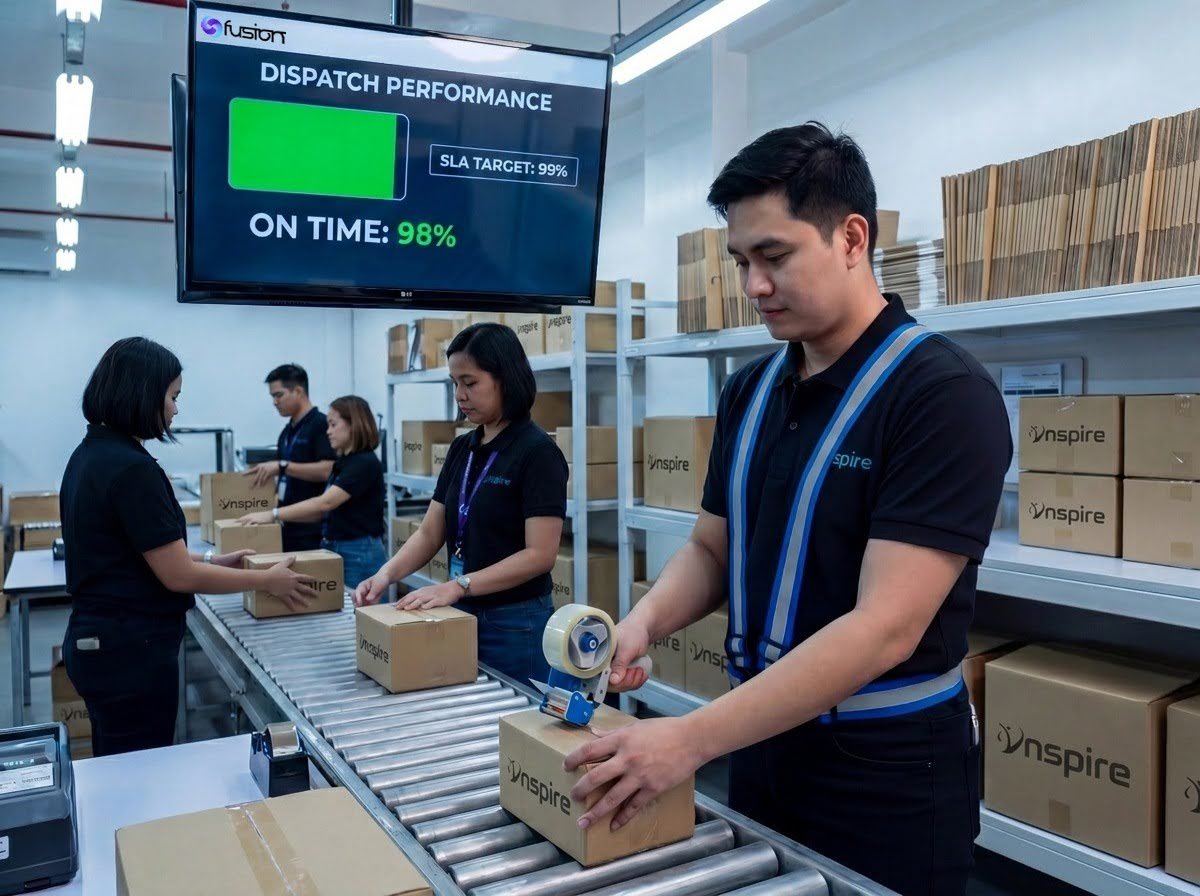
One of the most important metrics influenced by service level agreements is dispatch performance.
Dispatch performance refers to how quickly and accurately orders are processed and sent out for delivery.
A strong service level agreement ensures:
When dispatch performance is optimized, overall delivery speed improves significantly.
The late shipment rate measures how often deliveries are delayed beyond the expected timeframe.
Service level agreements directly help reduce this issue by:
A high late shipment rate often indicates weak operational control or unclear service agreements.
By enforcing strong SLAs, businesses can reduce delays and improve customer satisfaction.

The cancellation rate reflects how often orders are canceled before completion.
Service level agreements help reduce cancellations by improving:
When service expectations are clearly defined and met consistently, fewer orders are canceled due to delays or fulfillment failures.
A lower cancellation rate also improves seller performance ratings on e-commerce platforms.
One of the key benefits of SLAs is accountability. Every party involved in the logistics process understands its responsibilities and expected outcomes.
This includes:
When accountability is clear, performance naturally improves.
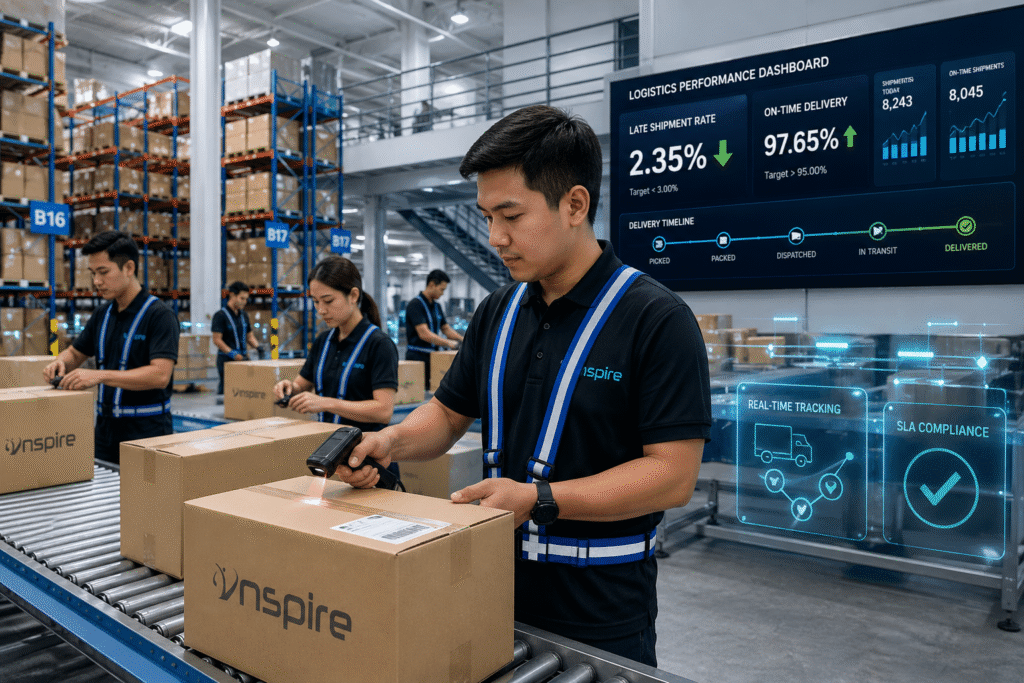
Service level agreements are often measured using key performance indicators (KPIs).
Common logistics KPIs include:
These metrics help businesses determine whether service agreements are being met or not.
Without KPI tracking, SLAs become ineffective because performance cannot be measured accurately.
Even with structured agreements, businesses often face challenges such as:
These issues can affect SLA compliance if not properly managed.
To overcome these challenges, businesses need strong operational systems and real-time tracking tools.
Modern e-commerce businesses use technology to improve SLA compliance.
This includes:
These systems help ensure that orders move through the supply chain efficiently and meet SLA requirements.
Automation also reduces human error and improves consistency.
As businesses scale, logistics complexity increases. Without structured service agreements, operations become harder to control.
Strong SLAs help businesses:
They act as a foundation for predictable and reliable logistics performance.
A service level agreement is a critical component of modern e-commerce logistics. It defines performance expectations and ensures accountability across all stages of order fulfillment.
When combined with strong dispatch performance, reduced late shipment rate, and lower cancellation rate, SLAs become a powerful tool for improving operational efficiency.
In today’s competitive e-commerce environment, businesses that implement and enforce strong service level agreements are better positioned to deliver consistent, reliable, and scalable logistics performance.
Inspire E-Commerce Solutions Inc.
Warehouse 4 & 5, C Teknik Industrial, 143 P. Gregorio Street, Valenzuela,
1442 Metro Manila
inspiresolutions.asia