
Inventory Financing vs Working Capital for E-commerce Cash Cycle

Inventory financing Philippines

Inventory financing Philippines provides e-commerce businesses with the funds needed to purchase stock without straining cash flow. Many online sellers struggle with balancing inventory purchases and day-to-day operations. When cash is tied up in unsold stock, it slows growth, delays order fulfillment, and can create gaps in the cash conversion cycle.

By leveraging inventory financing, businesses can access immediate funds for stock purchases, ensuring they can meet demand spikes, launch promotions, or expand product lines without dipping into operational cash. This type of financing also helps sellers manage seasonal fluctuations, reduce stockouts, and maintain consistent service levels for customers. 

Additionally, it provides flexibility for scaling operations, negotiating better deals with suppliers, and responding quickly to market trends while keeping working capital healthy.

Key Takeaways

  • Inventory financing provides immediate funds for stock purchases, supporting cash flow.

  • Proper stock funding focuses on high-turnover products and seasonal demand.

  • Monitoring the cash conversion cycle ensures funds are recovered efficiently.

  • Aligning financing with operational processes prevents errors and overstocking.

  • Strategic use of funding enables e-commerce growth without straining working capital.

Table of Contents

Understanding Working Capital for E-commerce

Working capital is the lifeblood of any e-commerce operation. It represents the difference between current assets and liabilities and determines whether a business can cover short-term expenses. In the context of working capital ecommerce strategy, it also reflects how efficiently a business converts inventory investments into available cash for reinvestment.

E-commerce businesses often face fluctuating sales patterns, seasonal demand, and delayed payments from marketplace platforms. Without sufficient working capital, sellers risk running out of stock during high-demand periods or missing supplier payments.

Inventory financing acts as a bridge, giving sellers the ability to maintain stock levels while keeping operations running smoothly. Properly managing working capital ensures that cash flows efficiently, reducing operational bottlenecks and missed revenue opportunities.

How Inventory Financing Works

Inventory financing is a type of short-term funding designed to support the purchase of stock. Here’s how it typically works:

  1. Assessment of Inventory Needs
    Lenders evaluate your current inventory, sales velocity, and future demand to determine financing limits.

  2. Funding Allocation
    Once approved, funds are disbursed to cover supplier payments, allowing you to purchase stock immediately.

  3. Repayment Terms
    Repayment is usually linked to the sale of the inventory, aligning with the cash conversion cycle to prevent cash flow strain.

  4. Interest and Fees
    Costs vary depending on lender, loan size, and repayment schedule. Transparent agreements help businesses calculate ROI and maintain profitability.

Stock Funding Strategies for E-commerce Growth

Securing the right inventory financing is only one part of the equation. Strategic stock funding ensures that the borrowed funds are used effectively:

Inventory financing Philippines
  • Prioritize Fast-Moving Products
    Focus financing on inventory with high turnover to accelerate cash recovery.


  • Seasonal Stock Planning
    Use financing to prepare for peak seasons or promotions, preventing stockouts and lost sales.


  • Supplier Negotiation
    Leverage financing to negotiate better pricing or bulk purchase discounts, increasing margins.


  • Diversify Products
    Allocate funds strategically across multiple SKUs to reduce the risk of unsold inventory.

Managing the Cash Conversion Cycle

The cash conversion cycle (CCC) measures the time between paying suppliers and receiving cash from customers. A shorter CCC means faster recovery of invested capital, reducing reliance on external financing.

Inventory financing can help optimize the CCC by:

  • Allowing bulk purchases to reduce per-unit cost.

  • Ensuring sufficient stock to avoid backorders that slow revenue recognition.

  • Aligning payment schedules with marketplaces or clients to improve cash inflows.

Tracking the CCC helps e-commerce businesses evaluate the efficiency of their inventory funding strategies and adjust as needed.

Choosing the Right Inventory Financing Option

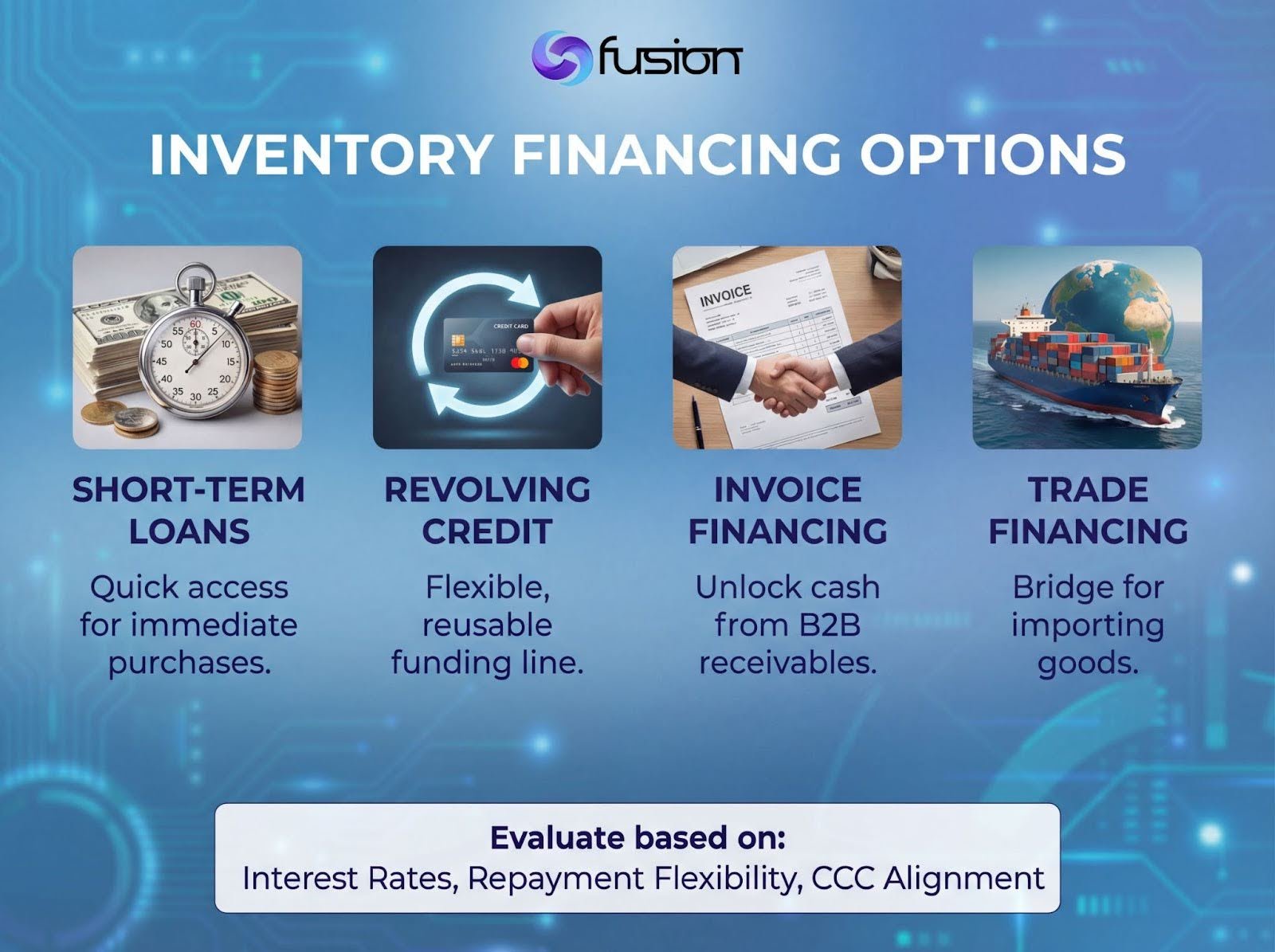
Several inventory financing options are available in the Philippines for e-commerce businesses:
Inventory financing Philippines
  • Short-Term Loans
    Quick access to cash for immediate stock purchases.

  • Revolving Credit Lines
    Flexible funding that can be drawn repeatedly as inventory is sold and repaid.

  • Invoice Financing / Factoring
    Unlock cash tied to receivables, especially for B2B sellers.

  • Trade Financing
    Specifically for importing products, bridging the gap between supplier payment and customer revenue.

Each option should be evaluated based on interest rates, repayment flexibility, and alignment with your cash conversion cycle.

Operational Best Practices for Funded Inventory

Funding inventory is only effective if operational processes ensure that cash is managed efficiently:

Inventory financing Philippines
  • Accurate Forecasting
    Use historical sales data and market trends to predict demand and avoid overstocking.

  • Inventory Visibility
    Implement an inventory system for e-commerce to track stock levels in real-time and reduce errors.

  • Reconciliation Processes
    Regularly reconcile stock purchases with actual inventory and sales to prevent discrepancies.

  • Automated Alerts
    Set reminders for upcoming repayment deadlines to avoid late fees and cash strain.

Mitigating Risks in Inventory Financing

While inventory financing offers growth opportunities, risks remain:

  • Overfunding
    Borrowing more than necessary can create unnecessary interest expenses.

  • Slow-Moving Stock
    Investing in products that do not sell quickly ties up cash and increases holding costs.

  • Supplier Dependence
    Relying too heavily on one supplier can create vulnerability if shipments are delayed.

Mitigation strategies include careful demand forecasting, diversified sourcing, and regular financial review.

Smart Inventory Financing

Inventory financing Philippines can be a powerful tool to optimize working capital and support e-commerce growth. By aligning stock funding with demand patterns, monitoring the cash conversion cycle, and implementing operational best practices, sellers can scale efficiently while maintaining financial health. When structured properly, stock funding provides the liquidity needed to replenish inventory without disrupting daily operations.

Structured financing, disciplined inventory management, and timely repayments ensure that funding works as a growth enabler rather than a financial burden. Businesses that strategically use inventory financing gain flexibility, maintain strong cash flow, and strengthen their competitive position in the Philippine e-commerce market.

Inspire E-Commerce Solutions Inc.
Warehouse 4 & 5, C Teknik Industrial, 143 P. Gregorio Street, Valenzuela,
1442 Metro Manila
inspiresolutions.asia

Inventory financing Philippines

Exclusive for You

  1. Free Get Quote – Learn how structured inventory financing and working capital strategies help scale your e-commerce operations effectively.

  2. Schedule a Meeting – Discover best practices to manage cash flow, stock funding, and optimize the cash conversion cycle for sustainable growth.

Links to Important Sections You Might Need