
Have you ever stayed up late packing orders, worrying about missed deadlines, or struggling to manage your inventory? You’re not alone. With global e-commerce revenue projected to exceed $4.3 trillion by 2025, businesses worldwide are under pressure to meet the rising expectations of customers for fast and reliable delivery.
For e-commerce businesses, managing order fulfillment is often one of the most challenging tasks to accomplish. In the Philippines, where logistics infrastructure is still evolving and customer expectations for next-day or even same-day delivery are on the rise, efficient fulfillment becomes even more crucial. Any delays can quickly lead to lost sales and damaged trust. So, how do you ensure that your operations run smoothly and efficiently?
Order fulfillment is critical to your business’s success. In this blog, we’ll explore what order fulfillment means, break down the key steps involved, and share strategies to help you save time, reduce costs, and scale your business confidently.
Order fulfillment is the process of receiving, processing, and delivering products to customers once an order is placed. It involves everything from managing inventory and picking and packing items to shipping and handling returns. At its core, order fulfillment ensures that customers receive the right product at the right time and in the right condition.
Think of it as the engine behind your e-commerce business. When a customer clicks “Buy Now,” fulfillment centers take over. They organize the products, pack them efficiently, and make sure they reach your customer’s doorstep, whether it’s across the street or around the world.
In other words, it’s all about ensuring your customers have a smooth, hassle-free experience from when they place their order to when they receive it. Without a well-run order fulfillment system, even the best product or website will struggle to meet customer expectations.
Now that we’ve explored the basics of order fulfillment and how it ensures your products reach your customers, let’s take a closer look at why it plays such a pivotal role in the success of your e-commerce business, influencing everything from customer satisfaction to operational efficiency.
Order fulfillment is a crucial process that directly affects your ability to meet customer expectations and drive business growth. When done right, it improves the efficiency of your operations, reduces costs, and strengthens customer loyalty. Even the best marketing or product offers could fall short without an optimized fulfillment strategy.
Poor order fulfillment can directly lead to high cart abandonment rates and loss of future sales opportunities. Let’s break down how a smooth and efficient order fulfillment process benefits your business:
Optimizing your order fulfillment process enhances your bottom line, enabling you to remain competitive in e-commerce. Now, let’s break down the specific steps involved in the order fulfillment process.
The order fulfillment process is essential for ensuring that customers receive their products quickly and accurately. It’s a chain of tasks, each one crucial to the successful delivery of goods. Let’s walk through the process step by step to understand its significance:
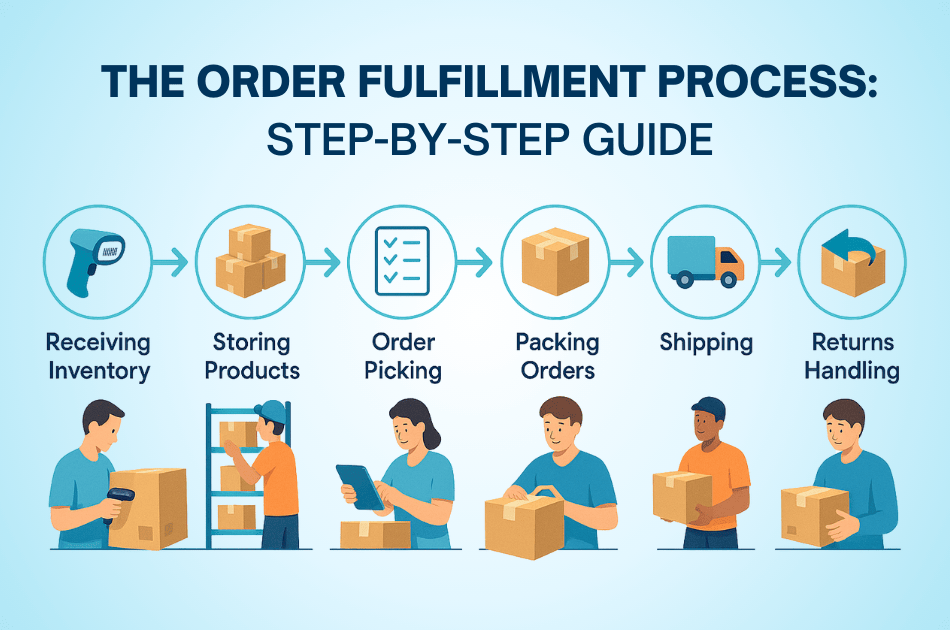
The first step in the order fulfillment process is receiving the inventory from your suppliers or manufacturers. When inventory arrives at the fulfillment center, it’s checked for quality and accuracy. This process ensures that the correct items are stored and helps identify any discrepancies or damages promptly. A well-organized system for receiving inventory keeps everything in order from the very beginning.
Once the inventory is verified, the next step is to store the products. Efficient storage is crucial for smooth order fulfillment. With the help of a Warehouse Management System (WMS), products are placed in an optimized location, making it easy for staff to locate and pick them when orders arrive quickly. Proper storage helps reduce errors and speeds up order processing.
When a customer places an order, the fulfillment center receives the request and immediately begins picking the items from the shelves. This stage requires accuracy to ensure the right products are selected. Depending on the volume and complexity, automated systems can assist in quickly locating and retrieving items, thereby reducing the likelihood of errors.
Once the items are selected, they proceed to the packing stage. Packaging plays a crucial role in protecting products during transit and ensuring they reach customers in perfect condition. The fulfillment center uses appropriate packing materials to prevent damage. Additionally, packing involves ensuring that the order is complete and that the shipping label is properly applied to facilitate smooth delivery.
After packing, the order is ready to be shipped. Fulfillment centers work with various courier services to ensure timely delivery. Depending on the service agreement, orders may be shipped through same-day, next-day, or standard shipping options. The key here is speed and accuracy, ensuring the customer receives their product as expected, without delay.
Returns are an inevitable part of the e-commerce landscape. A good fulfillment center will handle returns efficiently, inspecting items and determining whether they can be restocked or need to be disposed of. This stage is crucial for maintaining good customer relations, as returns are handled promptly and without hassle for the customer.
By optimizing each step, you can ensure a smooth fulfillment process that drives customer satisfaction and business growth.
If you want to improve your fulfillment operations in the Philippines, Inspire Solutions Asia offers end-to-end support tailored to your needs, from pick, pack, and dispatch services to barcoding, bundling, and seamless returns management. Whether it’s light assembly for promo packs or quality-checked reverse logistics, we’ve got you covered.
There’s no one-size-fits-all approach to order fulfillment. Each business needs to choose a model that aligns with its operational capacity, customer expectations, and cost-effectiveness. Each model has its unique advantages and challenges. Selecting the right model can make or break your delivery speed, cost, and customer satisfaction.
With the rise of e-commerce giants and consumer expectations for faster deliveries, understanding these models and how they operate is key to scaling your business efficiently. Here, we’ll explore the main types of fulfillment models, each with its own set of advantages and challenges:
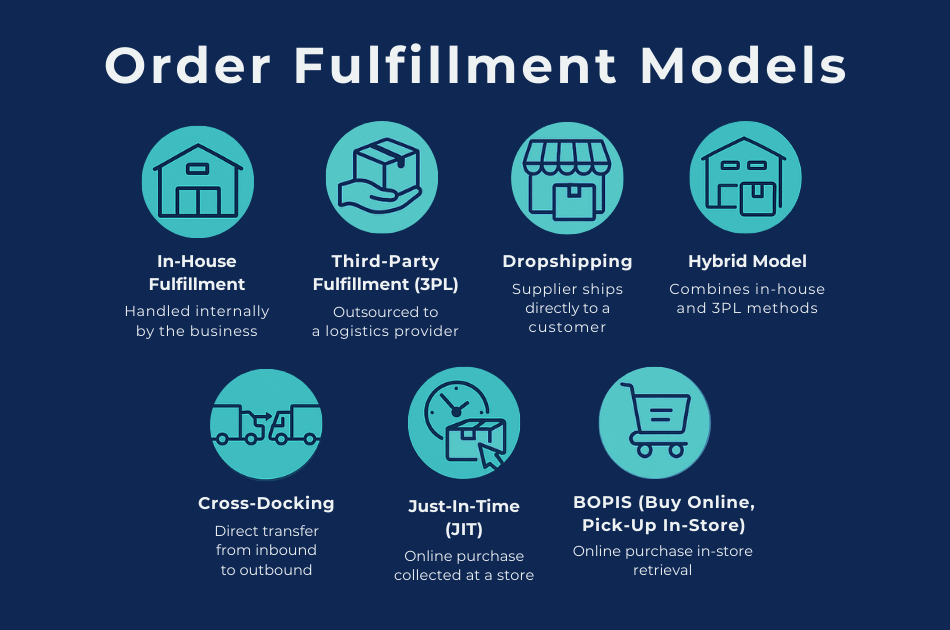
In-house fulfillment means that a business handles all aspects of order fulfillment itself, from receiving inventory to shipping orders. This model provides businesses with complete control over their processes, enabling them to manage everything directly. It’s ideal for small businesses or startups that want to maintain control over their operations.
However, as order volumes grow, it can become resource-intensive and costly, requiring more staff, space, and equipment.
Advantages:
Challenges:
Third-party logistics (3PL) providers handle the fulfillment process on behalf of businesses. This model is popular for businesses looking to outsource logistics to a professional fulfillment partner. A 3PL provider will receive inventory, store products, process orders, and ship them to customers.
This allows e-commerce businesses to focus on marketing, product development, and customer service, while the 3PL handles the logistics.
Advantages:
Challenges:
Dropshipping is a model where e-commerce businesses don’t hold any inventory. Instead, when a customer places an order, the business purchases the product from a third-party supplier who then ships the item directly to the customer.
This model is popular with entrepreneurs who want to sell products without worrying about inventory management or fulfillment.
Advantages:
Challenges:
The hybrid fulfillment model combines in-house and third-party services to create a tailored solution for businesses. For example, a business may handle some products internally and outsource others to a third-party logistics (3PL) provider, depending on factors such as order volume, product type, and seasonal demand. This model provides flexibility and control while using the expertise of a 3PL for specific tasks.
Advantages:
Challenges:
Also Read: Understanding Third-Party Logistics (3PL): Definition and Benefits
Cross-docking is a fulfillment strategy where products are directly transferred from the supplier to the customer, without being stored in a warehouse. The goal is to reduce handling and storage costs while speeding up the shipping process. Products typically arrive at a distribution center, are sorted, and then shipped directly to customers, often on the same day.
Advantages:
Challenges:
Just-In-Time (JIT) fulfillment is a strategy where inventory is ordered and shipped only as needed, minimizing warehousing costs by reducing stock levels. JIT fulfillment is often used by businesses that want to maintain low inventory and rely on fast replenishment from suppliers.
Advantages:
Challenges:
Also Read: How to Track Inventory: Steps and Tips
BOPIS (Buy Online, Pick Up In Store) enables customers to shop online and collect their order from a local store, rather than having it shipped. This model combines the convenience of online shopping with the immediacy of in-store pickup. It’s becoming increasingly popular among retailers with physical stores who want to offer customers the flexibility of both in-store and online shopping options.
Advantages:
Challenges:
Having explored the various order fulfillment models available, let’s examine how businesses in the Philippine e-commerce sector have successfully implemented these approaches. These real-world examples showcase the tangible benefits of these strategies in action.
Also Read: What Is a Central Warehouse and Its Role in Logistics
The Philippine e-commerce industry has experienced tremendous growth in recent years, with businesses increasingly adopting innovative fulfillment strategies to meet the rising demand for fast and reliable services. Let’s explore some notable examples and benchmarks from local businesses that have effectively implemented order fulfillment strategies:
Lazada, one of the leading e-commerce platforms in Southeast Asia, has invested heavily in its logistics infrastructure to smooth order fulfillment. In the Philippines, Lazada’s warehouses are equipped with advanced warehouse management systems (WMS) that allow for real-time inventory tracking and efficient order picking. This technology enables them to process and ship orders quickly, helping them meet customer expectations for fast delivery.
Impact:
Lazada’s commitment to optimizing its fulfillment process has resulted in a significant reduction in delivery times, especially during major sales events like 11.11 (Singles’ Day). The company has reduced its average delivery time from five days to two days, thereby boosting customer satisfaction and repeat purchases.
Shopee, another major e-commerce player, introduced its Same-Day Delivery service, a significant milestone for the Philippine market. By partnering with local logistics providers and optimizing their warehouse and transportation networks, Shopee offers customers in key urban areas faster delivery options.
Impact:
This initiative has helped Shopee increase its market share by attracting customers who value fast, reliable service. The same-day delivery option has enhanced Shopee’s customer retention, as users can receive their orders within a matter of hours, particularly for essentials such as groceries and household items.
Zalora, a leading online fashion retailer in the Philippines, has successfully integrated multi-channel fulfillment by combining in-house fulfillment with third-party logistics (3PL). This hybrid approach allows Zalora to manage its large inventory efficiently while outsourcing complex shipping tasks to third-party providers.
Impact:
The integration of 3PL has allowed Zalora to scale its operations during peak shopping seasons, such as Christmas and Year-End Sales, without overwhelming its in-house team. By using this model, Zalora has been able to reduce logistical costs and improve its order processing speed.
BeautyMNL, a popular online beauty retailer, faced the challenge of managing returns, which are common in the beauty industry due to customer preferences and product mismatches. The company implemented an efficient returns management system that allows customers to easily return products through a streamlined process, offering them a no-hassle 7-day return window.
Impact:
This returns policy helped BeautyMNL build trust with its customers, leading to an increase in repeat purchases. The ability to manage returns efficiently also reduced the operational strain on their fulfillment center, keeping the process smooth even during periods of high demand.
While the success stories from the Philippine e-commerce sector provide valuable insights, let’s look at how you can implement similar strategies and refine your order fulfillment process.
Improving your order fulfillment process requires more than just timely deliveries. It involves refining every step of the process, from inventory management to the moment the customer receives their package. Automation, technology, and strategic partnerships can greatly enhance order fulfillment’s speed, accuracy, and cost-effectiveness.
The key is to focus on areas like reducing human error, improving communication between your warehouse and suppliers, and ensuring robust customer support in case issues arise. By continuously optimizing these elements, you can elevate the entire customer experience and improve operational efficiency.
Let’s explore actionable steps you can take to improve each aspect of your fulfillment operations:
Automation can significantly reduce human error, accelerate processing, and lower operational costs. Implementing an Inventory Management System (IMS) or Warehouse Management System (WMS) helps track inventory in real-time and optimizes stock levels. Automated picking systems can also enhance speed and accuracy when fulfilling orders, particularly during peak periods.
Effective communication among your fulfillment, warehouse, and customer service teams is crucial for smooth operations. Implementing an integrated communication system that allows teams to share real-time information about inventory levels, order status, and shipping updates can help prevent delays and miscommunications.
Efficient packaging reduces shipping costs and prevents product damage. By using the right-sized packaging for each item, you can minimize waste and avoid shipping overcharges for oversized packages. Consider using packaging materials that provide better protection without adding unnecessary bulk.
Offering real-time tracking not only keeps your customers informed but also provides transparency throughout the fulfillment process. This reduces customer inquiries and helps build trust. Additionally, tracking tools enable you to monitor your internal processes and identify areas for improvement, such as shipping delays or warehouse bottlenecks.
Utilize data to analyze the performance of your fulfillment processes. By tracking key metrics, such as order accuracy, shipping time, and return rates, you can pinpoint weaknesses and identify opportunities for optimization. Regularly reviewing these metrics ensures that your fulfillment process evolves with your growing business.
Evaluate your shipping carriers regularly to ensure that they provide the best combination of speed, cost, and reliability. It may be worth negotiating better rates with your existing carriers or considering alternative carriers that align with your service goals. Offering multiple shipping options (same-day, next-day, standard) can also cater to different customer needs.
A viable returns process is just as important as accurately fulfilling orders. Make it as easy as possible for customers to return items, whether by providing prepaid return labels or easy drop-off points. Efficient returns handling helps maintain customer satisfaction and ensures that products are quickly returned to inventory.
By implementing these improvements, you can smooth your order fulfillment process, boost customer satisfaction, and position your business for sustainable long-term growth in the competitive e-commerce industry. Now that we have discussed how to improve your order fulfillment process, it is essential to focus on measuring its success.
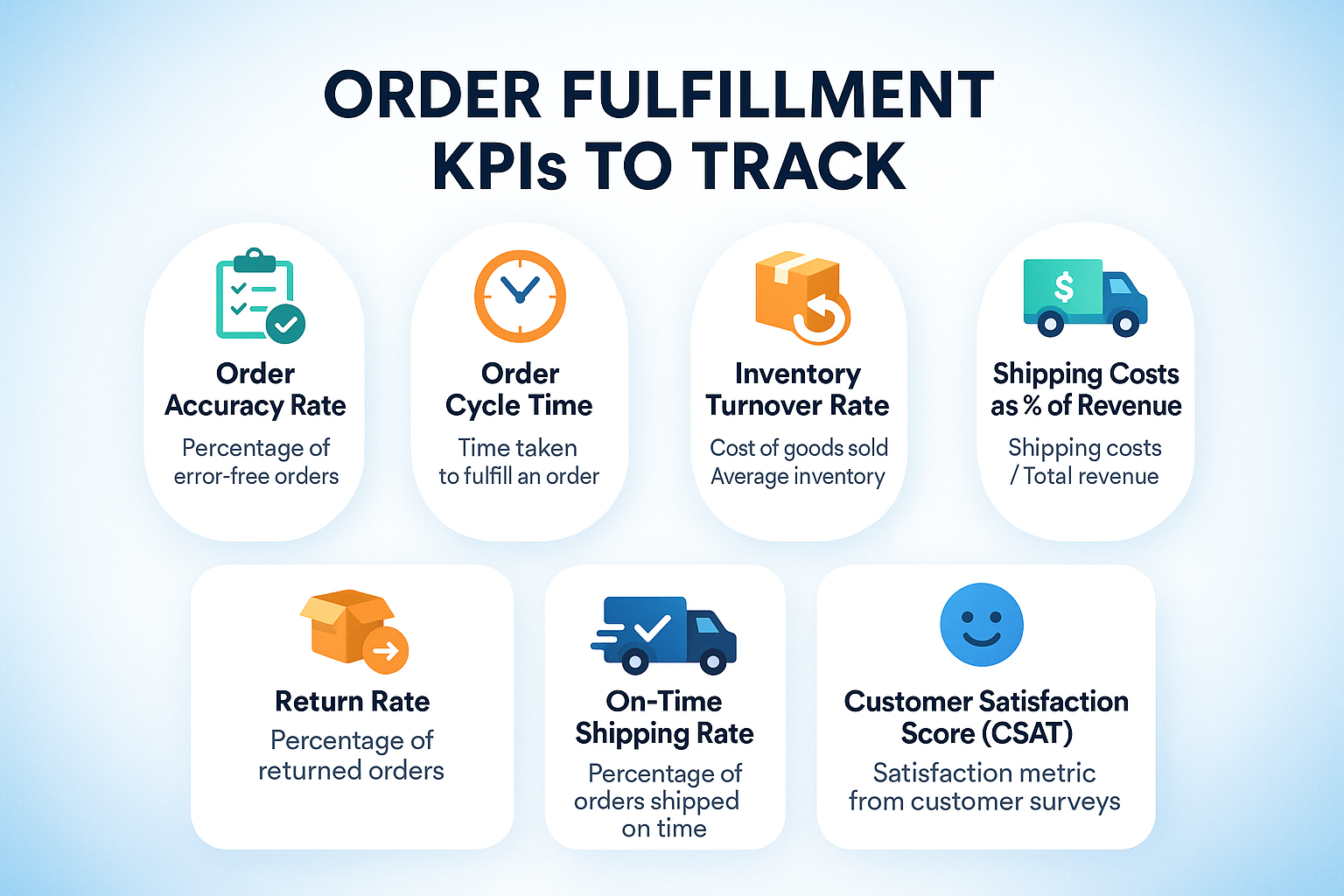
Tracking key metrics and performance indicators is crucial to understanding whether your order fulfillment process is optimized. These measurements offer valuable insights into the performance of your fulfillment operations, identify areas for improvement, and help your business scale efficiently. Here are the most important order fulfillment metrics to monitor:
Order accuracy is a fundamental metric that indicates the percentage of orders delivered without errors. This includes correct items, quantities, and packaging. High order accuracy directly correlates with customer satisfaction and reduces return rates.
How to Measure:
Order Accuracy = (Total Correct Orders / Total Orders) × 100
Why It Matters:
Inaccurate orders lead to returns, customer dissatisfaction, and costly mistakes. Ensuring high accuracy improves customer trust and loyalty.
Order cycle time refers to the duration from when an order is placed until it is shipped. This metric reflects how quickly you can process and fulfill customer orders. A shorter order cycle time results in faster deliveries and improved customer experiences.
How to Measure:
Order Cycle Time = (Shipment Date – Order Date)
Why It Matters:
Faster fulfillment helps meet customer expectations for timely deliveries and improves your business’s overall competitiveness.
This metric measures the frequency at which inventory is sold and replenished during a specified period. A high turnover rate means you are efficiently managing inventory and meeting customer demand without overstocking.
How to Measure:
Inventory Turnover = Cost of Goods Sold / Average Inventory
Why It Matters:
Tracking this metric ensures you’re not tying up too much capital in unsold inventory and helps reduce storage costs.
Shipping costs can quickly add up, and tracking them as a percentage of revenue helps assess whether your shipping strategies are cost-effective. High shipping costs can eat into your profit margins, so it’s essential to keep them under control.
How to Measure:
Shipping Costs Percentage = (Total Shipping Costs / Total Revenue) × 100
Why It Matters:
Optimizing shipping costs while maintaining service levels is key to profitability. Lowering these costs without sacrificing speed or reliability can boost your bottom line.
The return rate is the percentage of orders that customers return. A high return rate often indicates issues with product quality, fulfillment accuracy, or a mismatch between customer expectations and the product.
How to Measure:
Return Rate = (Total Returned Orders / Total Orders) × 100
Why It Matters:
A high return rate can indicate operational or product-related issues. By monitoring this metric, you can identify areas of concern and work to reduce returns.
On-time shipping refers to the percentage of orders shipped by the promised date. Delayed shipments can negatively impact customer trust, resulting in dissatisfaction and increased cart abandonment.
How to Measure:
On-Time Shipping Rate = (Orders Shipped On Time / Total Orders) × 100
Why It Matters:
Maintaining a high on-time shipping rate ensures customers receive their orders as expected, increasing customer satisfaction and loyalty.
While not directly related to fulfillment speed or accuracy, customer satisfaction scores are an important metric to track. They provide direct feedback on how your customers perceive the fulfillment process and overall service quality.
How to Measure:
CSAT = (Number of Satisfied Customers / Total Survey Responses) × 100
Why It Matters:
CSAT scores provide direct insight into how well your fulfillment process meets customer expectations, helping you identify areas for improvement.
By tracking these metrics and performance indicators, you’ll be able to gain actionable insights into your order fulfillment process. Not only will this help improve customer satisfaction, but it will also help you optimize costs and scale your business effectively. Regularly monitor these KPIs to ensure your fulfillment operations remain efficient and effective.
With the right metrics in place, it’s time to focus on fulfilling orders across multiple sales channels. Let’s explore how to adapt your fulfillment strategy for different platforms to maximize efficiency and customer satisfaction.
Businesses often sell their products through multiple channels, including online marketplaces, brick-and-mortar stores, social media platforms, and their direct-to-consumer websites. Each of these channels has its own unique fulfillment requirements and challenges. Understanding how to manage order fulfillment across all your sales channels effectively can manage your operations and improve customer satisfaction:
Fulfillment through your e-commerce website is often the most controlled channel for delivery. You can integrate your order fulfillment system directly with your site, allowing for real-time inventory updates, easy order processing, and automated shipping labels. However, ensuring your fulfillment system is scalable and capable of handling fluctuating order volumes is key.
Considerations for E-Commerce Websites:
Marketplaces like Amazon, eBay, and Etsy present unique challenges because their fulfillment processes may differ from those on your website. For instance, Fulfillment by Amazon (FBA) requires you to send your inventory to Amazon’s warehouses, while other platforms may not offer a centralized fulfillment service. Understanding the rules, shipping timelines, and return policies of each marketplace is essential for smooth fulfillment.
Considerations for Marketplaces:
For businesses with physical stores, order fulfillment doesn’t stop at the store’s door. Many retailers now offer “Buy Online, Pick-Up In-Store” (BOPIS), allowing customers to place orders online and pick them up at the store. This model increases foot traffic and offers a fast fulfillment option for customers, but requires coordination between the online system and the physical store’s inventory.
Considerations for Brick-and-Mortar Stores:
Social media platforms, such as Instagram and Facebook, have emerged as powerful sales channels. These platforms now offer “Shoppable Posts,” allowing customers to purchase directly from the app. Fulfillment through social media is typically handled via integration with your e-commerce platform or third-party fulfillment providers.
Considerations for Social Media Sales:
Subscription-based businesses, where customers receive products on a recurring basis, require a different type of fulfillment approach. Subscription boxes must be packed and shipped consistently and often, adhering to specific schedules. Fulfillment for subscriptions must be highly reliable, with accurate inventory management and personalized packaging options.
Considerations for Subscription Models:
By understanding and adapting your fulfillment strategy to each channel’s unique needs, you can effectively manage operations, enhance the customer experience, and increase sales.
With the rise of multi-channel selling, utilizing advanced technology and AI in your order fulfillment process can help smooth operations and improve efficiency. Let’s now understand how AI and technology are transforming order fulfillment, making it more efficient than ever.
With customer expectations rising, businesses need more than just traditional fulfillment methods. Advanced technologies, such as AI and robotics, are revolutionizing the way orders are processed, from inventory management to delivery.
Here’s how these tools are improving efficiency and accuracy across every step of order fulfillment:
With the growing influence of AI and technology in managing operations, let’s now explore the tangible benefits that come with optimizing your order fulfillment process.
Optimizing your order fulfillment process drives customer satisfaction, reduces costs, and ensures efficient operations.
Here’s how improving your order fulfillment can benefit your business:
Optimized orders improve customer experience, drive brand loyalty, and support business growth. Now that we’ve explored the common challenges in order fulfillment, let’s look at some challenges and solutions that can help you effectively address these issues and manage your operations.
While order fulfillment is crucial to e-commerce success, it comes with its own set of challenges. As your business grows, so do the challenges associated with fulfilling larger order volumes while maintaining high service standards.
Below are some common hurdles businesses face and how effective solutions can help tackle them:
These challenges can feel overwhelming, especially as you scale. At Inspire Solutions Asia, we provide customized fulfillment solutions that directly address these challenges. Contact us today to learn how we can optimize your order fulfillment process.
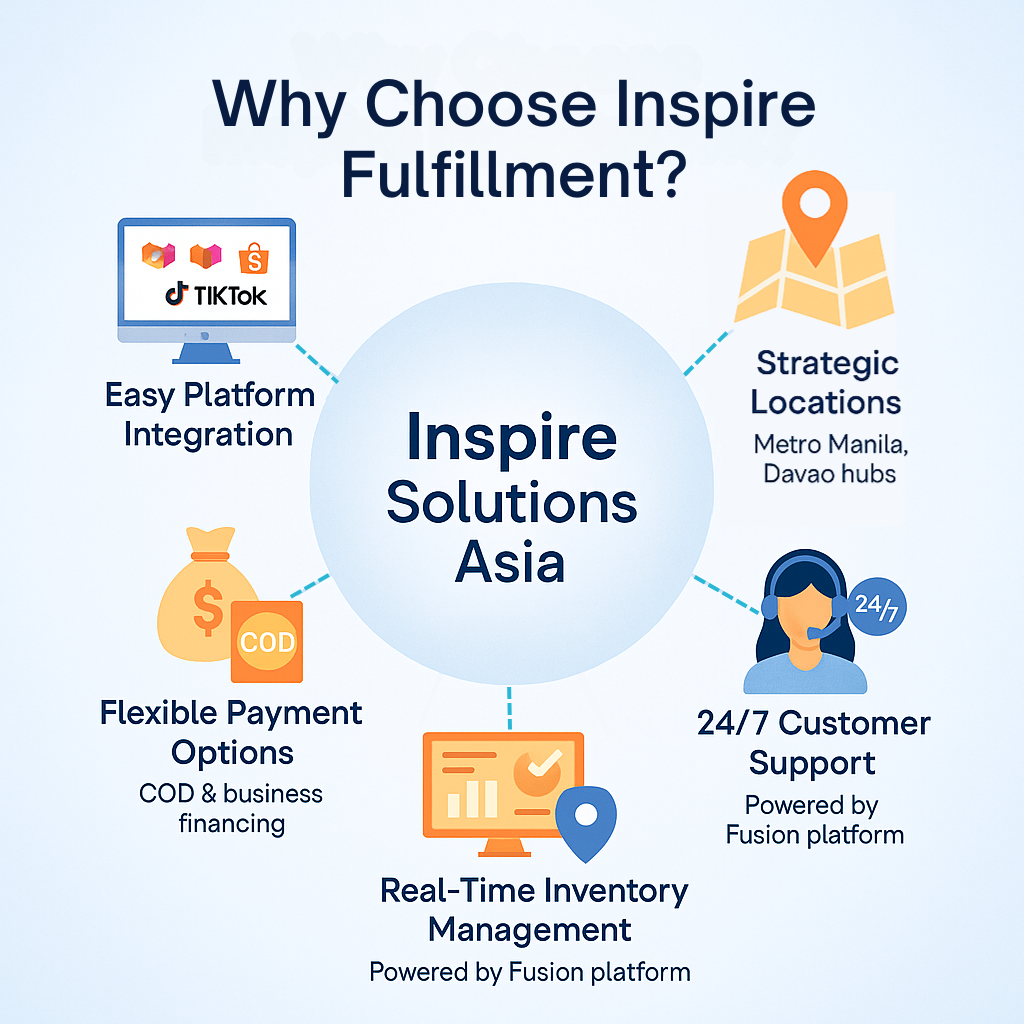
The right fulfillment partner can make or break your e-commerce business. Inefficient order processing, delayed shipments, and poor customer service can quickly lead to lost sales and a damaged reputation. At Inspire Solutions Asia, we offer tailored fulfillment solutions designed to tackle these challenges head-on.
With a focus on speed, reliability, and customer satisfaction, we ensure that your business operates smoothly, allowing you to scale efficiently and maintain customer loyalty.
Our fulfillment centers smoothly integrate with popular e-commerce platforms such as Shopify, Lazada, Shopee, and TikTok Shop. This integration ensures a smooth flow of orders, real-time stock updates, and efficient inventory management, leaving you more time to focus on scaling your business.
Our fulfillment centers are strategically located in key hubs across the Philippines, including Metro Manila and Davao. This allows us to minimize shipping costs and reduce delivery times, ensuring that your products reach customers quickly, leading to higher customer satisfaction and loyalty.
Managing cash flow is a vital part of growing your business. We understand that, which is why we offer flexible payment options such as Cash on Delivery (COD) and financing solutions. This helps you better manage your inventory and business expenses without requiring hefty upfront investments.
With our advanced Fusion platform, you get real-time inventory tracking and data analytics that help smooth your order processing. You’ll never have to worry about stock discrepancies or missed orders again.
We know how important it is to provide excellent service to your customers, which is why we provide dedicated 24/7 customer support. Whether it’s about order queries, inventory updates, or delivery issues, our team is always ready to assist you, allowing you to focus on growing your business.
Are you ready to take your fulfillment process to the next level? Get a quote now, and let us help you reduce costs, manage operations, and meet your customers’ expectations more efficiently.
When it comes to scaling your e-commerce business, choosing the right fulfillment partner can make all the difference. By utilizing the power of an optimized fulfillment center, you not only enhance operational efficiency but also improve the customer experience.
With the right logistics in place, you can focus on driving growth and innovation while leaving the complexities of order fulfillment to a trusted partner.
Inspire Solutions Asia offers the expertise, flexibility, and technology you need to stay ahead in today’s competitive market. With easy integrations, fast delivery, and scalable solutions, we are here to support your growth and help you meet customer expectations.