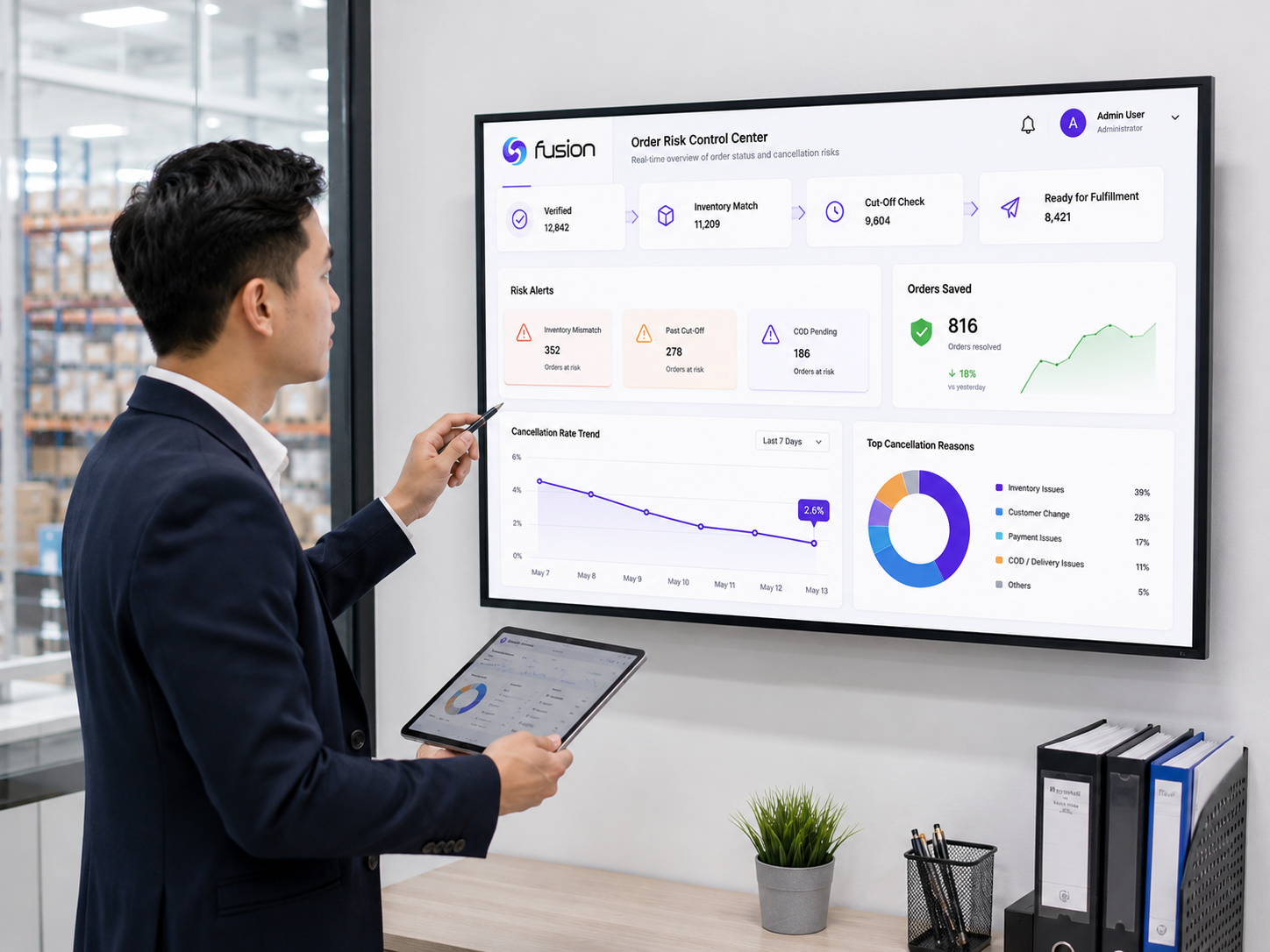
Every completed order represents a successful interaction between a business and its customer. However, not every order reaches the fulfillment stage. In many e-commerce and logistics operations, some orders are canceled before they can be processed, shipped, or delivered. While occasional cancellations are expected, a consistently high cancellation rate can signal deeper operational challenges that affect efficiency, revenue, and customer satisfaction.
Order cancellations occur for many reasons. Inventory discrepancies, processing delays, payment issues, and customer decisions can all contribute to orders being canceled before completion. As businesses grow and manage larger order volumes, even small inefficiencies can result in a noticeable increase in cancellation rates.
Understanding why cancellations happen is the first step toward reducing them. By addressing operational weaknesses, improving inventory accuracy, managing fulfillment cut-off times, and handling cash on delivery orders more effectively, businesses can minimize cancellations and create a more reliable customer experience.
This article explores the common causes of high cancellation rates, their impact on business performance, and practical strategies for reducing them.
Cancellation rate refers to the percentage of customer orders that are canceled before fulfillment is completed.
It is typically calculated using the following formula:
Cancellation Rate = (Canceled Orders ÷ Total Orders) × 100
For example, if a business receives 1,000 orders in a month and 50 of those orders are canceled, the cancellation rate would be 5%.
While cancellation rates vary across industries and business models, consistently high rates often indicate underlying operational or customer experience issues that require attention.
Monitoring cancellation rate helps businesses evaluate the effectiveness of their order management, inventory control, and fulfillment processes.
Some businesses view cancellations as an unavoidable part of operations. While occasional cancellations are normal, a high cancellation rate can create significant challenges.
Every canceled order represents lost revenue. Businesses spend time and resources acquiring customers, processing orders, and maintaining inventory. When orders are canceled, those investments may not generate a return.
Canceled orders consume operational resources even when fulfillment does not occur. Teams may spend time verifying orders, reserving inventory, or preparing shipments that never move forward.
Frequent cancellations can distort inventory forecasting and demand planning efforts, making it more difficult to maintain optimal stock levels.
Customers who experience canceled orders may lose confidence in a business and choose alternative suppliers for future purchases.
Because of these consequences, cancellation rate is an important performance indicator for both operational and customer service teams.
A high cancellation rate rarely stems from a single issue. Instead, it is often the result of multiple operational factors working together.
One of the most common causes of cancellations is poor inventory accuracy.
When inventory records do not match actual stock levels, customers may place orders for products that are unavailable. Once the discrepancy is discovered, the order must often be canceled.
Inventory inaccuracies can result from:
Maintaining accurate inventory records is critical for preventing these situations.
Customers increasingly expect fast order processing and delivery. When orders remain unprocessed for extended periods, customers may choose to cancel before fulfillment begins.
Processing delays can occur because of:
Reducing delays helps improve customer confidence and decreases the likelihood of cancellations.
Some orders are canceled because payment information cannot be verified or processed successfully.
Examples include:
Businesses that streamline payment verification processes can reduce cancellation risks associated with payment problems.
Customers may also cancel orders voluntarily for reasons such as:
Although these cancellations may not be directly caused by operational issues, businesses can still reduce them through better communication and order transparency.

Strong inventory accuracy is one of the most effective ways to reduce cancellation rates.
Accurate inventory data ensures that customers only purchase products that are genuinely available. It also helps fulfillment teams process orders with confidence.
Businesses can improve inventory accuracy through:
Inventory systems should update stock levels immediately after sales, returns, transfers, or adjustments.
Regular cycle counts and inventory reviews help identify discrepancies before they create larger issues.
Connecting inventory systems with sales channels ensures that stock availability remains consistent across platforms.
Clear receiving, storage, and picking procedures reduce inventory tracking errors.
By maintaining reliable inventory records, businesses can significantly reduce cancellations caused by unavailable products.

Fulfillment cut-off times play a major role in customer expectations and order processing performance.
Cut-off times define the latest point at which an order can be processed within a specific operational cycle.
For example:
Problems occur when businesses fail to manage these timelines effectively.
If orders are not processed within expected timeframes, customers may cancel while waiting for fulfillment updates.
Customers often make purchasing decisions based on expected delivery dates. Delays caused by missed cut-off times can increase cancellation risk.
Poor management of order intake and processing capacity can create backlogs that affect fulfillment performance.
Businesses can reduce cancellation rates by aligning staffing, workflows, and system capacity with order volume demands.

Cash on delivery remains a popular payment method in many markets because it allows customers to pay when they receive their orders.
While convenient for customers, cash on delivery can contribute to higher cancellation rates.
Customers may feel less committed to completing the transaction because payment is not required upfront.
Some customers cancel COD orders after placing them because they change their minds or find alternative products.
Orders may be rejected during delivery, resulting in cancellation even after fulfillment costs have already been incurred.
Incomplete customer information can make delivery difficult and increase the likelihood of canceled COD orders.
To reduce COD-related cancellations, businesses can:
These steps help improve order completion rates while maintaining the convenience of cash on delivery.

Reducing cancellations requires ongoing monitoring and analysis.
Businesses should track:
Provides a broad view of operational performance.
Identifies products that frequently experience inventory or fulfillment issues.
Highlights whether certain payment options contribute to higher cancellation rates.
Helps determine whether operational inefficiencies are contributing to order losses.
Regular reporting allows businesses to identify patterns and take corrective action before problems escalate.
Reducing cancellation rates requires a combination of technology, process improvement, and customer communication.
Real-time inventory systems help ensure product availability information remains accurate.
Confirming customer details and order information reduces fulfillment errors.
Faster processing times reduce opportunities for customers to cancel before shipment.
Providing timely updates helps manage customer expectations and builds confidence.
Tracking cancellation trends allows businesses to identify recurring issues and address them proactively.
Businesses that successfully reduce cancellations gain several advantages.
More completed orders lead to stronger sales performance.
Operational resources are focused on fulfilled orders rather than canceled transactions.
Reliable fulfillment experiences encourage repeat purchases.
Stable order completion rates improve demand planning and inventory management.
Over time, these benefits contribute to improved operational efficiency and long-term business growth.
A high cancellation rate is often a symptom of deeper operational challenges rather than an isolated issue. Inventory discrepancies, fulfillment delays, payment complications, and customer behavior can all contribute to canceled orders and lost revenue.
By improving inventory accuracy, managing fulfillment cut-off times effectively, and implementing stronger controls for cash on delivery transactions, businesses can address many of the factors that drive cancellations.
Reducing cancellation rates not only protects revenue but also improves operational efficiency, customer satisfaction, and long-term business performance. Organizations that consistently monitor and refine their processes are better positioned to deliver reliable service and maintain customer confidence.
Inspire E-Commerce Solutions Inc.
Warehouse 4 & 5, C Teknik Industrial, 143 P. Gregorio Street, Valenzuela,
1442 Metro Manila
inspiresolutions.asia
