
Selling through online marketplaces has become an essential growth strategy for many ecommerce businesses. Expanding beyond a single website allows brands to reach new customers, increase product visibility, and generate more sales through platforms where shoppers already spend their time.
However, managing multiple sales channels also introduces new operational challenges. Product listings must remain accurate, inventory needs to stay synchronized, and customer orders must be processed efficiently across every platform. Without a connected approach, businesses may encounter inconsistent product information, stock discrepancies, and delays that affect both operations and customer satisfaction.
Marketplace optimization helps businesses manage these challenges by improving how products, inventory, and orders are handled across different ecommerce channels. Instead of treating each marketplace as a separate operation, businesses can create more consistent processes that support growth while maintaining operational efficiency.
This article explores how marketplace optimization strengthens product information management, supports omnichannel inventory management, and helps ecommerce businesses build a more connected multi-channel strategy.
Online marketplaces have changed how customers discover and purchase products. Instead of shopping through a single website, consumers often compare products across multiple platforms before making a buying decision.
For businesses, selling across several marketplaces provides opportunities to:
At the same time, each additional marketplace increases the complexity of daily operations.
Businesses must manage multiple product catalogs, monitor inventory across different channels, process orders from various platforms, and maintain consistent customer experiences throughout the purchasing journey.
As operations grow, maintaining efficiency becomes just as important as increasing sales.
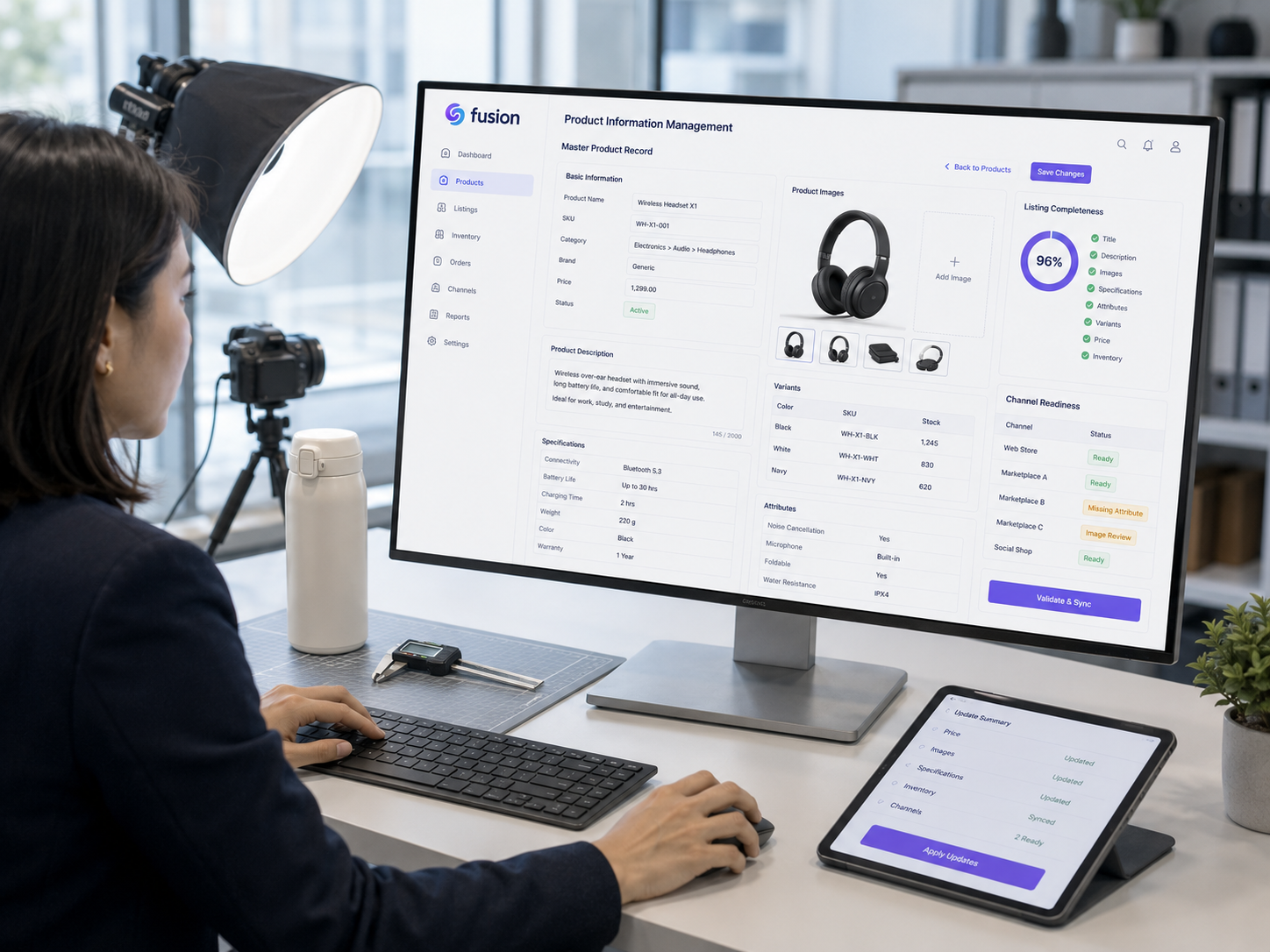
Customers expect the same level of accuracy regardless of where they shop. Whether they purchase through an ecommerce website, an online marketplace, or another digital sales channel, they expect product information, pricing, and availability to remain consistent.
Without standardized processes, businesses may experience:
Creating consistency across every marketplace helps reduce these issues while improving operational reliability.
Maintaining synchronized information also helps internal teams spend less time correcting errors and more time focusing on business growth.
Accurate product information is one of the most important factors in creating a reliable shopping experience.
As product catalogs expand, managing descriptions, specifications, images, pricing, and product attributes across multiple platforms becomes increasingly difficult.
Product information management provides a structured approach to organizing and maintaining product data across different sales channels.
Benefits include:
Keeping product information centralized also makes it easier to update listings when products change, or new items are introduced.
This helps businesses maintain consistency while reducing manual administrative work.
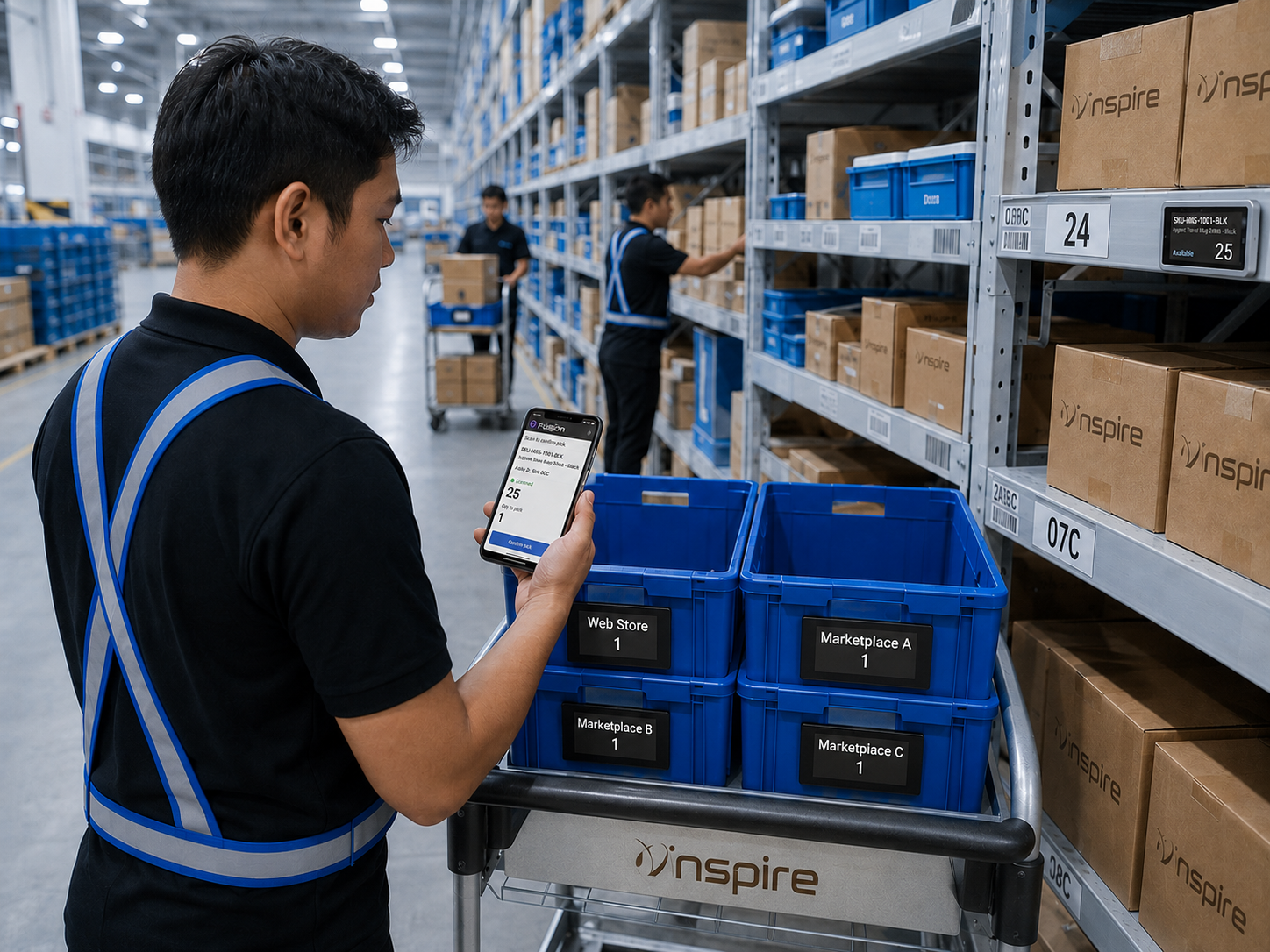
Managing inventory across multiple marketplaces requires more than simply tracking available stock.
Without synchronized inventory updates, businesses risk overselling products, delaying fulfillment, or creating inaccurate stock records.
Omnichannel inventory management helps maintain accurate inventory information across ecommerce websites, online marketplaces, and fulfillment locations.
When inventory updates automatically after every transaction, businesses gain greater confidence in their available stock while reducing operational errors.
Connected inventory management also supports:
Maintaining accurate inventory across every sales channel helps businesses operate more efficiently as order volumes increase.

As businesses expand into additional marketplaces, managing day-to-day operations becomes increasingly demanding. Orders originate from different platforms, inventory changes frequently, and product information requires regular updates.
Without efficient processes, teams may spend significant time performing repetitive administrative tasks instead of focusing on business growth.
Marketplace optimization helps simplify these activities by creating more consistent workflows across multiple sales channels.
Operational improvements may include:
When information moves efficiently across connected systems, businesses can process orders more accurately while maintaining a consistent customer experience.
Customers expect a seamless buying experience regardless of where they purchase a product.
Whether shopping through an ecommerce website or an online marketplace, they want accurate product information, current inventory availability, and timely order updates.
Businesses that maintain consistency across every sales channel are better positioned to meet these expectations.
This includes:
Providing a dependable customer experience not only supports satisfaction but also encourages repeat purchases and strengthens long-term customer relationships.
Selling across multiple marketplaces offers significant opportunities, but it also introduces operational challenges when systems and processes are not properly connected.
Managing inventory separately for each sales channel increases the likelihood of inaccurate stock levels.
Without synchronized updates, businesses may oversell products, experience stock shortages, or delay customer orders.
Product titles, descriptions, specifications, and images may differ across marketplaces when updates are managed manually.
These inconsistencies can confuse customers and make products appear less reliable.
Maintaining standardized product information helps create a more consistent shopping experience.
Updating product listings, adjusting inventory, and processing orders separately for each marketplace can consume valuable time.
Manual processes also increase the risk of errors that affect inventory records, customer orders, and fulfillment performance.
Automating routine tasks helps improve efficiency while reducing repetitive work.
When sales information is spread across multiple platforms, it becomes more difficult to monitor business performance.
Businesses may spend additional time gathering reports, comparing inventory records, or reviewing order information before making operational decisions.
Having access to centralized information supports faster and more informed decision-making.

Managing multiple marketplaces successfully requires a combination of connected technology and well-defined operational processes.
Keeping product information in one centralized location makes it easier to maintain consistent listings across every sales channel.
This reduces duplicate work while helping ensure customers receive accurate information regardless of where they shop.
Keeping inventory synchronized across marketplaces helps maintain accurate stock levels while reducing overselling and fulfillment delays.
Real-time inventory updates also support better planning as order volumes increase.
Automating repetitive tasks such as inventory updates, order synchronization, and product listing management allows businesses to operate more efficiently.
Reducing manual work helps improve accuracy while allowing teams to focus on activities that contribute to business growth.
Monitoring sales performance, inventory trends, fulfillment efficiency, and customer feedback helps businesses identify opportunities for improvement.
Regular performance reviews support continuous optimization as marketplace operations continue to expand.
As ecommerce businesses expand into more online marketplaces, maintaining consistency across products, inventory, and orders becomes increasingly important. Connected operations help businesses reduce manual work, improve accuracy, and create a more reliable experience for both customers and internal teams.
Marketplace optimization supports these goals by helping businesses manage multiple sales channels more efficiently. Combined with effective product information management and omnichannel inventory management, it creates a stronger foundation for sustainable ecommerce growth.
By investing in connected processes and scalable technology, businesses can improve operational efficiency, adapt to changing customer expectations, and confidently grow across multiple ecommerce channels.
Inspire E-Commerce Solutions Inc.
Warehouse 4 & 5, C Teknik Industrial, 143 P. Gregorio Street, Valenzuela,
1442 Metro Manila
inspiresolutions.asia
