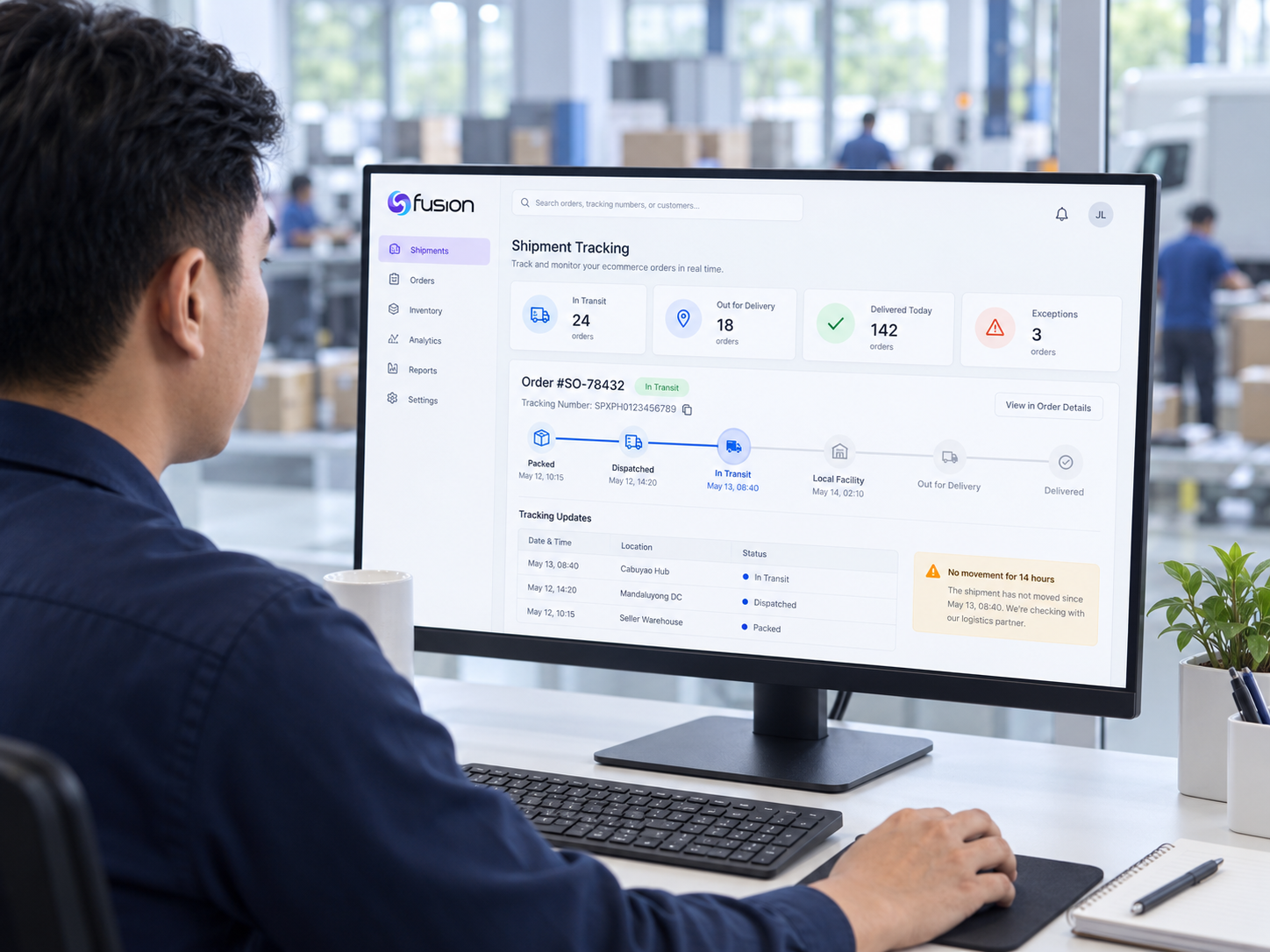
Ecommerce customers expect to know what is happening with their orders after checkout. From dispatch to final delivery, access to accurate tracking information can make the buying experience more predictable while helping businesses manage their operations more effectively.
For ecommerce teams, shipment tracking provides visibility into an order’s movement after it leaves the warehouse. It can help businesses monitor delivery progress, identify delays, respond to exceptions, and keep customers informed throughout the delivery process.
As order volumes grow and businesses sell across multiple channels, having a clear view of shipments becomes increasingly important. Connecting tracking information with order, inventory, warehouse, and fulfillment processes can give teams a more complete understanding of the customer order journey.
Shipment tracking is the process of monitoring an order after it has been dispatched to a customer. Tracking information can show important updates such as when a shipment leaves the warehouse, reaches a sorting facility, is out for delivery, or has been delivered.
Tracking usually begins when a shipment is assigned a tracking number or reference. The shipment can then be monitored as status updates are recorded throughout its journey.
For ecommerce businesses, shipment tracking is more than a way for customers to check where their packages are. It also provides operational information that teams can use to monitor orders, identify potential problems, and respond to delivery issues.
The amount and timing of tracking information can vary depending on the courier, service level, location, and systems involved. For this reason, businesses need reliable processes for collecting and managing shipment information.
Shipment visibility can affect both day-to-day operations and the customer experience. When businesses have access to reliable shipment information, teams can make better decisions about orders that are still in transit.
Customers often want to know when an order has been dispatched and when they can expect it to arrive. Providing accessible tracking information can reduce uncertainty after checkout.
Instead of contacting customer service for every delivery update, customers can check the status of their orders themselves. This can also reduce repetitive tracking-related inquiries for support teams.
Clear updates can be particularly useful when delivery times change. If a shipment is delayed, having accurate information allows businesses to communicate with customers instead of leaving them without an explanation.
Tracking information can help teams identify shipments that may not be progressing as expected.
For example, an order may remain at a particular facility longer than anticipated or fail to receive a new status update. These signals can prompt a team member to investigate the shipment before the customer raises a concern.
Early identification does not guarantee that a delivery issue can be resolved immediately, but it gives businesses more time to determine what happened and decide what action is appropriate.
Shipment information is one part of the larger order journey. Businesses may need to understand when an order was received, processed, picked, packed, dispatched, and delivered.
Connecting these stages gives teams a clearer view of what is happening with individual orders and can make it easier to identify where an issue occurred.
An order tracking system helps businesses organize information about an order as it moves through different stages of fulfillment and delivery.
While the exact process can vary between businesses, a typical ecommerce order may move through these stages:
The process begins when an order is placed through an ecommerce website or marketplace.
Order information may include the products purchased, quantities, customer details, delivery address, payment information, and selected delivery method.
The order is then prepared for fulfillment. Inventory availability is checked, and the required products are identified for picking.
Accurate inventory information is important at this stage because an order cannot be fulfilled correctly if the expected stock is unavailable or recorded incorrectly.
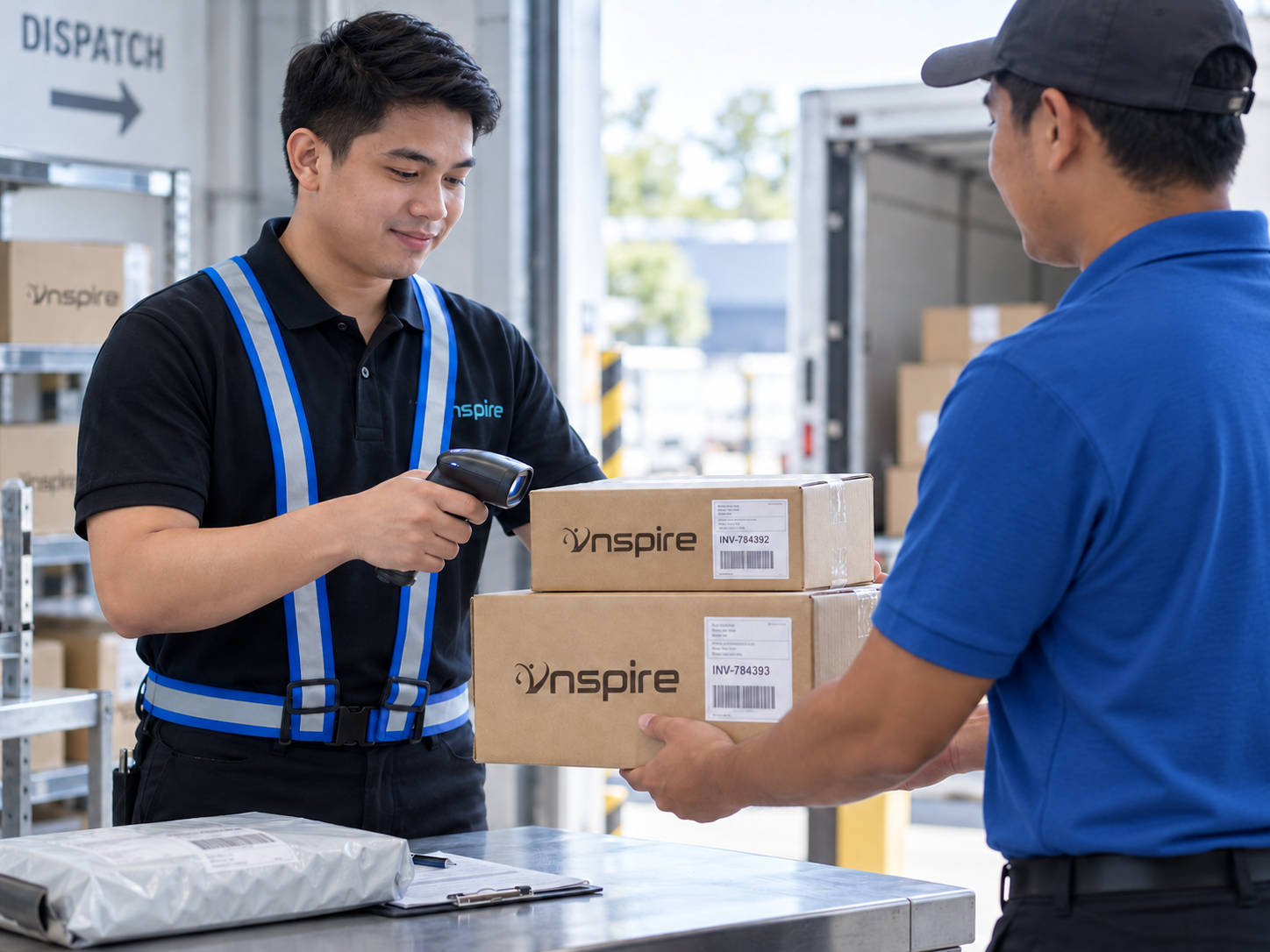
Once the shipment is prepared for dispatch, tracking information may be generated through the courier or fulfillment process.
The tracking number allows the shipment to be identified and followed after it leaves the warehouse.
The packed order is handed over to the courier or delivery provider.
At this point, the order moves from the warehouse or fulfillment operation into the transportation stage.
As the shipment moves through the delivery network, status updates may be recorded.
These can include collection, sorting, transit, arrival at a local facility, an out-for-delivery update, and other relevant events.
The final stage occurs when the shipment is delivered to the customer.
A delivery confirmation can provide a useful record that the order journey has been completed.
Shipment tracking and delivery tracking are closely related, but they can refer to slightly different parts of the order journey.
Shipment tracking generally focuses on monitoring a package as it moves through the transportation process. Delivery tracking can place more emphasis on the progress and status of the shipment as it approaches the customer’s location.
In practice, the terms may be used interchangeably depending on the system or courier involved.
For ecommerce businesses, the important point is not simply which term is used. What matters is whether the available information gives teams and customers a clear understanding of the shipment’s current status.
A useful tracking process should make important updates accessible without requiring teams to manually search through multiple systems.
Shipment visibility becomes more useful when it is connected with inventory information.
Before an order can be shipped, products must be available, located, picked, packed, and prepared for dispatch. If these processes are managed separately, it can be difficult to understand the complete order journey.
Connecting shipment information with inventory tracking can help teams see how stock movement relates to order fulfillment.
For example, when an item is allocated to an order, picked from storage, packed, and dispatched, each stage represents a change in the status of that order and its associated inventory.
A connected approach can therefore provide better visibility from stock availability through final delivery.
Tracking is only useful when the information being provided is accurate and updated appropriately.
Several factors can affect the quality of shipment visibility.
Customer details, delivery addresses, product information, and order references need to be recorded correctly.
Incorrect information at the beginning of the process can create problems later, including failed deliveries and additional manual work.
The tracking number and shipment details should correspond to the correct order.
When tracking information is assigned incorrectly, teams and customers may see the wrong status or be unable to locate the shipment.
Tracking information needs to be updated as the shipment progresses.
Delayed updates can make an order appear inactive even when it is moving through the delivery network.
When order, warehouse, inventory, and shipment information is spread across disconnected systems, teams may need to compare information manually.
Consistent data across connected systems can make it easier to understand the current state of an order.
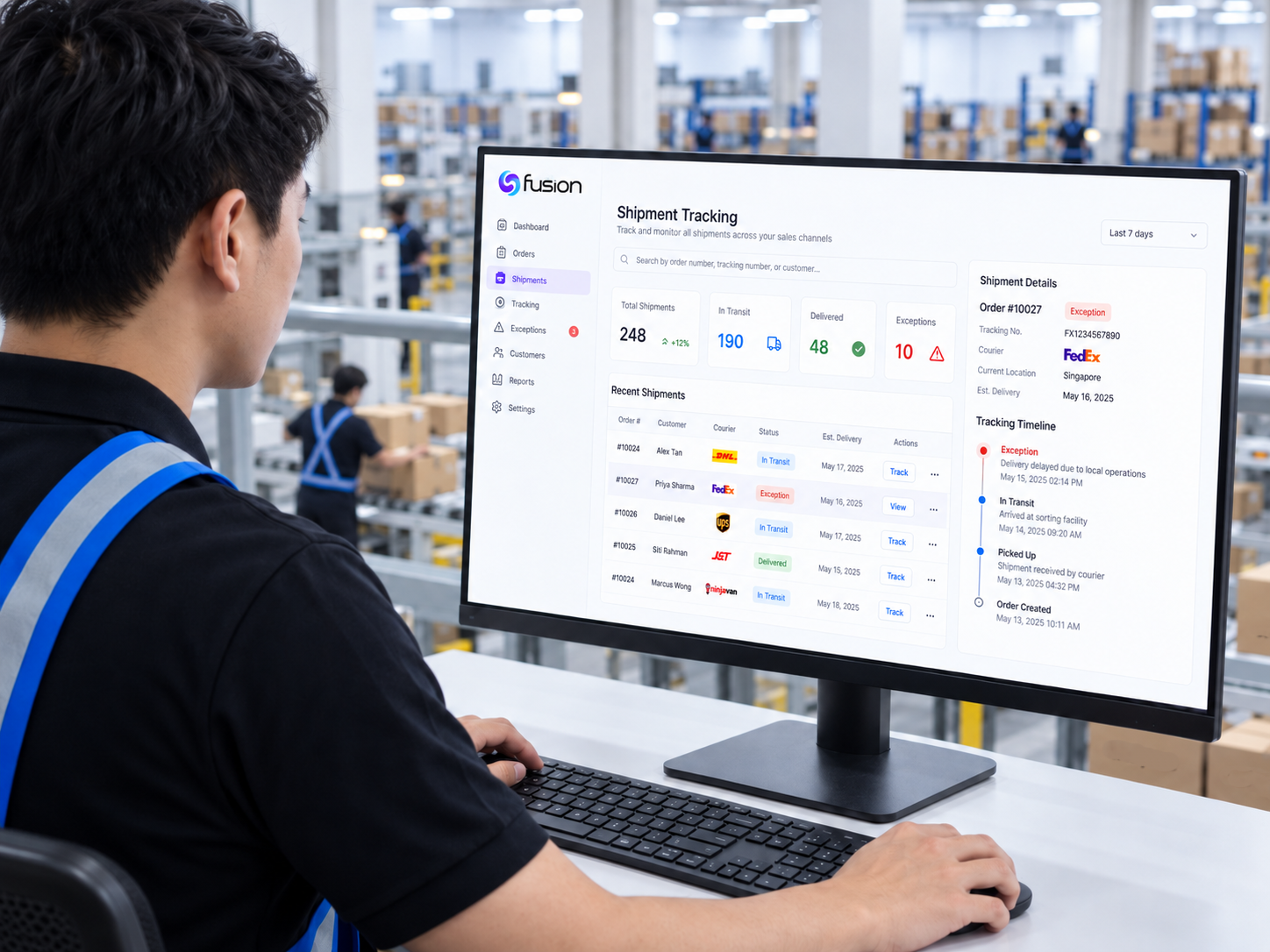
Not every order moves through fulfillment and delivery without complications.
A shipment may experience a delayed handoff, an incorrect address, a failed delivery attempt, a courier exception, or an unexpected delay.
Tracking information can help businesses identify these situations and determine which orders require attention.
Rather than reviewing every shipment manually, teams can focus on orders showing unusual or problematic statuses.
This can make exception management more practical as order volumes increase.
For example, if several shipments have remained at the same delivery stage for an unusual period, a team can investigate whether there is a courier issue, address problem, or another reason for the delay.
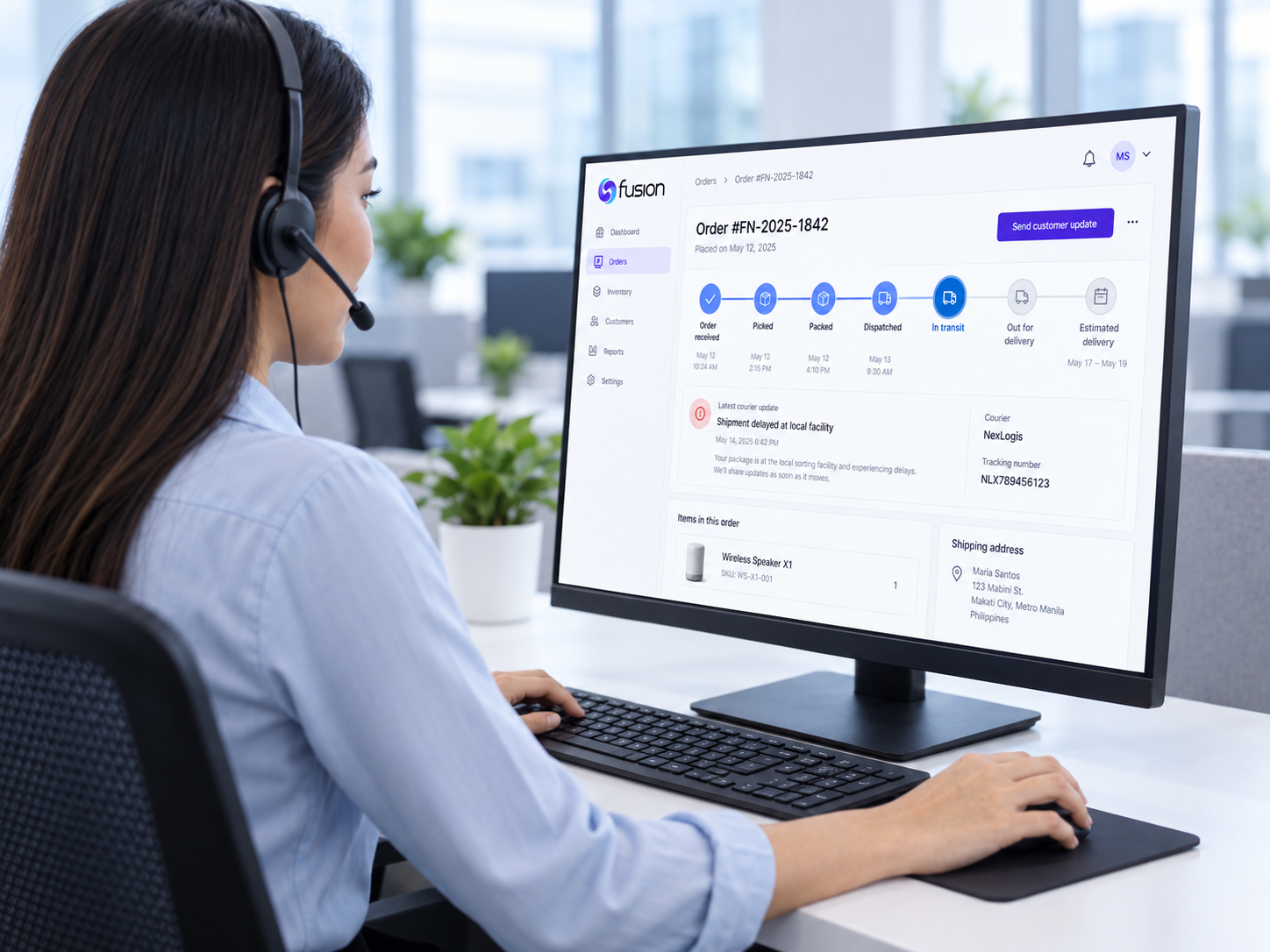
Customers do not see every step of the fulfillment process. They usually see the information that is presented through their order confirmation, tracking page, notifications, or customer support interactions.
This makes shipment visibility an important part of the post-purchase experience.
Customers are more likely to feel informed when they can easily see whether an order has been dispatched, where it is in transit, and whether delivery has been completed.
Tracking information can also help businesses communicate more proactively. If a delay is identified, customers can be notified rather than left to discover the issue themselves.
Clear communication does not eliminate delivery problems, but
Centralizing shipment information can make tracking easier to manage, particularly for businesses with multiple sales channels or courier relationships.
Teams do not have to spend as much time checking different platforms for individual shipment updates.
Centralized information can make unusual shipment statuses easier to identify and investigate.
Customer service, warehouse, operations, and management teams can work from more consistent order information.
Support teams can access relevant shipment information when responding to customer questions.
Shipment information can contribute to a more complete record of the order journey, which can be useful when reviewing delivery performance or investigating issues.
A reliable shipment tracking system should provide useful information without creating unnecessary complexity for the teams managing orders.
Several capabilities are worth considering.
Businesses selling through multiple ecommerce channels may need tracking information to work across different sources of orders.
Centralizing information can make it easier to monitor shipments regardless of where an order originated.
Courier integration can help tracking information move between fulfillment and delivery processes.
This reduces the need for teams to repeatedly enter or transfer shipment details manually.
Real-time shipment tracking can provide more current information about an order’s progress.
The exact frequency of updates depends on the courier and technology involved, but timely information can help teams identify changes sooner and respond when action is needed.
Shipment tracking becomes more useful when it is connected with order details.
Teams should be able to understand which customer, products, and order are associated with a particular shipment.
Tracking should make it easier to identify shipments that may need attention.
This can include delayed shipments, failed delivery attempts, address problems, or other exceptions.
Customers should have a straightforward way to check their order status.
Providing accessible tracking information can reduce unnecessary support requests while giving customers greater visibility after purchase.
Shipment tracking becomes more valuable when it forms part of a connected ecommerce operation.
For a growing brand, the goal is not simply to know where a package is. The larger objective is to understand the order journey and make relevant information available to the people who need it.
This is where fulfillment technology can connect order, inventory, warehouse, and shipment information. A centralized platform can help businesses maintain a consistent view of orders as they move from purchase through fulfillment and delivery.
When these processes are connected, teams can spend less time checking information across separate systems and more time responding to orders, identifying exceptions, and keeping customers informed.
This type of connected approach can be especially useful for brands managing multiple sales channels, growing order volumes, and increasingly complex fulfillment requirements.
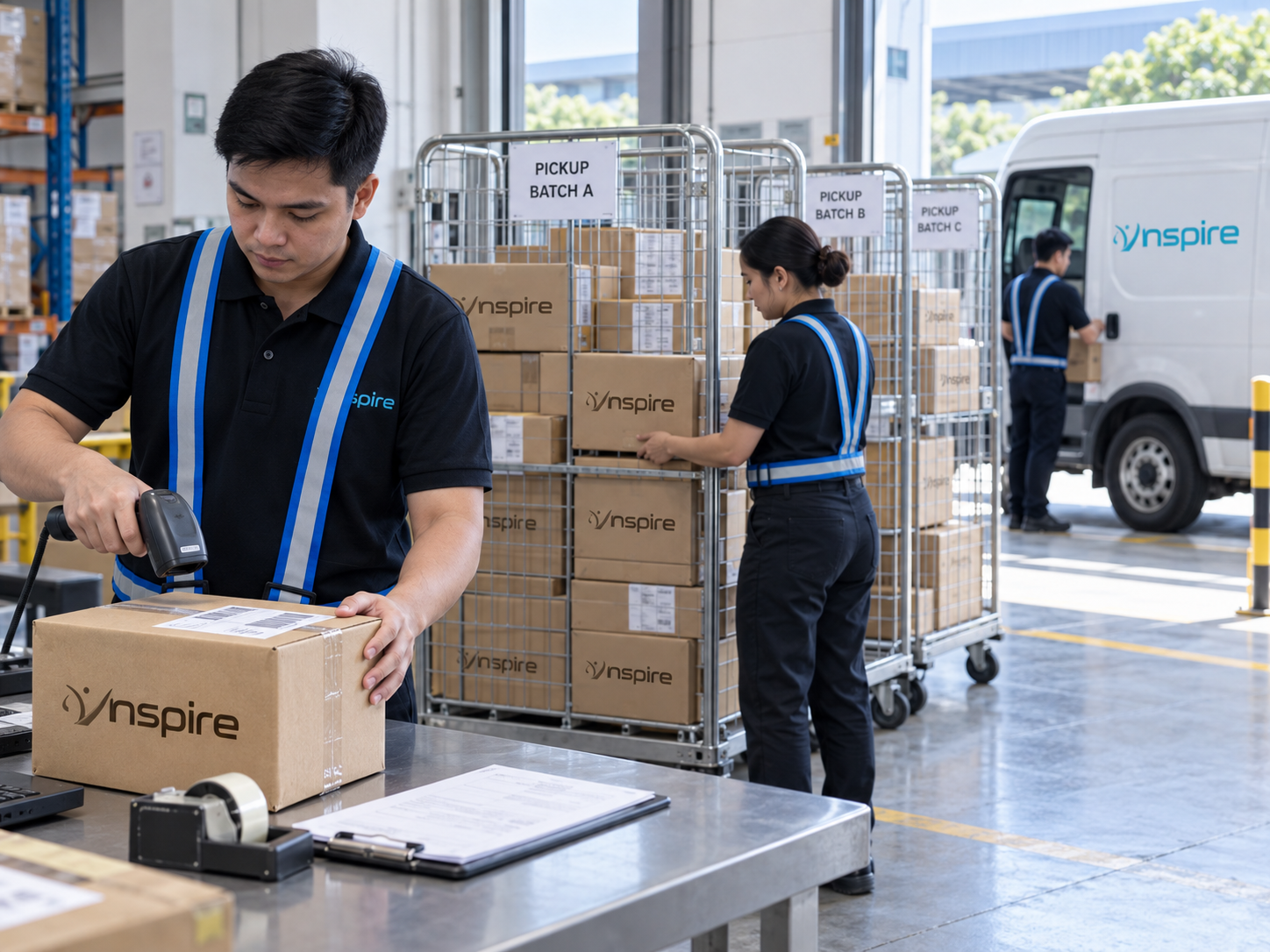
For ecommerce businesses, shipment tracking is more than a way for customers to check the status of their packages.
A fulfillment partner should be able to provide clear information about what happens before and after an order leaves the warehouse.
This includes visibility into:
When these activities are connected, businesses can spend less time piecing together information from different sources and more time responding to issues that actually require attention.
A fulfillment operation with connected systems can also make it easier to maintain consistent order information across warehouse and delivery processes.
Shipment tracking gives ecommerce businesses a clearer view of what happens after an order leaves the warehouse. It helps teams monitor delivery progress, identify exceptions, communicate with customers, and maintain a more complete record of the order journey.
As ecommerce operations become more complex, tracking becomes more valuable when it is connected to order, inventory, warehouse, and fulfillment information.
For brands looking to improve operational visibility, the goal should not simply be to provide a tracking number. It should be to create a connected process where accurate information follows the order from purchase to delivery.
With the right fulfillment technology and operational support, businesses can make shipment information easier to manage while providing customers with a clearer and more reliable delivery experience.
Inspire E-Commerce Solutions Inc.
Warehouse 4 & 5, C Teknik Industrial, 143 P. Gregorio Street, Valenzuela,
1442 Metro Manila
inspiresolutions.asia
