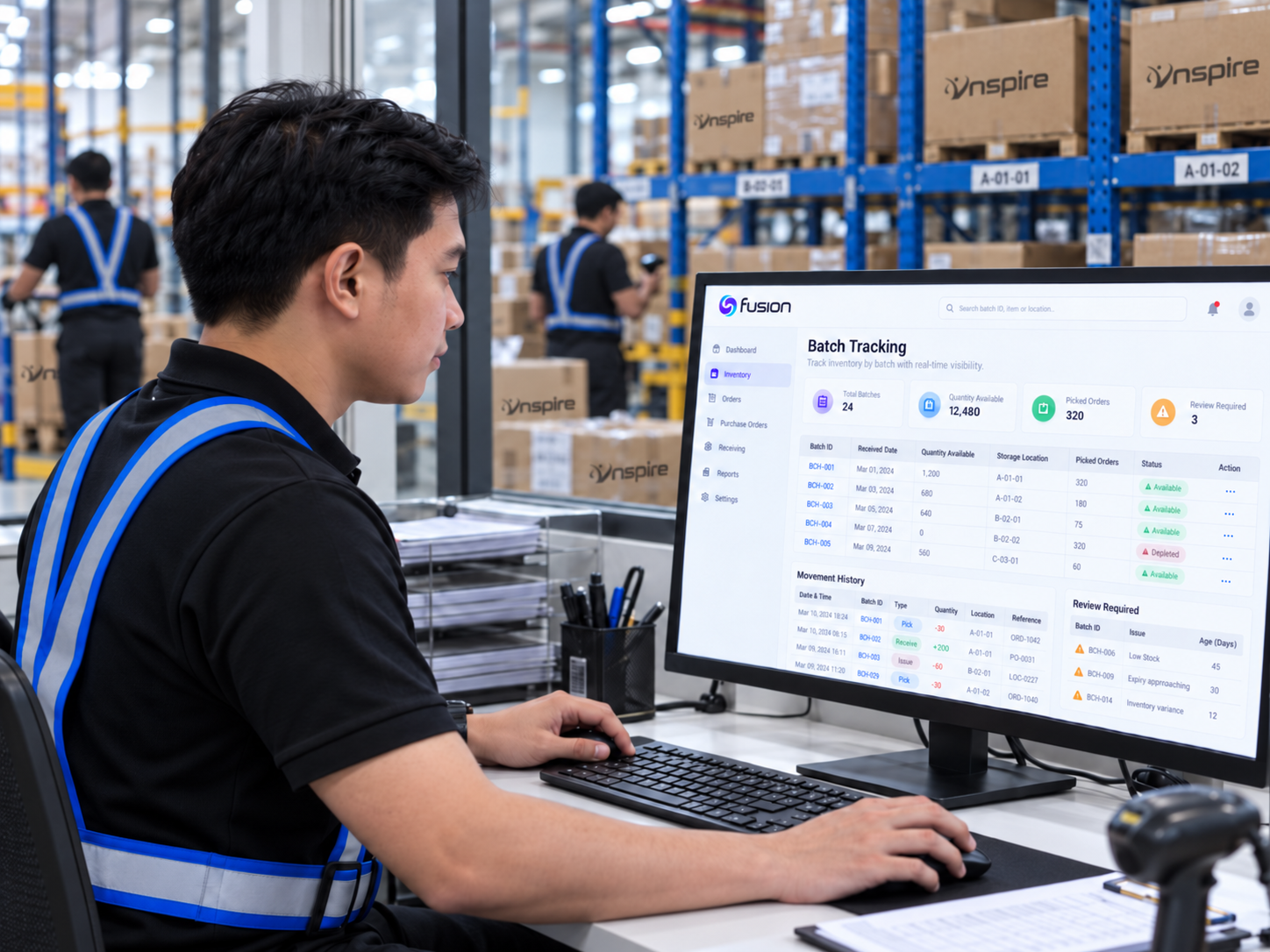
Ecommerce businesses need accurate inventory records to fulfill orders reliably and respond to changes in customer demand. As product volumes grow, tracking stock by quantity alone may not provide enough information to understand where products came from, which batches remain available, or where specific units have been shipped.
Batch tracking helps address this challenge by connecting groups of products to identifiable batch or lot numbers. These records allow businesses to follow inventory through receiving, storage, picking, and shipping while maintaining a clearer record of product movements.
For ecommerce businesses managing multiple products, suppliers, and fulfillment activities, batch tracking can strengthen product traceability, support more reliable inventory tracking, and make it easier to investigate stock discrepancies or product quality concerns.
Batch tracking is an inventory management method that assigns or associates products with a specific batch or lot identifier. A batch may represent products manufactured together, received in the same shipment, or grouped according to a business’s inventory procedures.
Rather than recording only the total quantity of a product, businesses can maintain additional information about individual batches. Depending on the product and operational requirements, records may include batch numbers, receiving dates, quantities, storage locations, expiration dates, and shipment details.
For example, an ecommerce business may receive 300 units of a skincare product in one shipment and another 200 units several weeks later. Although the products share the same SKU, the two deliveries may belong to different batches.
Batch tracking allows the business to distinguish between these groups and maintain records of their inventory movements. If a product issue arises with one batch, the business can use these records to identify the relevant stock rather than treating all units as one undifferentiated quantity.
Ecommerce operations depend on accurate stock information. Businesses need to know what is available, where it is stored, and whether products can be picked and shipped to fulfill customer orders.
Batch tracking adds another level of detail to these records. It helps businesses connect inventory quantities with specific groups of products, providing information that may not be available through standard SKU-level tracking alone.
Product traceability refers to the ability to follow a product’s history and movement through relevant stages of the supply chain.
Batch tracking supports traceability by linking inventory to identifiers and associated records. Businesses can use this information to investigate when stock was received, where it was stored, and which orders or shipments involved the relevant batch, provided these activities are recorded in the system.
This visibility can be especially useful when handling product quality concerns, supplier issues, or requests to identify affected inventory.
When businesses manage several batches of the same product, combining all units into a single quantity can make it difficult to distinguish between them.
Batch-level records provide additional information about stock composition. This can help warehouse teams investigate discrepancies, review inventory movements, and confirm whether particular batches are available, reserved, damaged, or on hold.
Some products need to be managed according to expiration dates, production dates, or receiving dates. Batch tracking can help businesses identify the relevant information and apply appropriate stock rotation procedures.
For example, a business selling packaged food may use batch records and expiration dates to help prioritize products that need to be shipped first. The specific rotation method should reflect the product’s requirements and the business’s operating procedures.
When a discrepancy occurs, batch information can help narrow the investigation to a particular group of products.
Instead of reviewing all inventory movements for a SKU, staff may be able to examine the receiving, storage, adjustment, and shipment records associated with the batch in question.
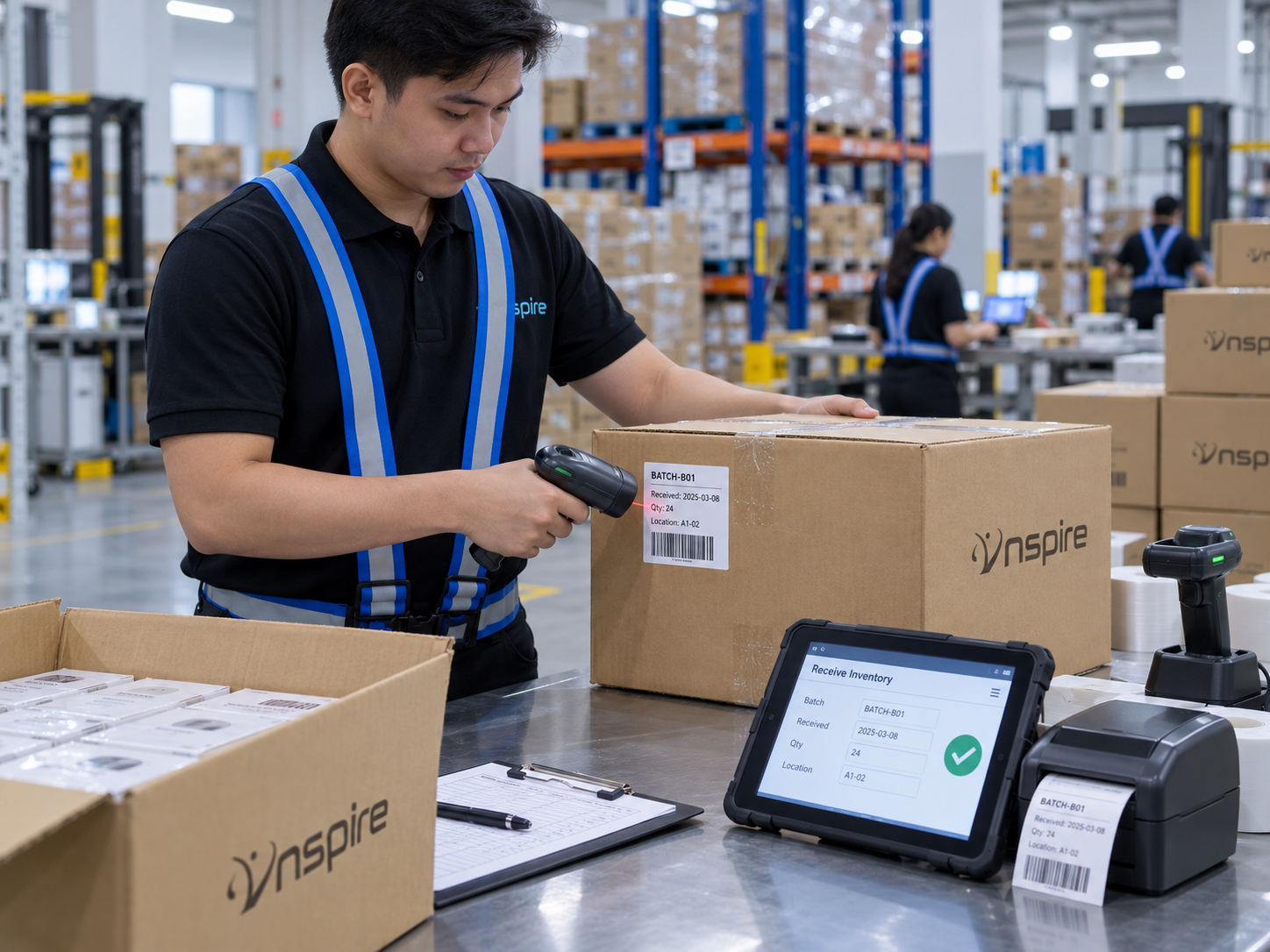
Batch tracking follows inventory from the point where a batch is identified through the relevant warehouse and fulfillment activities. The process varies by business, but it generally includes several steps.
When products arrive at a warehouse, staff record the product details, quantities, and relevant batch information. If the supplier has already assigned a batch or lot number, that identifier can be recorded according to the business’s procedures.
Each batch needs a reliable identifier that distinguishes it from other inventory. The identifier should be associated with the correct product and receiving record to reduce the risk of mixing information between batches.
After receiving, products are moved to designated storage locations. Recording where each batch is stored helps staff locate the correct inventory when replenishing stock, picking orders, or investigating product issues.

As products move between storage locations or through other warehouse activities, relevant transactions should be recorded. These records help maintain a consistent view of batch quantities and locations.
Where required, the system should record which batch was picked for an order and shipped to a customer. This connection can help businesses identify the destinations of affected inventory if a product issue arises later.
Returns, damaged goods, stock adjustments, and other inventory changes should be recorded accurately. Maintaining these updates helps prevent batch records from becoming inconsistent with the actual stock held in the warehouse.

Standard inventory tracking and batch tracking serve related but different purposes.
Standard inventory tracking typically focuses on quantities, product identifiers, and storage locations. Batch tracking adds information about specific groups of products, allowing businesses to distinguish between inventory that might otherwise be recorded under the same SKU.
Consider an ecommerce business that holds 500 units of a product. Standard inventory records may show the total quantity available. Batch-level records may additionally show that 300 units belong to one batch and 200 belong to another.
This distinction becomes useful when the business needs to identify a particular production run, review supplier deliveries, manage expiration dates, or trace products associated with a quality concern.
The two methods work best together. Businesses can maintain an overall view of available stock while preserving the additional details needed to identify and investigate individual batches.
Effective inventory management for warehouse operations requires accurate records of stock quantities, locations, movements, and availability. By maintaining organized warehouse inventory records alongside batch identifiers, businesses can improve stock visibility and distinguish between different groups of products.
When warehouse teams can access reliable batch records, they can make more informed decisions about stock handling and fulfillment.
For example, a warehouse may hold the same product across several storage locations. If each batch is recorded accurately, staff can check which locations contain the relevant stock and confirm whether a particular batch is available for picking.
Batch tracking can also support inventory investigations by helping staff compare recorded quantities with physical stock. If the figures do not match, batch-level transaction records may help identify where the discrepancy occurred.
These benefits depend on consistent receiving procedures, accurate location records, and timely updates whenever inventory moves or changes status.

Batch tracking provides useful visibility, but businesses need reliable processes to maintain accurate information. Several common issues can reduce its effectiveness.
If labels are missing, unreadable, or recorded incorrectly, warehouse staff may have difficulty matching physical stock with system records. Standardized labeling procedures can help reduce this risk.
Spreadsheets and paper records may be sufficient for simple operations, but maintaining them across multiple products, locations, and transactions can become difficult as order volumes grow. Manual updates can also introduce errors or delays.
If transfers, picks, returns, or adjustments are not recorded promptly, the system may show incorrect quantities or locations for a batch.
Combining products from different batches without preserving their identities can weaken traceability. Businesses should establish clear handling procedures that maintain the batch information required for their products and operations.
When warehouse, inventory, and order management records are not properly connected, staff may struggle to determine which batch was used for a particular order or where remaining units are stored.
Addressing these challenges requires clear procedures, staff training, and technology that supports the business’s traceability requirements.
As ecommerce businesses expand, technology can help maintain inventory records across receiving, storage, picking, and shipping.
A suitable warehouse management system can centralize inventory information and support batch-level records. Depending on its capabilities and configuration, the system may allow businesses to record batch identifiers, monitor quantities by location, document stock movements, and connect picked inventory with order information.
Barcode scanning can also help staff capture product and batch identifiers during warehouse activities. This can reduce reliance on manual entry, although accuracy still depends on proper labeling, scanning procedures, and system configuration.
For businesses operating across multiple sales channels, integrations between warehouse and order management systems can help keep stock information consistent. Businesses should confirm that their chosen systems support the batch-level data and traceability workflows they require.
Technology does not replace good inventory procedures. Instead, it helps teams apply those procedures consistently and access relevant information when making operational decisions.
Businesses can strengthen batch tracking by establishing consistent processes and reviewing how inventory information is maintained.
Define how batch numbers are recorded and associated with products. Ensure staff understand how to handle supplier-assigned identifiers and any internal identifiers used by the business.
Record the required batch details when products arrive rather than trying to reconstruct them later. This creates a reliable starting point for subsequent inventory movements.
Update inventory locations when batches are moved. This helps warehouse teams locate stock and reduces confusion during picking and stock checks.
Establish procedures for recording transfers, picks, returns, adjustments, and damaged inventory. The level of detail should match the business’s operational and traceability requirements.
Cycle counts and other inventory checks can help identify discrepancies between recorded quantities and physical stock. Investigating differences promptly helps prevent inaccurate information from spreading across later transactions.
Warehouse employees should understand why batch information is important and how to record it correctly. Consistent training can reduce avoidable errors during daily operations.
Choose inventory technology that supports the products, order volumes, storage arrangements, and reporting requirements of the business. As operations grow, review whether current systems continue to provide sufficient visibility.
Batch tracking can be useful for businesses that need to distinguish between groups of the same product. Its importance depends on the products sold, supplier arrangements, operational complexity, and traceability requirements.
Businesses may benefit from batch tracking when they:
Not every product requires the same level of tracking. Businesses should assess their inventory risks and operational needs to determine which products require batch-level records and what information should be retained.
Reliable batch tracking helps ecommerce businesses maintain a clearer record of their inventory and its movement through warehouse operations. By connecting products to identifiable batches, businesses can improve product traceability, investigate stock issues more efficiently, and maintain more accurate inventory records.
However, effective batch tracking depends on accurate receiving procedures, consistent labeling, reliable movement records, and suitable warehouse technology.
Technology-driven warehousing and fulfillment solutions can help businesses improve inventory visibility and coordinate warehouse activities. Businesses evaluating a fulfillment partner should discuss their specific batch tracking, reporting, and traceability requirements to confirm that the available systems and workflows meet their needs.
Ready to improve your ecommerce inventory visibility? Discuss your warehousing and fulfillment requirements with a team that understands the importance of accurate batch tracking and inventory control.
Inspire E-Commerce Solutions Inc.
Warehouse 4 & 5, C Teknik Industrial, 143 P. Gregorio Street, Valenzuela,
1442 Metro Manila
inspiresolutions.asia
