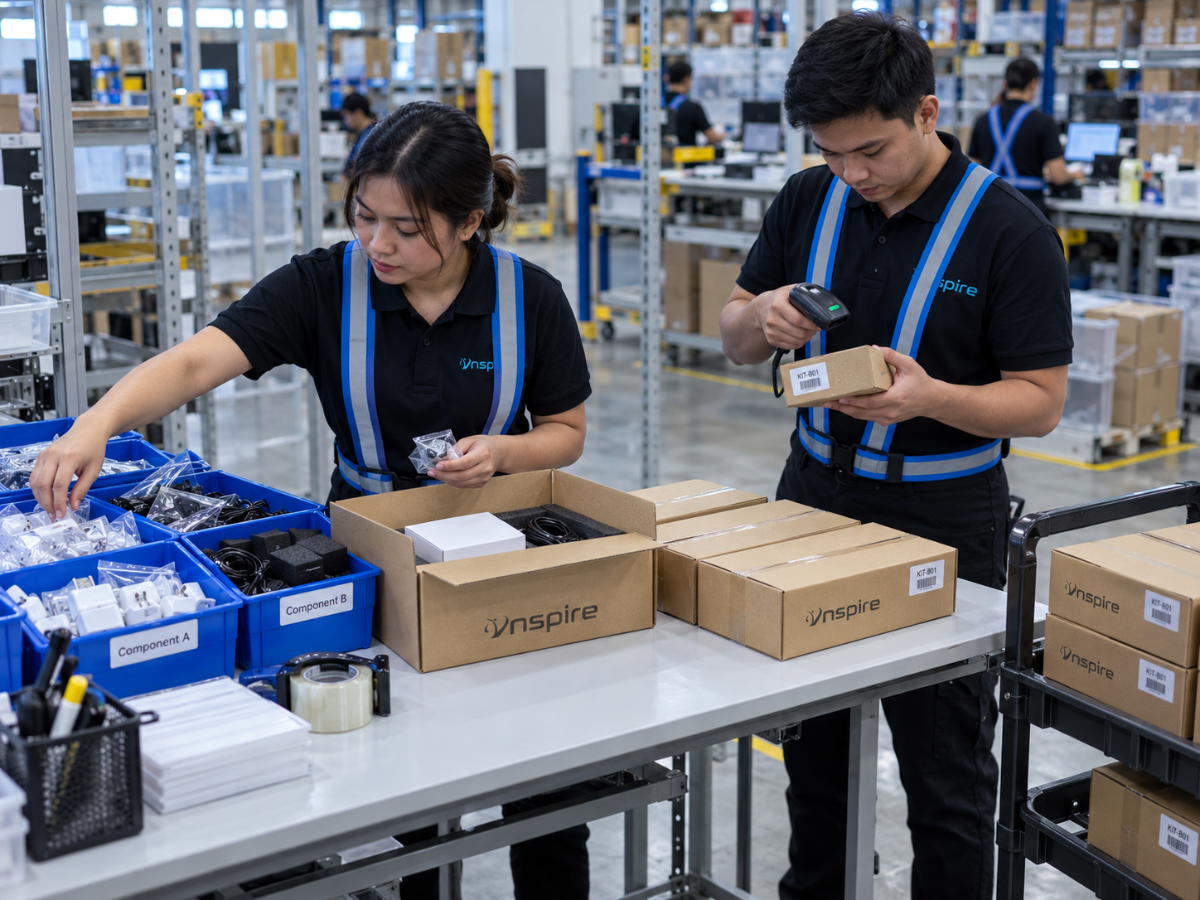
Warehouse teams often handle products that need to be grouped, assembled, or prepared before they are ready for storage or shipment. Without a consistent process, these tasks can create additional handling, increase the risk of missing components, and complicate inventory records.
Warehouse kitting helps organize these activities by grouping individual products or components into a prepared kit. Depending on the business, this may involve assembling product bundles, preparing subscription boxes, combining accessories with a main product, or organizing items for a specific order.
A clear kitting process can help businesses coordinate warehouse tasks, maintain more accurate inventory records, and prepare products more consistently. Understanding the process, benefits, and best practices can help ecommerce businesses determine how kitting fits into their broader warehouse operations.
Warehouse kitting is the process of grouping two or more products or components into one prepared kit. The items may be packaged together, assigned a shared identifier, or kept together in a designated location until they are needed for an order or another operational task.
For example, an ecommerce business selling a skincare set may combine a cleanser, moisturizer, and serum into one kit. A retailer selling electronic accessories might group a device with its compatible cables and other components. In both cases, the individual products are prepared as a set to make subsequent handling easier.
Kitting differs from simply storing multiple products in the same warehouse. It involves a defined process for identifying the required components, preparing the kit, verifying its contents, and recording relevant inventory changes.
Businesses may prepare kits in advance when demand is predictable or assemble them after receiving an order when product combinations vary. The best method depends on order patterns, available storage space, product requirements, and the time needed to prepare each kit.
The exact workflow varies by warehouse, product type, and business requirements. However, a consistent process typically includes the following steps.
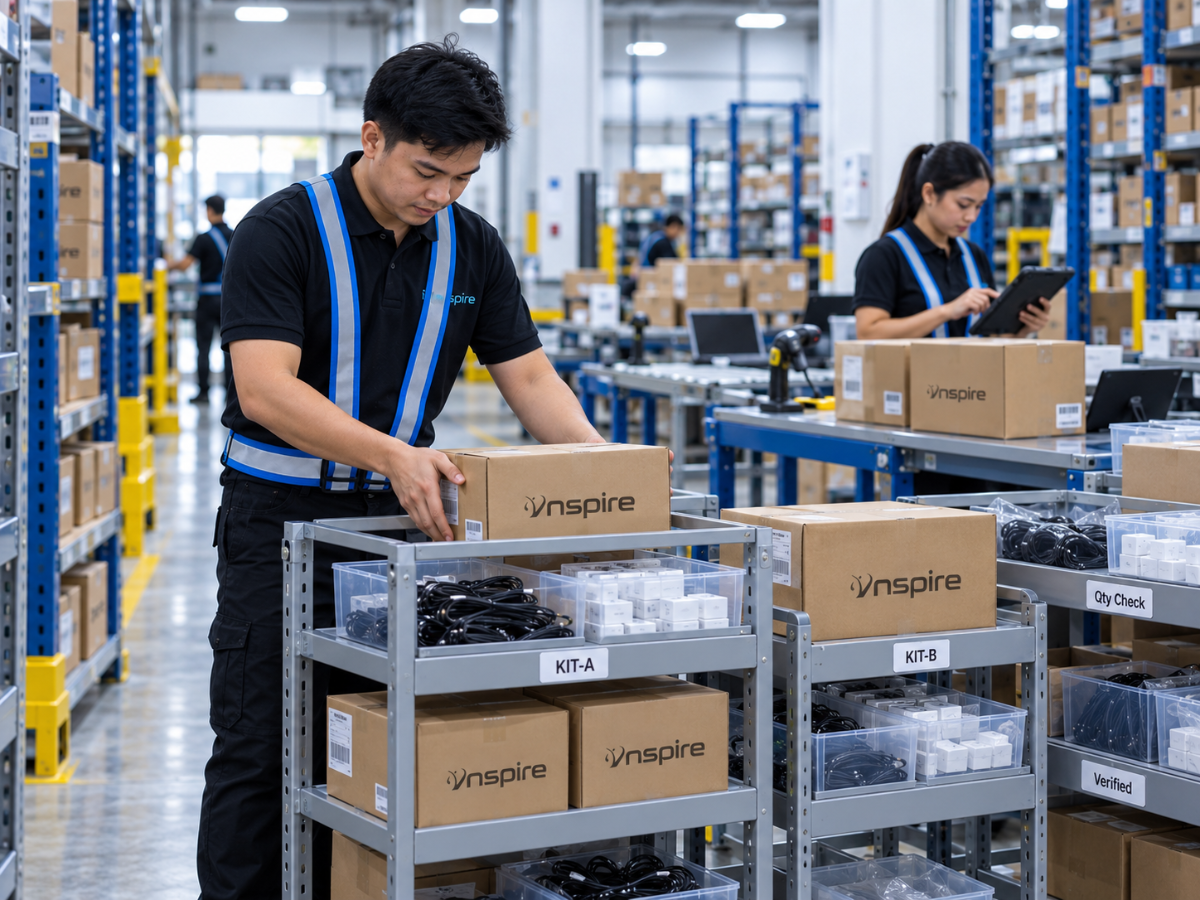
The process begins when individual products or components arrive at the warehouse or are selected from existing inventory. Staff verifies the items against receiving records, product specifications, or kit requirements.
Checking quantities and product condition at this stage helps prevent incorrect or damaged components from entering the kitting workflow. Any shortages or discrepancies should be recorded and resolved before assembly proceeds.
Once components are verified, warehouse staff move them to an appropriate staging area. Organizing items by kit type, product identifier, or assembly requirements can help reduce unnecessary movement and make components easier to locate.
The staging area should provide enough room for the required items and allow staff to distinguish between different kits. Clear labels and designated work areas can also reduce the risk of mixing components from separate product sets.
Staff combine the required products according to the kit specifications. These instructions should identify the correct components, quantities, packaging requirements, and any special handling procedures.
Standardized instructions are especially useful when a warehouse prepares multiple kit types or handles recurring orders. They help employees follow consistent steps rather than relying on memory or informal instructions.
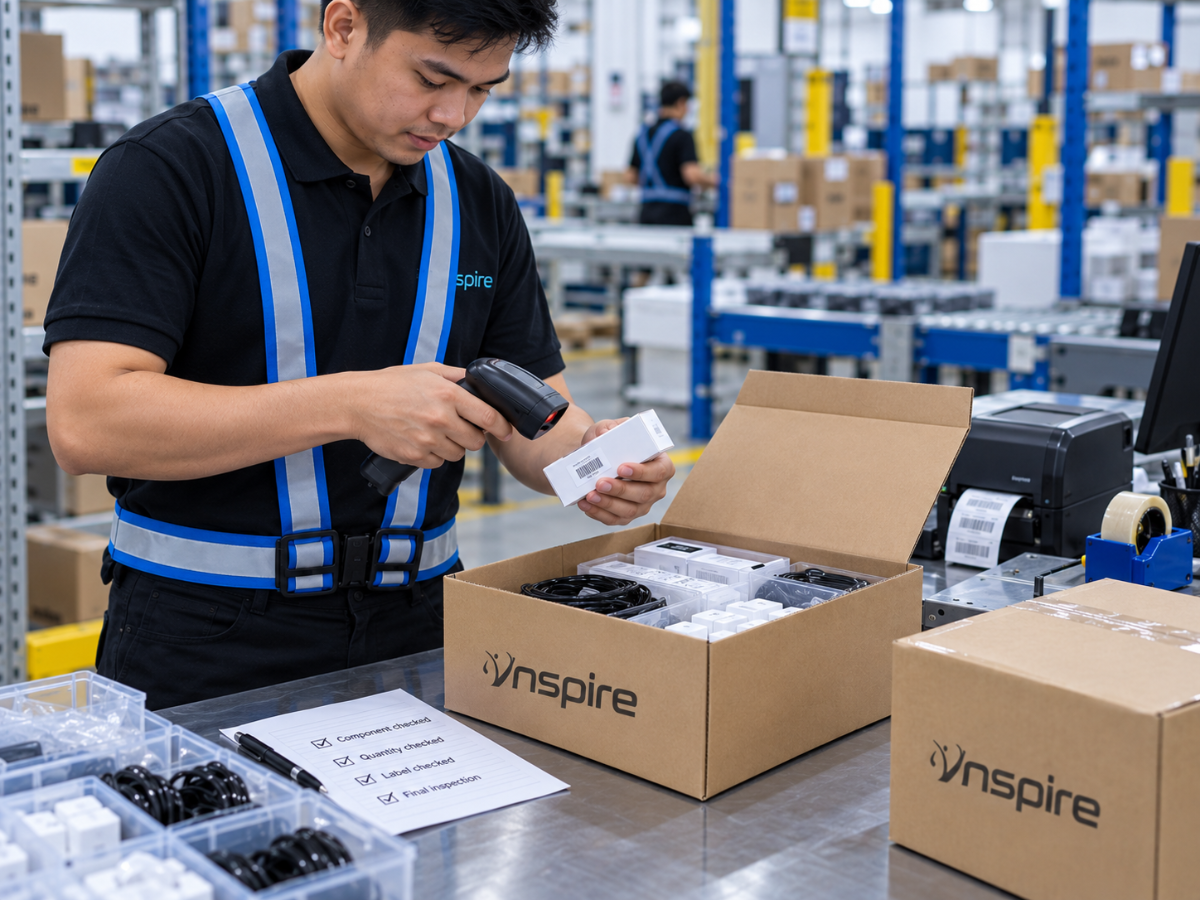
Before a kit moves to storage or shipment, staff verify that it contains the required products and quantities. Depending on the product, quality checks may also cover packaging condition, labeling, and the correct arrangement of components.
A final inspection can help identify missing or incorrect items before they reach the customer. The verification process should reflect the complexity and risk associated with each kit.
After assembly, the warehouse needs to record the relevant changes to inventory. This may involve reducing the quantities of individual components and recording the completed kit as a separate stock item, depending on how the business manages its inventory.
Accurate records help staff understand which components remain available and how many completed kits can be allocated to orders. Any damaged, unused, or excess components should also be handled according to established procedures.
Completed kits can be moved to a designated storage location, a picking area, or a packing station. The next step depends on whether the kits are prepared in advance or assembled for a specific customer order.
Clear location records help staff retrieve the correct kits later. If a kit is being shipped immediately, the warehouse can move it into the normal packing and dispatch workflow.

Warehouse kitting can improve warehouse operations by organizing product components, standardizing assembly steps, and reducing unnecessary handling. These improvements help staff prepare kits more consistently and coordinate kitting with other warehouse activities.
Grouping components and assigning clear assembly steps can make warehouse tasks easier to coordinate. Staff can work from defined instructions and designated staging areas rather than locating and combining products from different parts of the facility for every order.
This can be particularly useful when a business regularly sells the same product combinations. Preparing those combinations through a repeatable workflow can reduce unnecessary movement and help teams plan their work.
Kitting requires businesses to account for the components used in each prepared set. When inventory changes are recorded correctly, staff can maintain a clearer view of remaining component quantities and completed kits.
This supports inventory management by helping teams identify potential shortages, review discrepancies, and avoid allocating components that are no longer available. The benefit depends on accurate records and timely updates throughout the process.
Standardized instructions help employees assemble kits according to the same specifications. This can reduce variation in component quantities, packaging, and labeling, especially when multiple employees prepare the same products.
Consistent preparation can also make quality checks easier because staff know which components and requirements to verify before a kit is released.
When demand patterns support advance preparation, warehouse teams may be able to assemble frequently ordered kits before individual orders arrive. This can reduce the need to collect and combine the same components repeatedly during order processing.
However, preparing kits in advance requires suitable demand forecasts and storage planning. If product combinations change frequently or demand is unpredictable, assembling kits after an order is received may be more practical.
Completed kits can be stored, picked, and packed according to a defined workflow. This helps warehouse teams understand which items are ready for shipment and how kits should move through subsequent handling stages.
For ecommerce businesses, consistent preparation can support smoother coordination between inventory storage and order processing without removing the need for final order verification.
Kitting can improve organization, but poor planning or inconsistent procedures may introduce additional work. Recognizing common challenges helps businesses establish more reliable processes.
A kit may be incomplete if a required item is unavailable, picked incorrectly, or overlooked during assembly. Standardized component lists, clear labels, and final checks can help identify these problems before the kit moves forward.
If the quantities of individual components are not updated after assembly, the system may show more available stock than the warehouse actually holds. This can lead to shortages when staff prepare additional kits or fulfill other orders.
Businesses should establish clear rules for recording component usage, completed kits, damaged goods, and adjustments.
Kitting may require dedicated room for components, workstations, partially assembled kits, and completed sets. Without suitable space, the process can interfere with other warehouse activities or create confusion between kit types.
Businesses can review staging layouts, group frequently used components strategically, and schedule assembly activities to make better use of available space.
Promotions, seasonal offers, and product updates can change which items belong in a kit. Outdated instructions or labels may cause employees to assemble sets using incorrect components.
Kit specifications should be reviewed whenever product combinations, quantities, packaging, or other requirements change. Staff should have access to the current version of each instruction.
When employees use different methods to prepare the same kit, the results may vary in accuracy, packaging, and completion time. Documented instructions and regular training help establish a consistent standard.
Businesses should also review recurring errors and update procedures when checks reveal weaknesses in the workflow.
Businesses can make kitting easier to manage by establishing clear responsibilities, maintaining reliable inventory records, and reviewing performance regularly.
Document the required components, quantities, packaging, labels, and inspection steps for each kit type. Instructions should be easy for warehouse staff to follow and updated when product requirements change.
Arrange frequently used components in suitable locations near the kitting area when practical. Clear location labels and separation between different kit types can reduce unnecessary movement and help prevent items from being mixed.
Check the required items before assembly and confirm that each completed kit meets its specifications. Verification methods may include checklists, barcode scans, quantity checks, or visual inspections, depending on the products and available systems.
Record component usage and completed kits promptly. Establish procedures for handling shortages, damaged items, returns, and unused components so that inventory records remain consistent with physical stock.
Review sales patterns and order history to determine which kits may benefit from advance preparation. Frequently ordered, stable combinations may be suitable for pre-assembly, while less predictable kits may be better prepared after orders arrive.
Employees should understand the assembly requirements, quality checks, and inventory procedures for each kit. Reviewing common errors, rework, and preparation delays can help identify where additional training or process changes may be needed.
As products, order volumes, and warehouse layouts change, the kitting workflow may need adjustment. Periodic reviews can help businesses identify bottlenecks, improve staging arrangements, and determine whether current procedures continue to meet operational needs.

Technology can help warehouse teams maintain more consistent records as components move through receiving, storage, assembly, and fulfillment.
A warehouse management system may support inventory visibility by recording product quantities, storage locations, and stock movements. If the system supports kit-level functionality, it may also help businesses define component requirements, record assembly activity, and track completed kits.
Barcode scanning can help employees verify product identifiers and capture inventory movements. This can reduce reliance on manual data entry, although the results still depend on accurate labels, correct scanning practices, and suitable system configuration.
Integrations between warehouse and order management systems may also help coordinate available stock with incoming orders. Businesses should confirm that their systems support the specific kitting workflows and inventory records they need.
Technology alone does not guarantee accurate kitting. Clear procedures, trained employees, appropriate quality checks, and timely inventory updates remain essential. The best solution is one that supports the actual workflow rather than adding unnecessary steps.
Some businesses manage kitting internally, while others outsource kitting services as part of their warehousing and fulfillment arrangements. Outsourcing may be worth considering when kitting requires more space, labor, or coordination than the business can manage efficiently. It may also be useful when order volumes fluctuate, product bundles become more complex, or the company wants to coordinate kitting with other warehouse activities.
Before choosing a provider, businesses should review its capabilities, including:
Businesses should also clarify how inventory updates are shared, how kit specifications are maintained, and how errors or discrepancies are resolved. These details help determine whether a provider can support the business’s operational requirements.
3PL warehousing may be worth evaluating when a business wants to coordinate storage, kitting, and fulfillment through one provider. The suitability of this option depends on service scope, product requirements, order volume, and the provider’s actual capabilities.
Products commonly sold together or requiring preparation as a set may be suitable for kitting. Examples include subscription boxes, promotional bundles, gift sets, and products packaged with accessories. Suitability depends on demand patterns, component availability, packaging requirements, and how frequently the product combination changes.
The decision depends on demand, storage capacity, and how stable the product combination is. Frequently ordered kits with predictable demand may be prepared in advance. Kits with uncertain demand or frequently changing components may be more practical to assemble after an order is received.
Kitting requires businesses to account for the components used and the kits produced. Accurate records help teams understand remaining component quantities, track completed kits, and investigate discrepancies. The exact inventory process depends on how the business records and manages kit items in its system.
Teams can use standardized assembly instructions, clear component labels, verification checks, and timely inventory updates. Final inspections can help identify missing or incorrect items before kits move to storage or shipment. Staff training and regular reviews can also reveal recurring problems.
Outsourcing may be worth considering when internal teams lack sufficient space, labor, or processes to manage kitting efficiently. Businesses should compare internal costs and capabilities with a provider’s service scope, inventory controls, quality procedures, and ability to coordinate kitting with other warehouse activities.
Warehouse kitting gives businesses a structured way to group products, prepare kits, and coordinate inventory before storage or shipment. With clear assembly instructions, accurate records, and consistent quality checks, teams can reduce avoidable errors and make better use of warehouse resources.
The process works best when component handling, assembly, inventory updates, and subsequent fulfillment activities are coordinated. Businesses should review their product requirements, demand patterns, and existing systems to determine how kitting can support their operations.
For businesses that need support with warehousing and fulfillment, evaluating a provider’s kitting procedures, inventory visibility, and technology capabilities can help identify whether its services fit their requirements.
Inspire E-Commerce Solutions Inc.
Warehouse 4 & 5, C Teknik Industrial, 143 P. Gregorio Street, Valenzuela,
1442 Metro Manila
inspiresolutions.asia
