
Modern ecommerce businesses operate in an environment where speed, accuracy, and coordination determine success. Orders are processed across multiple channels, inventory changes in real time, and customer expectations continue to rise. Managing all of this through separate tools often leads to delays, errors, and inefficiencies.
This is where ecommerce ERP software becomes essential. It provides a centralized system that connects core business functions such as order processing, inventory control, fulfillment, and reporting. Instead of operating in silos, every department works within one unified platform.
As ecommerce operations scale, the complexity increases. Businesses must manage higher order volumes, multiple sales channels, and faster fulfillment cycles. Without integration, this leads to mismatched data and operational bottlenecks. ERP systems solve this by ensuring that all processes are connected and updated in real time.
Ecommerce ERP software is a centralized system designed to manage and integrate all key business processes involved in online retail operations. It acts as the backbone of ecommerce infrastructure by connecting data across departments.
A typical ecommerce ERP system includes:
The primary goal is to eliminate disconnected systems and replace them with a single source of truth. This allows businesses to operate more efficiently, reduce manual work, and improve decision-making accuracy.
In fast-moving ecommerce environments, having real-time visibility across operations is critical. ERP systems make this possible by synchronizing data instantly across all connected functions.
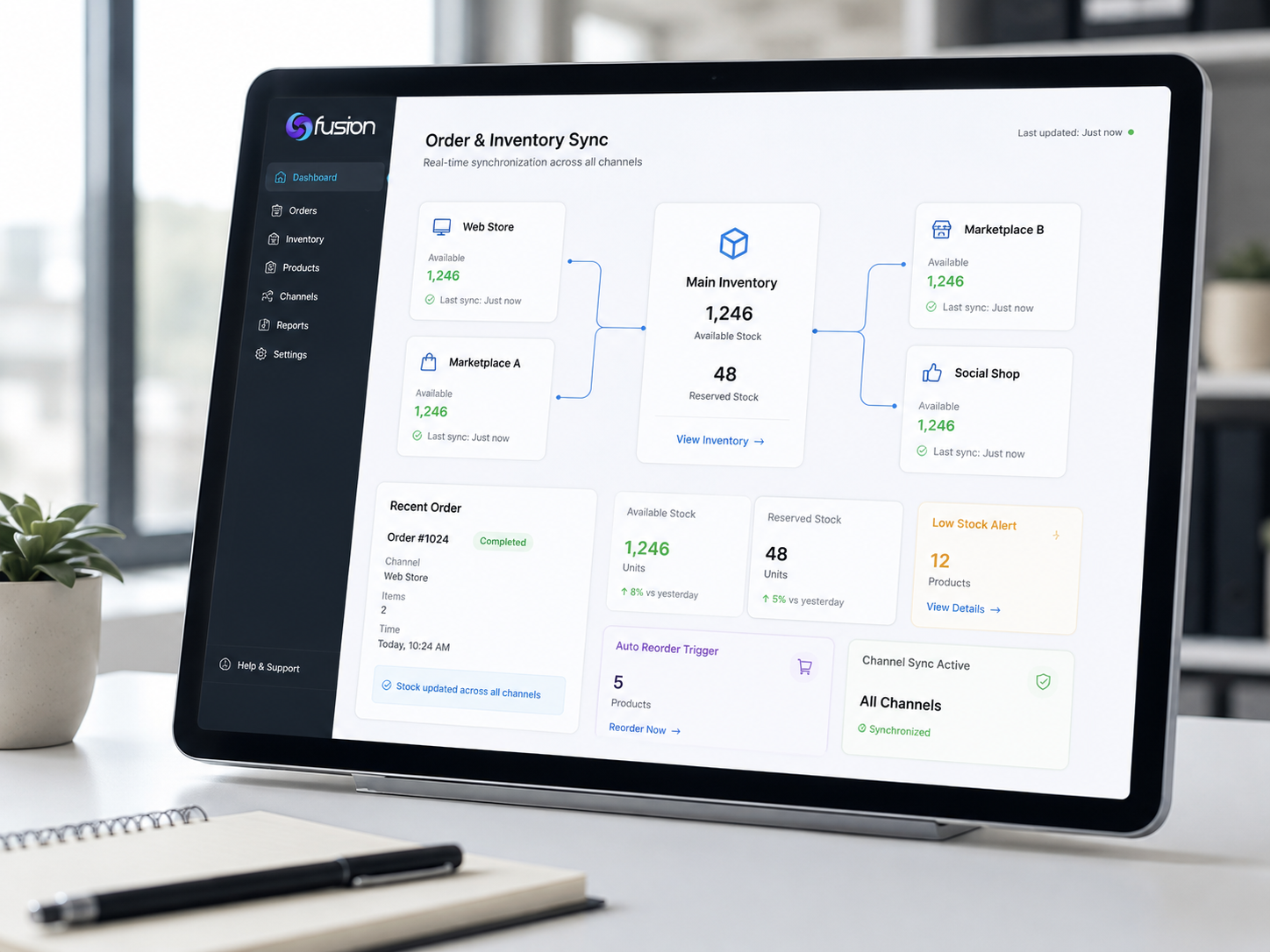
An order management system ecommerce is a core component of ERP platforms. It handles the complete lifecycle of an order from placement to fulfillment.
When a customer places an order, the system immediately:
Once the order is processed, updates are reflected across all connected systems in real time.
Without an integrated order management system, businesses often face:
When embedded in ecommerce ERP software, the order management system ensures smooth coordination between sales, warehouse, and logistics teams. This leads to faster processing times and improved customer satisfaction.

An order and inventory management system ensures that stock levels and order flows remain aligned across all sales channels.
Every time an order is placed, inventory is automatically updated. This prevents overselling and ensures accurate stock visibility across platforms.
Many ecommerce businesses sell through multiple channels such as marketplaces, websites, and social media platforms. Integrated systems ensure that inventory remains consistent across all of them.
The system can trigger alerts when stock levels fall below a certain threshold. This allows businesses to restock in advance and avoid disruptions.
Without integration, businesses may experience:
With an integrated system, these risks are significantly reduced, improving overall operational efficiency.
The implementation of ecommerce ERP software provides measurable improvements across multiple areas of business performance.
All business data is stored in a single system. This eliminates duplication and ensures that every department works with accurate and consistent information.
Orders move through automated workflows, reducing delays between order placement and shipment.
Real-time updates ensure that inventory data is always current, reducing errors in stock management.
ERP systems provide detailed insights into sales performance, inventory turnover, and operational efficiency. This helps businesses make data-driven decisions.

One of the most important features of ecommerce ERP software is workflow automation.
Automation reduces manual workload and improves consistency across operations. It also minimizes human error, which is common in manual processing environments.
As order volumes increase, automation becomes essential for maintaining efficiency and scalability.
Businesses that operate without integrated systems often face significant challenges:
Separate systems often produce conflicting data, leading to confusion and errors.
Manual processes slow down order fulfillment and inventory updates.
Without centralized data, it becomes difficult to track performance across departments.
Manual entry increases the likelihood of mistakes in order processing and inventory management.
These challenges directly affect customer satisfaction and overall profitability.

As ecommerce businesses grow, operational demands increase significantly. More orders, more customers, and more sales channels require stronger infrastructure.
Ecommerce ERP software supports scalability by:
This allows businesses to expand without sacrificing operational control or accuracy.
Modern ERP systems are not standalone tools. They integrate with various other platforms to create a connected ecosystem.
Common integrations include:
This integration ensures seamless data flow across all business functions.
When combined with an order and inventory management system, ERP becomes the central hub of ecommerce operations.
The use of ecommerce ERP software leads to measurable improvements in performance:
These improvements collectively contribute to stronger business performance and increased competitiveness in the ecommerce market.
Ecommerce ERP software serves as the foundation of modern online business operations by connecting order management, inventory control, and business analytics into a unified system.
Through the use of an order management system ecommerce, businesses can efficiently process orders from multiple channels. At the same time, an order and inventory management system ensures accurate stock levels and prevents fulfillment issues.
By integrating these functions, ecommerce ERP systems improve efficiency, reduce errors, and support scalable growth. In a highly competitive digital marketplace, system integration is no longer optional. It is a critical requirement for sustainable success.
