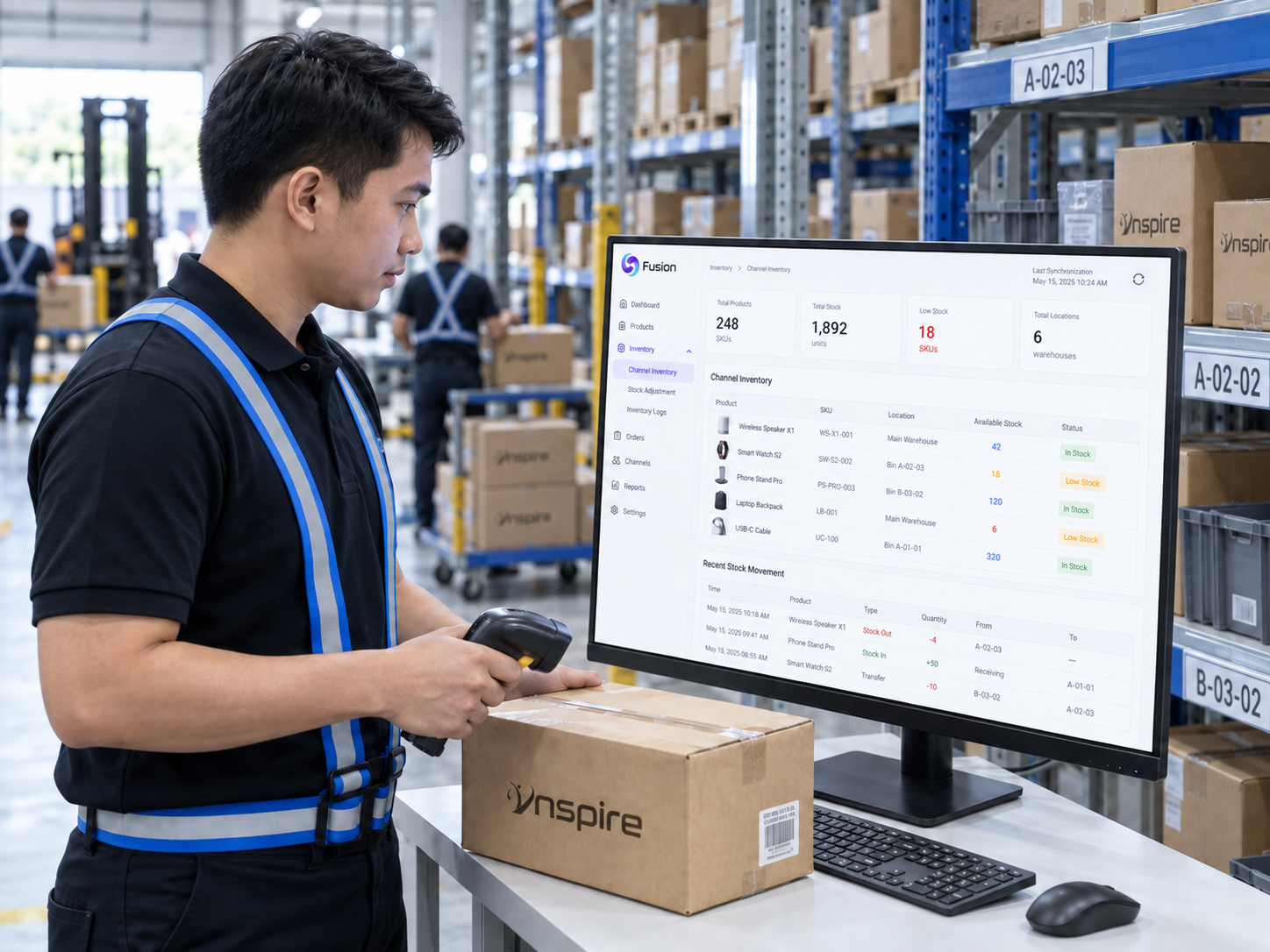
Inventory tracking is an important part of managing an ecommerce business and maintaining accurate stock information. As businesses sell through multiple channels and manage larger product ranges, keeping track of what is available, where it is stored, and how quickly it is moving becomes more difficult.
Without reliable inventory information, businesses may face problems such as inaccurate stock counts, overselling, misplaced products, delayed fulfillment, and unnecessary purchases. These issues can become more difficult to manage when inventory is spread across different sales channels or warehouse locations.
Effective inventory tracking gives ecommerce teams a clearer view of stock as products move through receiving, storage, sales, fulfillment, and returns. It can also help businesses make better purchasing decisions and maintain more organized warehouse operations.
This is the process of monitoring products as they enter, move through, and leave a business’s inventory.
For ecommerce businesses, this can include recording when products are received, where they are stored, how many units are available, when orders are placed, and how stock changes after picking, dispatch, returns, or adjustments.
The purpose is not simply to maintain a product count. Businesses also need reliable information about where products are located and how stock moves throughout the operation.
For example, a business may have 500 units of a product across two warehouse locations. Knowing the total quantity is useful, but knowing how many units are available at each location can be just as important when orders need to be fulfilled.
Maintaining reliable inventory records can give ecommerce teams a clearer understanding of available stock and help them make decisions based on current information.
Ecommerce businesses can manage hundreds or thousands of units across multiple sales channels. Without reliable stock information, even small inventory discrepancies can affect daily operations.
One of the most common problems is selling products that are no longer available. If stock information is not updated accurately, a customer may place an order for a product that has already sold out.
Reliable inventory records can also help businesses identify fast-moving products, slow-moving items, and stock that has remained in storage longer than expected.
Better inventory management can support:
For growing businesses, having dependable inventory information can make it easier to manage increasing order volumes without relying entirely on manual records.
The information businesses track will depend on their products and operations, but several data points are particularly useful.
Each product should have clear identifying information so warehouse and ecommerce teams can distinguish between similar items.
SKU information can help teams identify products, variants, sizes, colors, or other characteristics when stock is received, stored, picked, and counted.
Businesses need to know how many units are available, reserved, damaged, returned, or otherwise unavailable for sale.
Keeping these quantities accurate helps teams understand what can actually be sold.
Tracking where products are stored can make warehouse operations more efficient.
Knowing the location of a product can reduce time spent searching for items and make picking easier.
Businesses can also monitor how inventory changes over time.
This may include incoming stock, customer orders, transfers between locations, returns, adjustments, and other inventory movements.
For some products, businesses may need to maintain additional information about where inventory came from and how it moved through the operation.
This is particularly relevant when product traceability requirements are important.

An effective tracking process should follow inventory throughout its lifecycle.
When products arrive, the business records the items received and checks them against the expected shipment or purchase information.
Products can be identified using SKUs, barcodes, labels, or other inventory records.
Inventory is placed in designated warehouse locations so teams know where products are stored.
Inventory records are updated after products are received and stored so the available stock reflects the latest quantities.
When customers place orders, the system should account for the inventory allocated to those orders.
Warehouse teams pick the required items and prepare them for dispatch. Inventory records should reflect the stock that has been picked and dispatched.
Returned products, damaged items, stock transfers, and inventory adjustments should also be recorded so the available quantity remains accurate.
This process creates a consistent record of inventory as it moves through the business.
Products are easier to manage when they are properly organized within the warehouse.
Inventory organization involves creating a structured approach to where and how products are stored. This can include assigning specific locations, labeling storage areas, separating product types, and maintaining consistent records.
An organized warehouse can make it easier to:
Product placement can also be influenced by demand. Frequently ordered products may be positioned where they are easier to access, while less frequently ordered products can be stored in locations that make better use of available space.
Good organization also supports accurate inventory records. Clear physical locations make products easier to identify and count, while consistent records help teams understand what should be stored in each location.

Batch tracking allows businesses to identify and monitor products that belong to a specific batch or lot.
This can be particularly useful for products where the production batch, manufacturing date, expiration date, or other batch-specific information matters.
For example, a business selling products with expiration dates may need to know which units came from a particular batch and where those products are currently stored.
Batch tracking can support:
Not every ecommerce business needs detailed batch information for every product. However, where batch-level information is relevant, keeping those records accurate can provide greater control over inventory.
Product traceability provides visibility into the movement and history of a product throughout the supply and fulfillment process.
Depending on the business, this may include information about when a product was received, where it was stored, which batch it belongs to, and how it moved through the warehouse.
Traceability can be particularly important when businesses need to investigate inventory issues or identify products affected by a specific batch or supplier.
For ecommerce operations, maintaining reliable records can make it easier to determine where products came from and where they have moved.
This information can also support more accurate inventory reviews and help teams respond more effectively when products need to be identified, separated, returned, or removed from sale.
Many ecommerce businesses sell through more than one channel. Products may be available through an online store, marketplaces, social commerce platforms, or other sales channels.
Managing inventory separately across these channels can create inconsistencies.
For example, a business may have 100 units available but receive orders from several channels at nearly the same time. If inventory information is not updated consistently, more products could be sold than are actually available.
Centralized inventory information can help businesses maintain a more consistent view of available stock.
Instead of relying on separate records for each channel, teams can use shared inventory information to monitor stock movement and make adjustments as orders are processed.
This can be particularly important for businesses with high order volumes or frequently changing stock levels.
Even businesses with established inventory processes can experience tracking problems.
Manual updates can take time and create opportunities for errors, especially when inventory changes frequently.
Physical stock may sometimes differ from recorded inventory because of damaged products, incorrect counts, receiving errors, or unrecorded adjustments.
Managing stock across multiple channels can make it harder to maintain consistent information.
When products are not stored in clearly defined locations, finding and counting inventory can become more difficult.
If stock information is updated after a delay, teams may make purchasing or fulfillment decisions based on outdated information.
When inventory information is spread across separate systems or records, businesses may not have a complete view of current stock.
Addressing these problems requires both reliable processes and accurate inventory information.
An inventory tracking system is a tool or combination of processes used to record and monitor inventory information.
Depending on the business, it may track stock quantities, product locations, orders, inventory movement, warehouse activity, and other information.
Smaller businesses may manage inventory through spreadsheets or manual records. As operations grow, however, maintaining accurate information across multiple channels and warehouse locations can become increasingly difficult without a centralized system.
A centralized system can bring inventory information together so teams have a more consistent view of available stock.
More advanced platforms may also support barcode scanning, automated inventory updates, warehouse processes, order management, and integrations with ecommerce platforms.
The right setup will depend on the size of the business, number of products, sales channels, warehouse requirements, and order volume.
Maintaining accurate stock information can support ecommerce operations in several ways.
Reliable records can help businesses maintain a closer match between physical stock and recorded inventory.
Knowing current stock levels and product movement can help teams determine when additional inventory may be needed.
Consistent inventory updates can reduce the risk of selling products that are no longer available.
Knowing where products are stored can make picking and order preparation easier for warehouse teams.
A centralized view can help teams understand stock levels across locations and sales channels.
Consistent records make it easier to identify unusual stock movements, discrepancies, and products that may require attention.
Businesses can improve their inventory processes by establishing consistent practices.
SKUs, product names, variants, and other identifying information should be recorded consistently across inventory and ecommerce systems.
Products should have clearly defined storage locations that are reflected in inventory records.
Inventory information should be updated as products are received, sold, moved, returned, or adjusted.
Regular physical counts can help identify differences between recorded and actual inventory.
Businesses should review which products are selling quickly, which are slowing down, and where inventory is accumulating.
Where products require batch or traceability information, businesses should maintain the records needed to identify and monitor those products.
Businesses selling through multiple channels should evaluate stock information across the entire operation rather than relying on individual channel records.
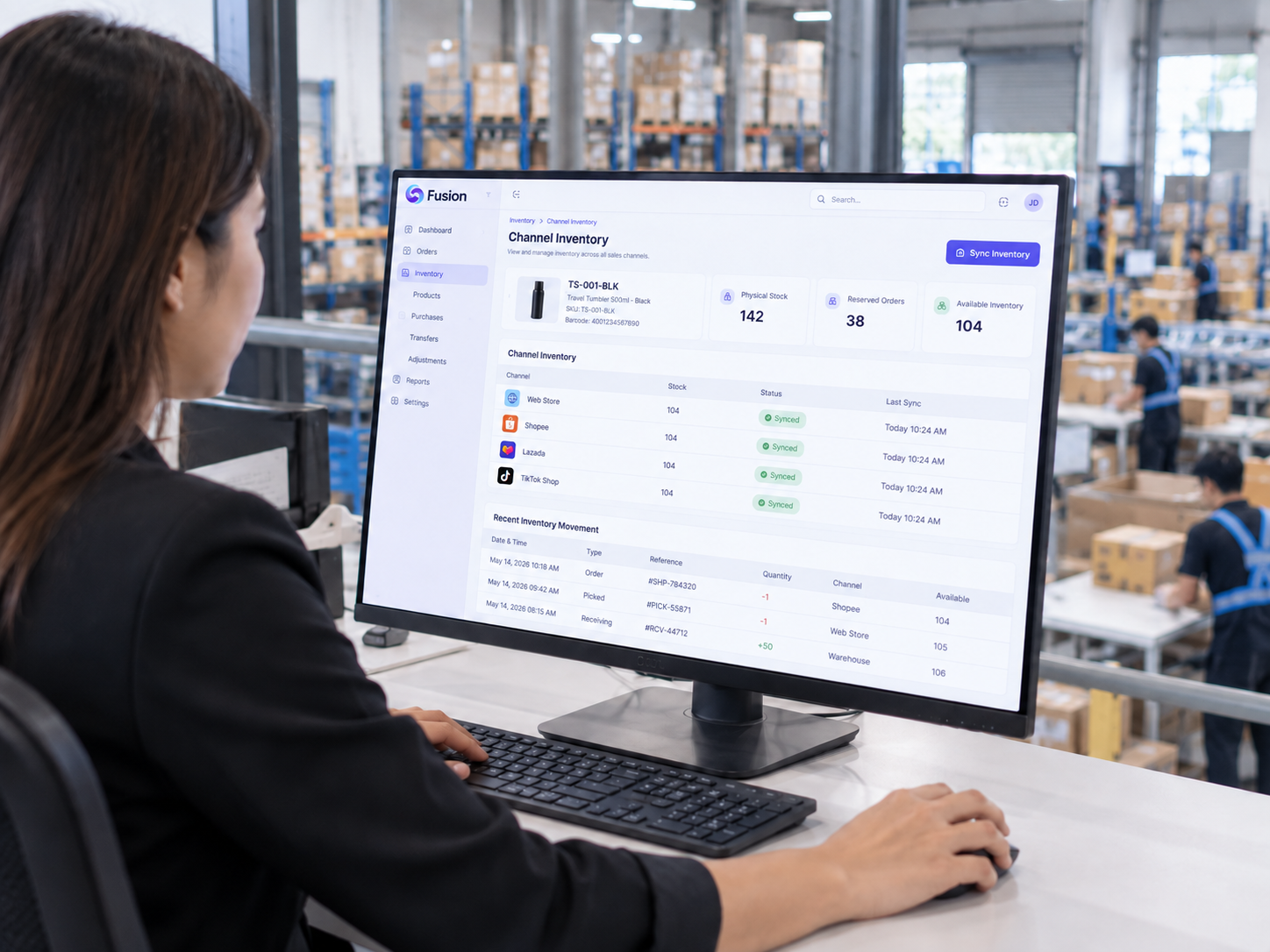
Technology can make inventory management easier by bringing together information that would otherwise be maintained across separate records.
A centralized system can provide information about stock levels, orders, warehouse activity, and product movement in one place.
Barcode-based processes can also reduce manual entry by allowing products to be scanned as they are received, stored, picked, or dispatched.
For businesses managing multiple sales channels, connected systems can help maintain more consistent inventory information as orders are processed.
Technology does not remove the need for accurate warehouse processes or regular inventory reviews. Instead, it gives teams better information to support those processes.
With reliable inventory data, businesses can make more informed decisions about purchasing, storage, fulfillment, and stock management.
As ecommerce operations grow, inventory management can become more difficult to handle internally.
Businesses may need to coordinate product receiving, warehouse storage, inventory records, order fulfillment, returns, and multiple sales channels at the same time.
Reliable warehousing and fulfillment support can help businesses maintain organized storage and accurate inventory processes as order volumes increase.
The right fulfillment operation should provide clear processes for receiving, storage, picking, packing, dispatch, and inventory management.
When warehouse operations and inventory information work together, businesses have a stronger foundation for maintaining accurate stock records and fulfilling customer orders reliably.

Inventory tracking is not simply about counting products. It is about maintaining reliable information as inventory moves through the ecommerce operation.
From receiving and storage to orders, fulfillment, returns, and adjustments, each movement can affect the accuracy of available stock.
Businesses can improve inventory control by maintaining organized warehouse locations, monitoring stock movement, using appropriate batch and traceability records, and keeping information consistent across sales channels.
A centralized system can make these processes easier to manage by giving teams a clearer view of current inventory information.
For growing ecommerce businesses, accurate inventory records can support better purchasing decisions, more reliable fulfillment, and greater control over day-to-day operations.
Inspire E-Commerce Solutions Inc.
Warehouse 4 & 5, C Teknik Industrial, 143 P. Gregorio Street, Valenzuela,
1442 Metro Manila
inspiresolutions.asia
