
Accurate product information is one of the foundations of a successful ecommerce business. Every product title, description, image, specification, and price influences how customers discover products, compare options, and make purchasing decisions.
As businesses expand across ecommerce websites, online marketplaces, and social commerce platforms, maintaining consistent product information becomes increasingly complex. Product updates must be reflected across multiple channels while ensuring customers receive accurate and reliable information regardless of where they shop.
Without a structured approach, businesses may encounter inconsistent listings, outdated product details, pricing discrepancies, and duplicate information that affect both customer confidence and operational efficiency.
Product information management helps businesses organize, maintain, and distribute product data across multiple sales channels from a centralized source. By creating a more consistent approach to managing product information, businesses can improve operational accuracy while supporting a better customer experience.
This article explores how product information management strengthens marketplace optimization, supports unified commerce, and helps ecommerce businesses deliver consistent product experiences across every sales channel.
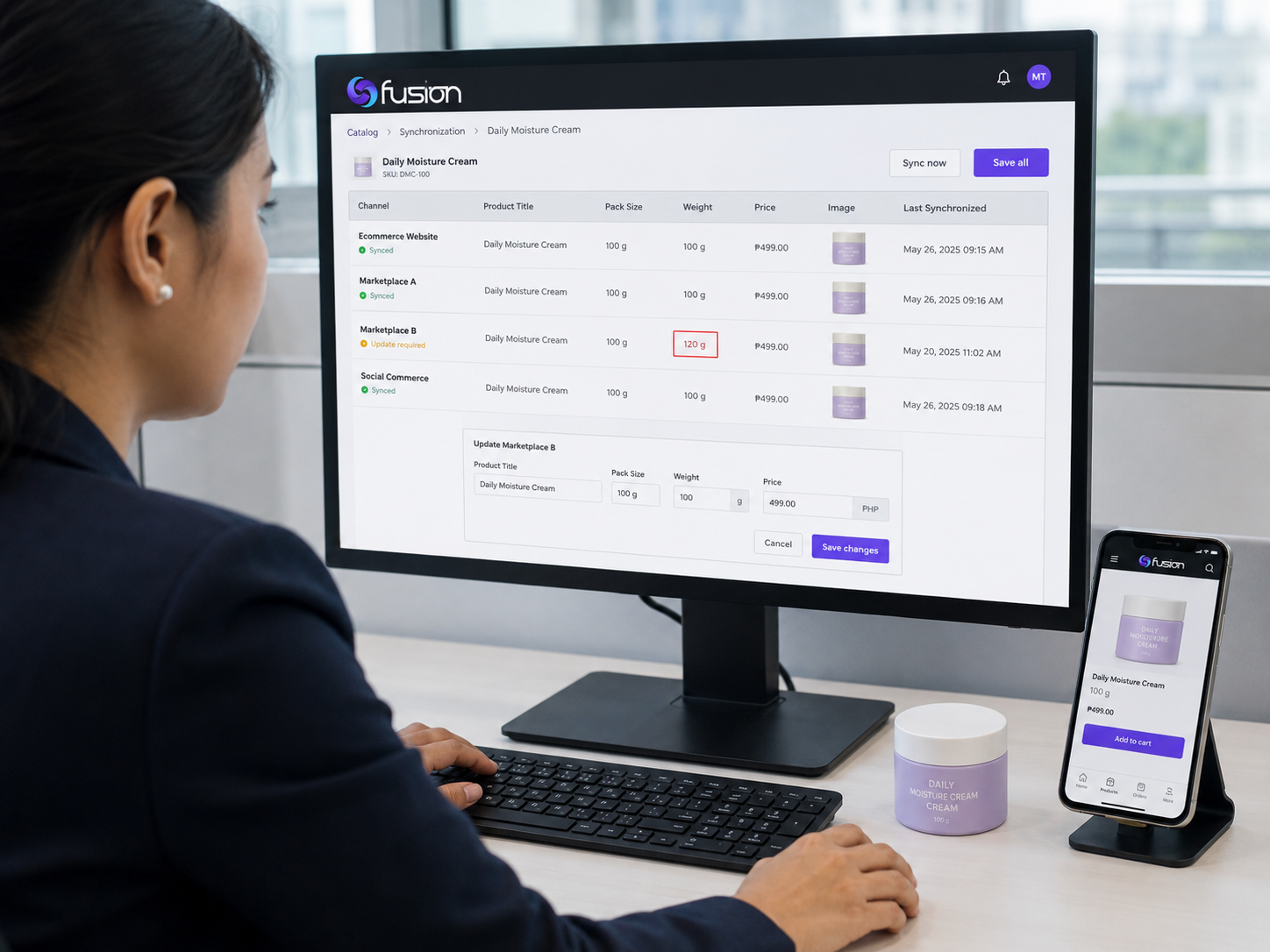
Customers expect accurate information regardless of where they purchase a product. Whether shopping through an ecommerce website, an online marketplace, or a social commerce platform, they expect product details to remain consistent.
Maintaining this consistency becomes more difficult as businesses introduce new products, expand into additional marketplaces, or update existing product catalogs.
Product data typically includes:
When this information is managed separately for each sales channel, inconsistencies can quickly develop.
For example, a product description may be updated on an ecommerce website but remain outdated on an online marketplace. Pricing may differ between platforms, or product specifications may be incomplete on one channel while remaining accurate on another.
Centralizing product information helps reduce these inconsistencies while improving operational efficiency across multiple sales channels.

Customers rely on product information to make confident purchasing decisions.
Clear descriptions, accurate specifications, high-quality images, and consistent pricing help customers better understand what they are buying before completing a purchase.
When product information varies between sales channels, customers may become uncertain about product quality or question the accuracy of the listing.
Consistent product information helps businesses:
Providing reliable product information across every sales channel also creates a more consistent shopping experience. When customers encounter the same product details regardless of where they shop, they can make purchasing decisions with greater confidence while developing stronger trust in the business.
As customer expectations continue to evolve, maintaining accurate product information remains an important part of delivering a consistent ecommerce experience.
Selling across multiple online marketplaces allows businesses to reach more customers, but it also increases the complexity of managing product catalogs.
Each marketplace may have different listing requirements, image specifications, category structures, and product attributes.
Without consistent product data, businesses may spend significant time manually updating listings while increasing the likelihood of errors.
Marketplace optimization becomes more effective when product information is managed through a centralized process.
Benefits include:
By reducing manual administration, businesses can improve efficiency while maintaining a consistent customer experience across multiple sales channels.

As ecommerce businesses continue expanding into websites, marketplaces, social commerce platforms, and physical retail locations, maintaining consistent product information becomes increasingly important.
Unified commerce connects these channels by allowing product data to flow across integrated systems rather than being managed independently.
When product information is updated centrally, changes can be reflected more consistently throughout connected sales channels.
This helps support:
Maintaining connected product information also supports other business functions, including inventory management, order processing, and customer service.
Well-organized product data supports more than customer-facing product listings. It also improves internal operations by giving different teams access to accurate and consistent information.
When sales, marketing, inventory, and fulfillment teams work from the same product data, everyday tasks become more efficient. Updates can be applied from a centralized source instead of being entered separately across multiple platforms, helping reduce repetitive work and minimize errors.
Better product data also supports:
As product catalogs continue to grow, having reliable product data becomes increasingly important for maintaining efficient ecommerce operations.
Selling through multiple ecommerce channels creates growth opportunities, but it also increases the complexity of maintaining accurate product information.
Product descriptions, specifications, pricing, and images may vary between sales channels when updates are managed separately.
These inconsistencies can create confusion for customers and affect confidence during the purchasing process.
Managing multiple catalogs manually often results in duplicate product entries or conflicting information across different platforms.
Duplicate records make product maintenance more time-consuming while increasing the likelihood of errors.
Updating product information individually across several marketplaces and ecommerce platforms requires significant administrative effort.
As product catalogs expand, manual updates become more difficult to manage and increase the risk of outdated information remaining on certain channels.
Without standardized processes, different departments may work with different versions of the same product information.
This can affect marketing campaigns, inventory planning, customer support, and fulfillment operations, making it harder to maintain consistency throughout the business.

Maintaining accurate product information requires both connected technology and well-defined operational procedures.
Keeping product data in a centralized location allows businesses to manage updates more efficiently while reducing duplicate work across multiple sales channels.
Centralized information also helps maintain greater consistency throughout the product catalog.
Establishing consistent guidelines for product titles, descriptions, specifications, categories, and images helps improve data quality across the business.
Standardized product information also simplifies future catalog updates.
Automation reduces the need to update product information manually across multiple ecommerce platforms.
Synchronizing product data between connected systems helps improve efficiency while reducing the likelihood of inconsistencies.
Product information should be reviewed periodically to ensure listings remain accurate and complete.
Regular quality checks help identify outdated details, pricing discrepancies, missing product attributes, or inconsistent descriptions before they affect customers.
As businesses introduce new products, expand into additional marketplaces, or increase the size of their product catalog, maintaining reliable product information becomes increasingly important.
A structured approach to managing product data helps businesses adapt to growth without significantly increasing manual administrative work.
Reliable product information also supports future technology initiatives, including connected commerce platforms, integrated inventory management, and automated order processing.
By building strong product data processes today, businesses are better prepared to scale their ecommerce operations while maintaining consistency across every customer touchpoint.
Accurate product data plays an important role in every stage of the ecommerce journey. From helping customers make informed purchasing decisions to supporting inventory, order processing, and marketplace management, consistent information contributes to smoother day-to-day operations and a better overall customer experience.
Product information management provides businesses with a structured approach to maintaining accurate product details across multiple sales channels. When combined with marketplace optimization and unified commerce, it helps create more connected ecommerce operations while reducing manual work and improving data consistency.
As ecommerce businesses continue to grow, investing in reliable product data processes can support greater operational efficiency, improve collaboration between teams, and create a stronger foundation for long-term success.
Inspire E-Commerce Solutions Inc.
Warehouse 4 & 5, C Teknik Industrial, 143 P. Gregorio Street, Valenzuela,
1442 Metro Manila
inspiresolutions.asia
