
Maintaining the right inventory levels has become increasingly challenging for ecommerce businesses. Customer demand can change quickly, seasonal trends influence purchasing behavior, and selling across multiple channels makes inventory planning more complex than ever.
Keeping too much inventory ties up valuable capital and increases storage costs, while insufficient stock can lead to missed sales opportunities and disappointed customers. Finding the right balance requires more than relying on past sales or manual forecasting.
Predictive inventory planning helps businesses make more informed inventory decisions by using historical sales data, purchasing patterns, and operational insights to anticipate future demand. Instead of reacting to inventory shortages or excess stock after they occur, businesses can plan and improve overall inventory management.
This article explores how predictive inventory planning supports inventory accuracy, strengthens omnichannel inventory management, and helps businesses make better inventory decisions while supporting long-term operational growth.
Many businesses still rely on spreadsheets, manual forecasting, or previous sales performance when planning inventory purchases. While these methods may provide a basic understanding of demand, they often struggle to keep pace with changing customer behavior and rapidly evolving market conditions.
Demand can fluctuate because of seasonal promotions, new product launches, changing buying habits, or expansion into additional sales channels. Relying solely on historical sales may not provide enough information to support timely purchasing decisions.
A more proactive planning approach allows businesses to evaluate multiple factors when determining future inventory needs. Looking beyond past sales helps improve purchasing decisions while reducing the likelihood of inventory shortages or unnecessary overstock.
As ecommerce operations continue to grow, businesses benefit from planning methods that adapt to changing demand instead of simply reacting to it.

Reliable inventory planning begins with accurate inventory records.
When businesses have a clear understanding of available stock, they can make better purchasing decisions, maintain appropriate inventory levels, and reduce operational disruptions.
Inventory accuracy supports better planning by ensuring inventory records closely reflect actual stock availability.
Accurate inventory information helps businesses:
Maintaining accurate inventory data also allows businesses to identify inventory trends more effectively, making future planning decisions more reliable.
As inventory accuracy improves, businesses gain greater confidence when forecasting future inventory requirements.
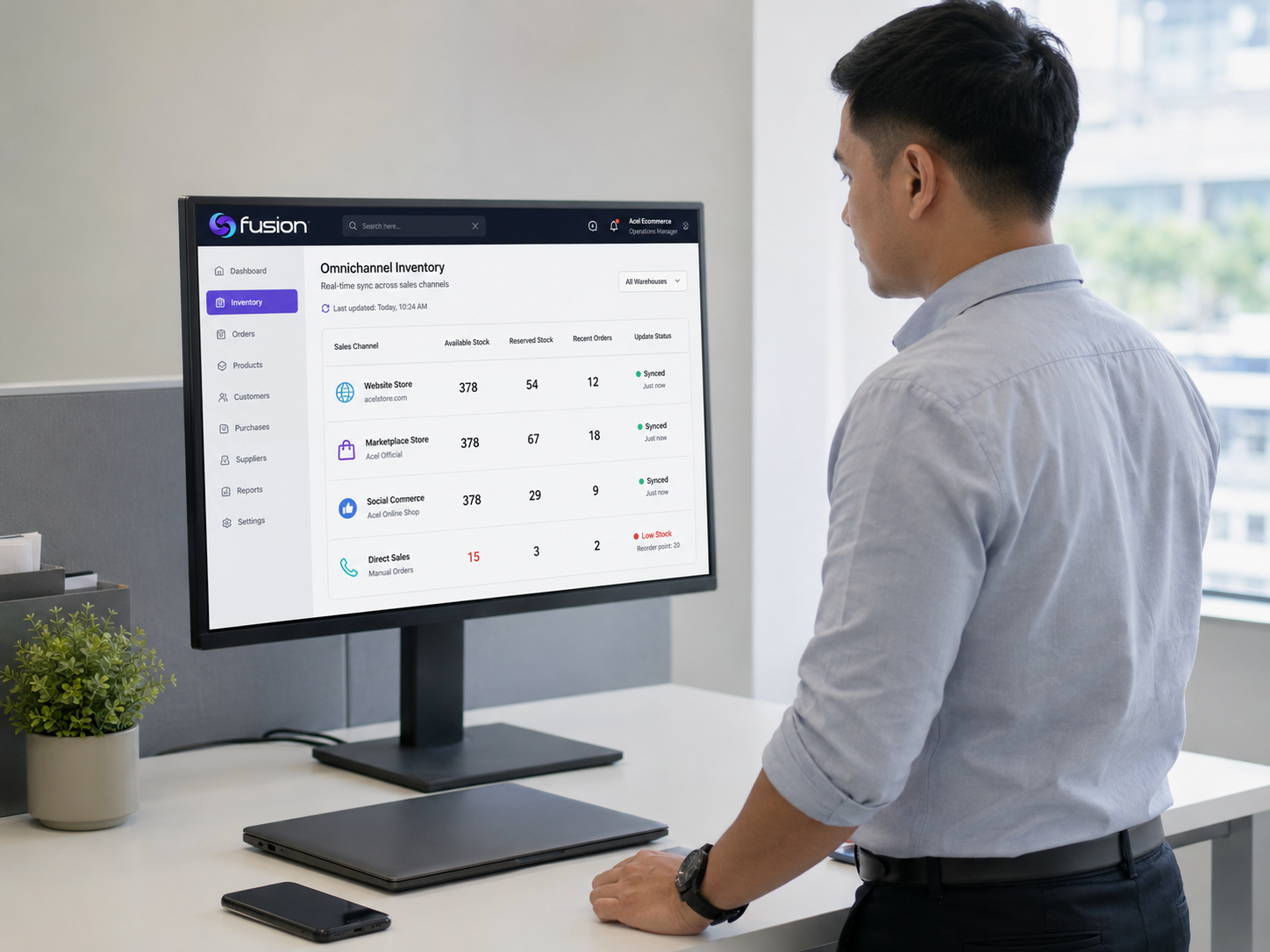
Selling through multiple ecommerce channels creates additional complexity for inventory planning.
Customer orders may originate from an ecommerce website, online marketplaces, or social commerce platforms, all of which affect available inventory.
Without synchronized inventory information, businesses may struggle to maintain accurate stock levels across every sales channel.
Omnichannel inventory management helps coordinate inventory updates across connected platforms, allowing businesses to work from more consistent inventory data.
This supports:
When inventory information remains synchronized, businesses can make more informed purchasing decisions while supporting a more consistent customer experience across every sales channel.

Inventory decisions affect more than warehouse operations. They also influence cash flow, purchasing strategies, and overall business performance.
Holding excess inventory increases storage costs and ties up working capital that could be invested elsewhere. On the other hand, carrying too little inventory may result in missed sales opportunities, delayed fulfillment, and dissatisfied customers.
Effective planning helps businesses strike a balance between product availability and operational costs.
It can also support better inventory financing decisions by providing greater confidence in purchasing plans and helping businesses allocate financial resources more efficiently as inventory requirements change.
By maintaining appropriate inventory levels, businesses are better positioned to control costs while continuing to meet customer demand.
Customer demand rarely remains consistent throughout the year. Seasonal promotions, marketing campaigns, new product launches, and changing buying habits can all influence purchasing patterns.
Businesses that monitor inventory trends regularly are better prepared to respond to these changes before they affect operations.
A more proactive planning approach allows businesses to:
Instead of reacting after inventory issues occur, businesses can adjust purchasing plans earlier and maintain better control over stock levels.
Managing inventory becomes increasingly difficult as businesses expand their operations and serve customers across multiple sales channels.
Demand can change quickly due to seasonal events, promotional campaigns, market trends, or unexpected shifts in customer behavior.
Without a structured planning process, businesses may struggle to maintain the right inventory levels.
Planning decisions depend on reliable inventory data.
If inventory records do not accurately reflect available stock, purchasing decisions may be based on incorrect information, increasing the risk of both overstocking and stock shortages.
Regular inventory updates and accurate recordkeeping help support more reliable planning.
Many businesses continue to rely on spreadsheets or manual calculations to estimate future inventory needs.
While these methods may work for smaller operations, they often become more difficult to manage as product catalogs, sales channels, and order volumes grow.
Manual forecasting can also delay purchasing decisions when inventory information must be collected from multiple systems.
When inventory, purchasing, and sales information are stored in separate systems, it becomes more difficult to identify demand patterns and respond quickly to changing business conditions.
Bringing operational information together supports faster decision-making and helps businesses plan inventory with greater confidence.
Improving inventory planning requires more than forecasting future demand. Businesses also need reliable data, consistent processes, and connected systems that support informed decision-making.
Reliable planning starts with dependable inventory records.
Regular inventory reconciliation and consistent stock updates help businesses make purchasing decisions using accurate information rather than assumptions.
Customer demand changes throughout the year.
Monitoring sales performance, seasonal trends, and purchasing patterns helps businesses adjust inventory plans before shortages or excess stock become larger operational issues.

Integrating inventory, sales, purchasing, and fulfillment systems allows information to move more efficiently across the business.
Connected systems reduce manual updates while providing better visibility into inventory performance and purchasing requirements.
Regularly reviewing inventory turnover, replenishment cycles, and stock availability helps businesses identify opportunities for continuous improvement.
Ongoing performance evaluations also support better planning as customer demand and business operations continue to evolve.
As ecommerce operations expand, inventory planning becomes increasingly important for maintaining operational efficiency and supporting customer expectations.
A structured planning approach allows businesses to adapt to changing demand, improve purchasing decisions, and maintain appropriate inventory levels without creating unnecessary operational costs.
By combining accurate inventory data, connected business systems, and consistent planning processes, businesses can create a stronger foundation for long-term growth while responding more effectively to future market changes.
Effective inventory planning depends on making informed decisions before stock challenges affect daily operations. Maintaining the right inventory levels improves product availability, controls operational costs, and supports effective inventory management across every sales channel.
Predictive inventory planning provides a structured approach to anticipating demand, improving inventory accuracy, and strengthening omnichannel inventory management. With reliable data and connected processes, organizations can make more confident purchasing decisions while reducing the risk of excess inventory or unexpected stock shortages.
A proactive planning strategy creates a stronger operational foundation, enabling ecommerce teams to adapt to changing demand, allocate resources more effectively, and maintain efficient inventory operations over time.
Inspire E-Commerce Solutions Inc.
Warehouse 4 & 5, C Teknik Industrial, 143 P. Gregorio Street, Valenzuela,
1442 Metro Manila
inspiresolutions.asia
