
Efficient warehouse operations play a vital role in the success of ecommerce businesses. As order volumes increase and customer expectations continue to rise, businesses need greater control over inventory, fulfillment, and warehouse processes to maintain reliable operations.
This highlights the importance of warehouse management system in modern supply chains. A warehouse management system helps businesses organize inventory, improve order accuracy, streamline warehouse workflows, and gain better visibility across daily operations.
Without a structured system, warehouses often rely on manual processes that can lead to inventory discrepancies, slower fulfillment, and increased operational costs. As businesses grow, these challenges become more difficult to manage.
This article explores the importance of warehouse management systems, how they improve warehouse operations, and why they have become an essential part of efficient ecommerce fulfillment.
The importance of warehouse management system goes beyond simply tracking inventory. It provides businesses with the tools needed to manage warehouse activities more efficiently while supporting faster and more accurate order fulfillment.
A warehouse management system helps coordinate every stage of warehouse operations, including:
Instead of relying on manual records or disconnected software, businesses can manage these processes through a centralized platform that provides real-time operational visibility.
As ecommerce operations become more complex, having this level of control allows businesses to respond more quickly to customer demand while maintaining consistent fulfillment performance.

Warehouse operations involve far more than storing products. Every item that enters or leaves the warehouse must be accurately recorded, properly stored, and efficiently processed to keep fulfillment running smoothly.
Without strong operational control, businesses may encounter problems such as:
Many of these challenges stem from limited visibility into warehouse activities. Manual updates and disconnected systems make it difficult to track inventory movement in real time, increasing the likelihood of errors as order volumes grow.
A warehouse management system improves operational control by providing accurate data throughout the fulfillment process. Warehouse teams can quickly locate products, monitor stock levels, and manage inventory movements from a single system, allowing operations to remain organized even during busy periods.

A warehouse and inventory management system combines warehouse operations with inventory control, creating a unified approach to managing products from the moment they arrive until they are shipped to customers.
Instead of treating inventory and warehouse activities as separate functions, businesses can coordinate both through one integrated system.
Real-time inventory tracking allows warehouse teams to monitor stock levels as products are received, transferred, picked, and shipped.
This visibility helps businesses:
Accurate inventory information also supports better purchasing decisions and reduces unnecessary stock holding.
Order fulfillment becomes more efficient when warehouse staff have immediate access to accurate inventory information and optimized picking instructions.
Rather than manually searching for products, employees can quickly identify storage locations and follow standardized workflows throughout the warehouse.
This reduces processing time while improving order accuracy.
As order volumes increase, faster fulfillment helps businesses maintain service quality without significantly increasing operational costs.
Warehouse capacity is often limited, making efficient space utilization an important part of warehouse management.
A warehouse management system helps organize inventory based on product demand, storage requirements, and warehouse layout.
Benefits include:
Optimizing warehouse layout also supports higher productivity during peak fulfillment periods.
Inventory accuracy is one of the biggest advantages of integrating warehouse operations with inventory management.
Every inventory movement is recorded automatically as products move through receiving, storage, picking, packing, and shipping.
This reduces manual data entry while helping businesses maintain reliable inventory records.
Improved inventory accuracy also reduces the likelihood of overselling, fulfillment delays, and customer dissatisfaction.
As ecommerce businesses expand, warehouse operations become increasingly complex. More products, larger order volumes, and additional sales channels create greater demands on fulfillment teams.
A warehouse management system provides the structure needed to support this growth without significantly increasing operational complexity.
Instead of relying on additional manual processes, businesses can scale warehouse operations using standardized workflows, centralized data, and automated inventory updates.
This allows warehouses to process higher order volumes while maintaining consistent operational performance.
Growing businesses also benefit from improved reporting capabilities, giving managers better insight into warehouse productivity, inventory movement, and fulfillment efficiency.
These insights support better planning and continuous operational improvement.
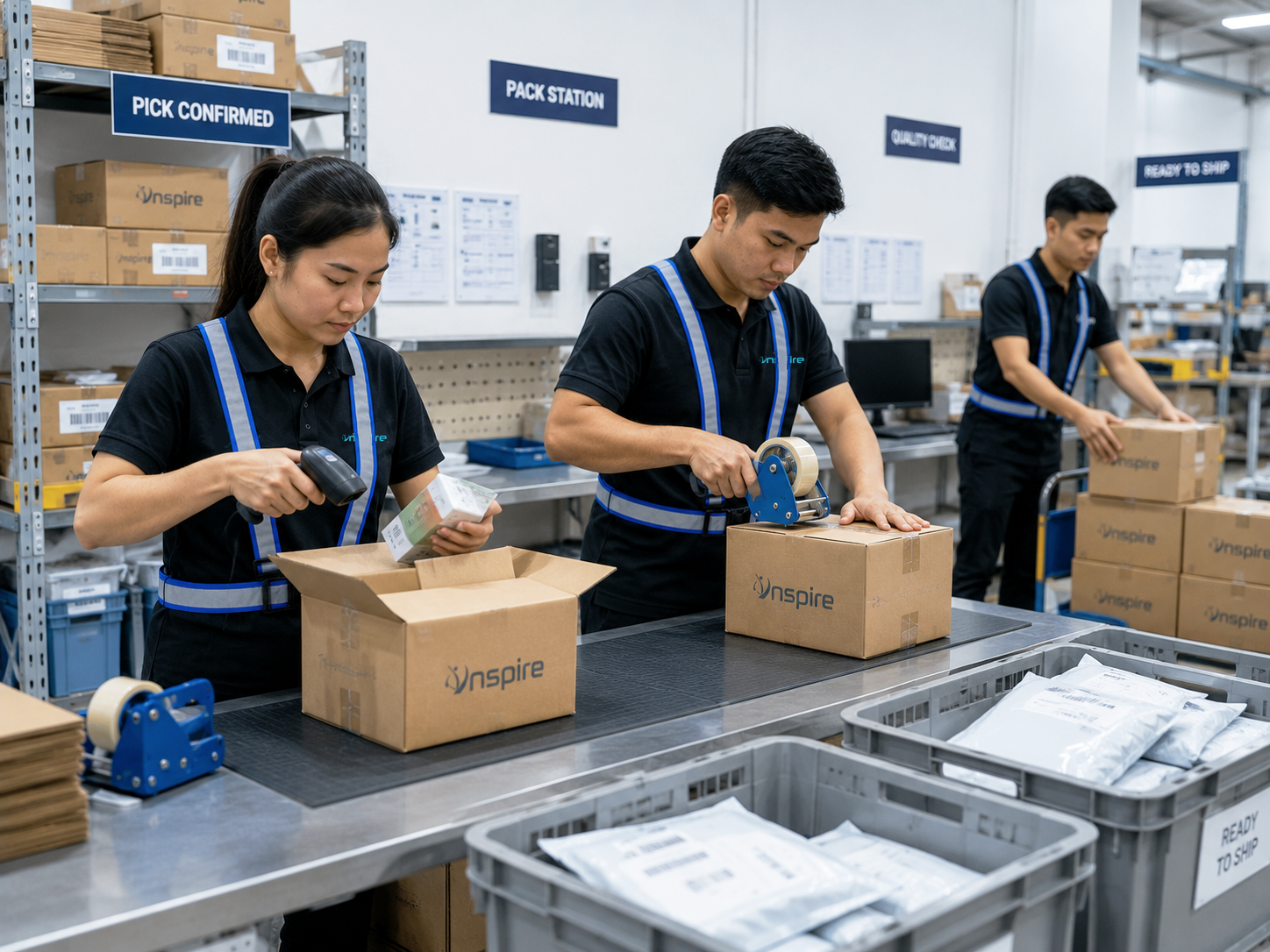
The warehouse management system benefits extend beyond improving daily warehouse operations. A well-implemented system helps businesses increase efficiency, reduce errors, and create a more reliable fulfillment process that supports long-term growth.
Order accuracy is essential for maintaining customer satisfaction. A warehouse management system helps reduce fulfillment errors by providing warehouse staff with clear picking instructions and real-time inventory information.
Accurate order processing can help businesses:
As order volumes increase, maintaining high order accuracy becomes even more important.
Warehouse teams spend less time searching for products or updating inventory manually when they use a centralized system.
Instead, employees can focus on value-added tasks such as picking, packing, and preparing orders for shipment.
Standardized workflows also make it easier to onboard new staff and maintain consistent productivity during busy periods.
One of the most valuable warehouse management system benefits is improved inventory control.
Real-time inventory updates allow businesses to monitor stock movement throughout the warehouse and quickly identify potential issues before they affect fulfillment.
This supports:
Improved inventory control also helps businesses make more informed purchasing decisions.
Warehouse operations generate large amounts of operational data every day. A warehouse management system organizes this information into reports that help managers evaluate warehouse performance.
Common performance indicators include:
Access to reliable data allows businesses to identify inefficiencies and make continuous improvements to warehouse operations.
Warehouses that rely on manual processes or disconnected software often face operational challenges that become more noticeable as order volumes increase.
Without centralized inventory tracking, businesses may struggle to determine actual stock availability.
This can result in:
Limited visibility also makes planning more difficult during periods of high demand.
Manual inventory updates and paper-based workflows often slow down warehouse operations.
Employees may spend additional time locating products, verifying stock levels, or correcting fulfillment errors, reducing overall productivity.
Inefficient warehouse processes often increase labor requirements and create unnecessary operational expenses.
Repeated inventory counts, manual data entry, and order corrections consume valuable time that could otherwise be spent processing customer orders.
As businesses grow, warehouse complexity increases.
Without structured warehouse processes, handling additional products, larger inventories, and higher order volumes becomes increasingly difficult.
A warehouse management system provides the operational framework needed to support long-term business growth without relying entirely on additional manpower.

Selecting the right warehouse management system solution requires evaluating both current operational needs and future business goals.
Rather than choosing software based only on available features, businesses should consider how well the system supports daily warehouse activities and long-term growth.
Important factors include:
The right warehouse management system solution should improve operational efficiency while adapting to changing business requirements.
It should also support continuous process improvement without requiring major workflow changes as the business grows.
Implementing a warehouse management system is most effective when supported by proper planning and employee training.
Businesses can improve implementation success by following several best practices.
Before introducing a new system, review current warehouse workflows to identify inefficiencies and opportunities for improvement.
This helps ensure that the new system supports optimized processes rather than outdated practices.
Employees should understand both the system and the operational procedures that accompany it.
Proper training improves user adoption while reducing implementation-related errors.
Implementation should be followed by ongoing performance monitoring.
Reviewing warehouse metrics allows businesses to measure improvements and identify additional opportunities for optimization.
Continuous evaluation helps maximize the long-term value of the warehouse management system.
The importance of warehouse management system continues to grow as ecommerce businesses handle increasing order volumes and more complex fulfillment requirements. A structured system improves visibility, strengthens inventory control, and helps warehouse teams process orders more efficiently.
By combining the capabilities of a warehouse and inventory management system, understanding the warehouse management system benefits, and selecting the right warehouse management system solution, businesses can create more organized and scalable warehouse operations.
As customer expectations continue to evolve, investing in effective warehouse management is no longer just an operational improvement. It is a strategic step toward achieving greater efficiency, accuracy, and long-term business growth.
Inspire E-Commerce Solutions Inc.
Warehouse 4 & 5, C Teknik Industrial, 143 P. Gregorio Street, Valenzuela,
1442 Metro Manila
inspiresolutions.asia
