
Today’s customers interact with businesses through multiple channels. They may discover products on social media, compare prices on online marketplaces, purchase through an ecommerce website, and expect timely updates throughout the fulfillment process.
As sales channels continue to expand, managing operations across separate systems becomes increasingly challenging. Inventory may become inconsistent, product information can vary between platforms, and order processing may require unnecessary manual work.
Unified commerce addresses these challenges by connecting business operations through a single, integrated approach. Instead of managing each sales channel independently, businesses can synchronize inventory, product data, and order information to create a more consistent customer experience.
This article explores how unified commerce supports connected ecommerce operations, strengthens omnichannel inventory management, improves marketplace optimization, and simplifies product information management.
Unified commerce is an approach that connects ecommerce platforms, marketplaces, inventory systems, fulfillment operations, and customer information into a single ecosystem.
Rather than operating separate systems for each sales channel, businesses manage their operations through connected technology that shares information across the entire business.
This allows teams to work with consistent data regardless of where a customer places an order.
For example, when a product is purchased through an online marketplace, inventory levels can be updated automatically across other sales channels. Customer service teams can also access the same order information, making it easier to provide accurate updates and resolve inquiries.
By connecting different operational areas, businesses can improve efficiency while delivering a more seamless buying experience.
Customers expect a consistent experience whether they shop through a website, marketplace, or another sales channel.
When systems are disconnected, businesses may struggle to meet those expectations.
Common challenges include:
Connected operations help reduce these issues by allowing information to flow more efficiently across the business.
This creates a smoother experience for both customers and internal teams while improving operational consistency.

As businesses expand into multiple sales channels, inventory becomes more difficult to manage.
Without proper coordination, stock levels can become inconsistent between ecommerce websites, online marketplaces, and fulfillment locations.
This increases the risk of overselling products, delaying orders, and disappointing customers.
Omnichannel inventory management helps businesses maintain accurate inventory information across every sales channel.
When inventory updates automatically after each transaction, businesses gain a clearer understanding of available stock and can make better fulfillment decisions.
Additional benefits include:
Maintaining synchronized inventory is an important step toward supporting connected ecommerce operations.
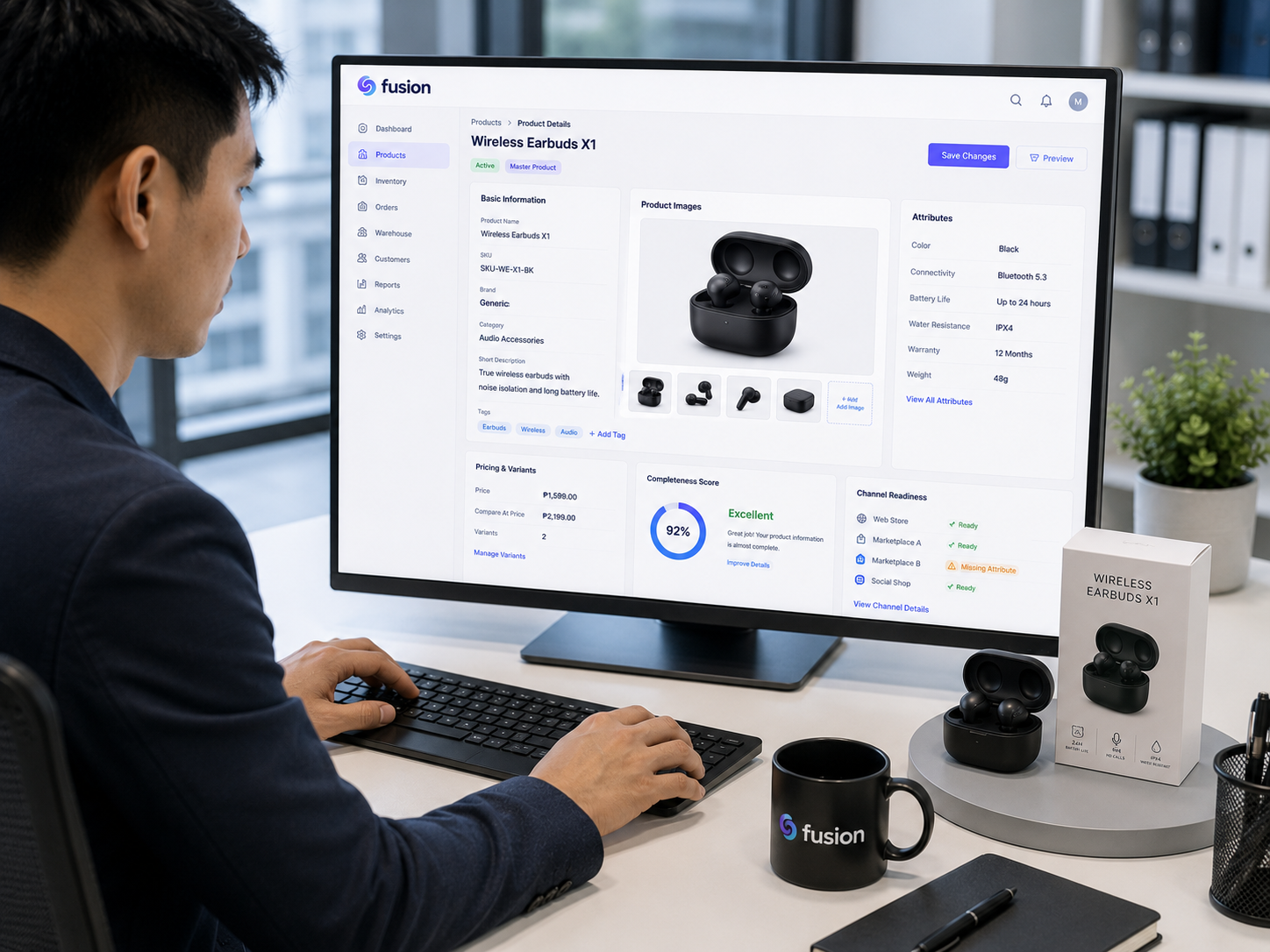
Many ecommerce businesses sell through multiple online marketplaces to reach a larger customer base.
While this creates new sales opportunities, it also increases operational complexity.
Managing separate product listings, pricing updates, inventory levels, and customer orders across multiple platforms can quickly become difficult without connected systems.
Marketplace optimization helps businesses improve how products are managed and sold across different channels.
When marketplace operations are integrated with inventory and fulfillment systems, businesses can:
This allows businesses to focus on growth while maintaining greater control over day-to-day operations.
Accurate product information plays an important role in creating a consistent customer experience. As businesses sell across multiple channels, maintaining the same product details on every platform becomes more challenging.
Product information management helps organize and maintain essential product data, including:
Managing this information through a centralized process helps ensure customers receive accurate and consistent details regardless of where they shop.
Well-managed product information also reduces the likelihood of listing errors, duplicate entries, and outdated product details across different sales channels.
When product data remains consistent, businesses can improve customer confidence while simplifying catalog management.
Expanding into multiple ecommerce platforms creates new opportunities for growth, but it also introduces operational challenges when systems are not connected.
Managing inventory separately for each sales channel increases the risk of stock discrepancies.
Without synchronized inventory updates, businesses may oversell products, experience unexpected stock shortages, or delay customer orders.
Different product descriptions, pricing, or specifications across sales channels can create confusion for customers.
Maintaining consistent product data becomes increasingly difficult as product catalogs expand.
Using separate systems often requires employees to transfer information between platforms manually.
This additional work increases processing time and creates more opportunities for human error.
Automating information sharing between systems helps reduce repetitive tasks while improving operational efficiency.
When information is spread across multiple platforms, it becomes more difficult to gain a complete understanding of daily operations.
Teams may spend unnecessary time gathering reports, reconciling inventory records, or tracking order progress instead of focusing on business growth.
Building connected ecommerce operations requires both the right technology and well-defined business processes.
Connecting ecommerce platforms, inventory management, fulfillment operations, and customer data helps create a more consistent flow of information.
System integration reduces manual updates while improving operational accuracy.
Establishing standardized processes for updating product data helps ensure customers receive accurate information across every sales channel.
Regular reviews of product listings also help identify outdated or inconsistent information before it affects the customer experience.
Accurate inventory updates allow businesses to manage stock more effectively across ecommerce websites, marketplaces, and fulfillment locations.
Keeping inventory synchronized helps reduce overselling while supporting more efficient order fulfillment.
Monitoring business performance helps identify opportunities for improvement.
Businesses should regularly evaluate inventory accuracy, order processing times, fulfillment performance, and customer feedback to support continuous operational improvements.

Managing multiple sales channels does not have to mean managing disconnected systems. As ecommerce businesses continue to expand, connecting inventory, product data, orders, and fulfillment processes becomes increasingly important for maintaining efficiency and delivering a consistent customer experience.
Unified commerce provides a centralized approach that helps businesses coordinate operations across websites, online marketplaces, and other sales channels. By supporting omnichannel inventory management, improving marketplace optimization, and maintaining reliable product information management, businesses can simplify daily operations while reducing manual work.
A connected ecommerce environment also creates a stronger foundation for future growth by improving operational accuracy, supporting faster decision-making, and helping businesses adapt to changing customer expectations.
Inspire E-Commerce Solutions Inc.
Warehouse 4 & 5, C Teknik Industrial, 143 P. Gregorio Street, Valenzuela,
1442 Metro Manila
inspiresolutions.asia