
Ecommerce growth has changed the way warehouses operate. As businesses handle larger order volumes, multiple sales channels, and faster customer expectations, traditional warehouse processes often struggle to keep up.
Manual tasks such as inventory tracking, picking, packing, and order processing can become challenging when demand increases. Small inefficiencies can lead to slower fulfillment, higher labor costs, and reduced customer satisfaction.
This is where warehouse automation becomes increasingly valuable. By using technology to improve warehouse processes, businesses can reduce manual workloads, increase accuracy, and create more scalable fulfillment operations.
Modern automation is not only about replacing manual tasks with machines. It involves connecting warehouse systems, improving workflows, and providing better visibility across daily operations.
This article explores how warehouse automation supports ecommerce fulfillment, improves warehouse performance, and helps businesses prepare for future operational demands.
Warehouse automation refers to the use of technology, software, and automated processes to improve warehouse operations. It helps businesses complete tasks faster and more accurately by reducing the need for repetitive manual work.
Automation can support different areas of warehouse management, including:
Depending on business requirements, automation can range from simple software-based improvements to advanced systems involving robotics and automated equipment.
For ecommerce businesses, automation provides better control over warehouse activities while helping teams manage increasing order volumes more efficiently.
Instead of relying entirely on manual processes, warehouses can use connected systems to monitor operations, identify issues, and improve workflow performance.

The demand for faster deliveries and accurate order processing has made warehouse efficiency a critical factor in ecommerce success.
Customers now expect quick order handling, accurate shipments, and reliable delivery experiences. Meeting these expectations requires warehouses to operate with greater speed and precision.
One of the biggest advantages of warehouse automation is improved processing speed.
Automated systems can help warehouse teams:
During peak sales periods, automation helps businesses manage increased demand without creating significant delays.
This is especially important for ecommerce businesses that experience sudden order spikes during promotional campaigns or seasonal events.
Inventory accuracy plays an important role in successful fulfillment.
Manual inventory management can create challenges such as:
Warehouse automation helps improve inventory accuracy by providing better tracking and real-time updates.
With more reliable inventory information, businesses can make better purchasing decisions and maintain appropriate stock levels.
Warehouse automation allows businesses to optimize how resources are used.
By reducing repetitive manual tasks, employees can focus on activities that require human decision-making and problem-solving.
This helps businesses improve productivity without relying only on increasing workforce size.
Automation also helps warehouses make better use of available space by improving product organization and movement throughout the facility.
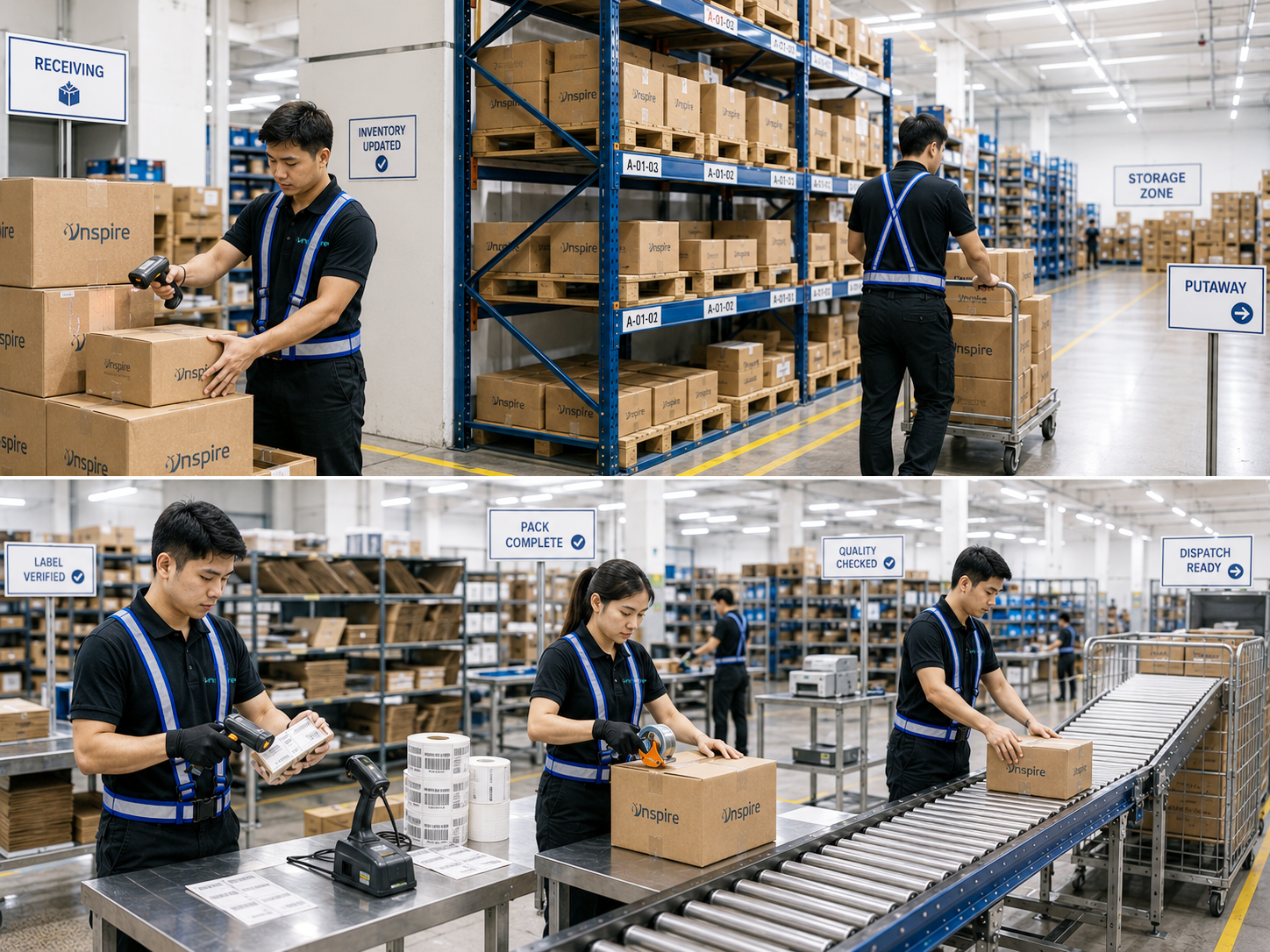
Warehouse automation can be applied across different stages of fulfillment. The level of automation depends on business size, order volume, and operational requirements.
Inventory tracking is one of the most important areas where automation creates value.
Automated inventory systems help monitor stock movement from receiving to storage and order fulfillment.
This improves visibility by allowing businesses to:
Accurate inventory data also supports better coordination between warehouses, suppliers, and ecommerce channels.
Picking is one of the most time-consuming warehouse activities.
Automation can improve picking processes by helping warehouse teams locate products more efficiently.
Examples include:
These improvements reduce search time and help minimize picking errors.
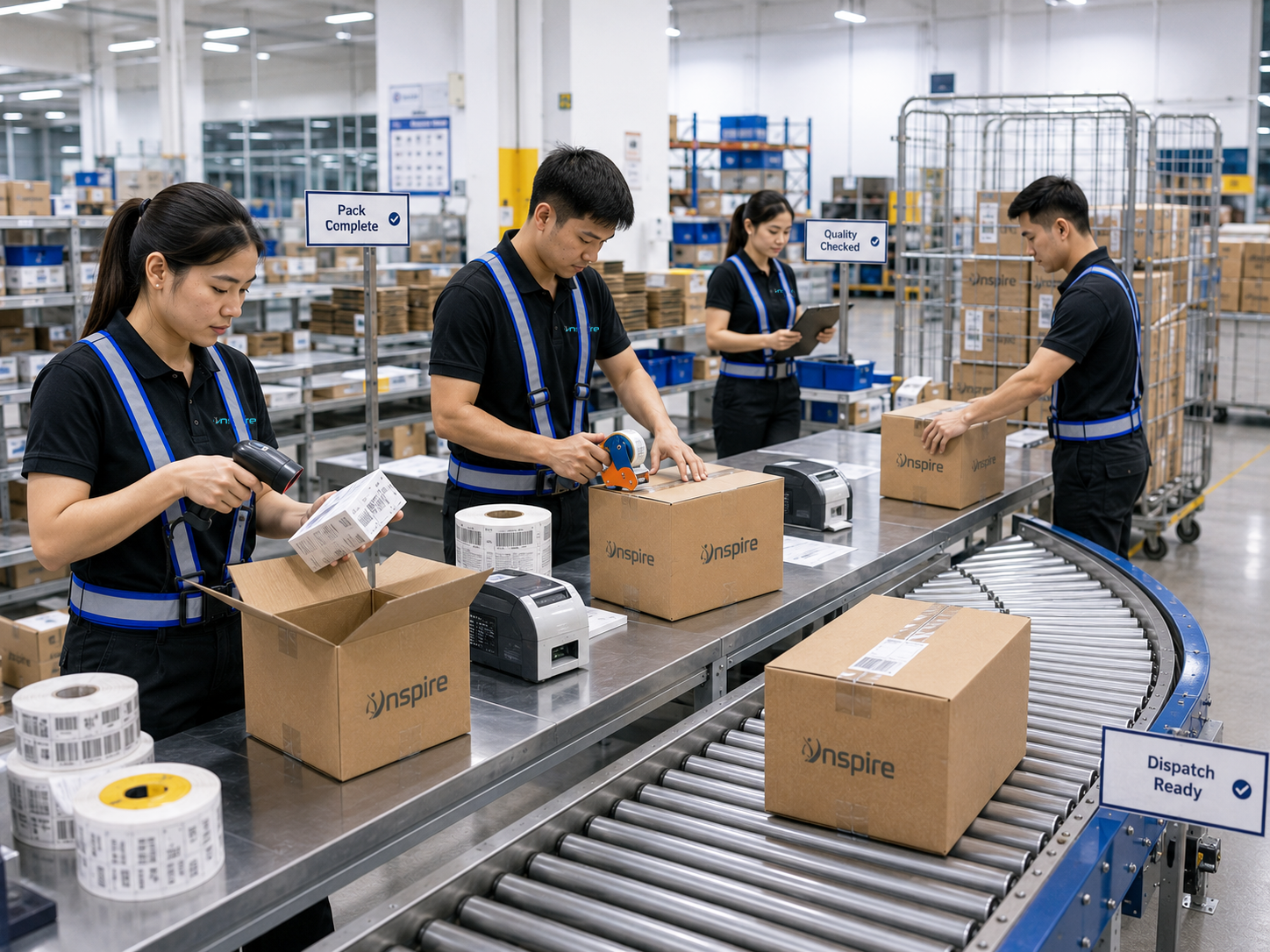
Packing accuracy directly affects customer satisfaction. Incorrect items, missing products, or damaged packages can lead to returns and additional costs.
Automated packing solutions help standardize packaging processes and improve consistency.
They can support:
By improving packing workflows, businesses can prepare orders faster while maintaining quality standards.
The value of warehouse automation extends beyond faster processing. It helps businesses create more reliable operations by improving accuracy, reducing inefficiencies, and supporting long-term scalability.
Many warehouse activities involve repetitive tasks that require significant time and labor. Automation helps reduce the amount of manual work required for processes such as inventory updates, product tracking, and order preparation.
By handling repetitive activities more efficiently, warehouse teams can focus on tasks that require attention and decision-making.
This allows businesses to improve productivity while maintaining consistent operational performance.
Human errors can affect inventory records, order accuracy, and customer satisfaction.
Common warehouse mistakes include:
Automation reduces these risks by using standardized processes and accurate data tracking.
With fewer errors throughout fulfillment operations, businesses can reduce returns, improve customer experiences, and maintain better service quality.
As ecommerce businesses grow, warehouse requirements become more complex. Higher order volumes, expanded product catalogs, and additional sales channels can place pressure on existing processes.
Warehouse automation provides the flexibility needed to support growth without requiring businesses to increase manual efforts at the same pace.
Automated workflows help warehouses handle more orders while maintaining efficiency, making it easier to scale operations during expansion periods or peak demand.
Automation provides businesses with clearer insights into warehouse activities.
By collecting and organizing operational data, automated systems help managers monitor:
This visibility supports better decision-making and allows businesses to identify areas where improvements can be made.
Modern ecommerce operations require more than efficient warehouse processes. Businesses also need a complete view of inventory movement, order status, and fulfillment performance across the supply chain.
This is where supply chain visibility becomes important.
Warehouse automation improves visibility by connecting warehouse activities with digital systems that provide real-time operational information.
With better visibility, businesses can:
For example, when inventory levels change automatically after orders are processed, businesses can make faster decisions regarding replenishment and fulfillment planning.
This connected approach helps reduce uncertainty and creates a more responsive supply chain.
Warehouse automation is an important part of broader warehouse digital transformation. Instead of improving individual tasks separately, digital transformation focuses on creating connected and efficient warehouse ecosystems.
Traditional warehouses often rely on manual records, separate systems, and time-consuming processes. Digital transformation replaces these limitations with integrated technology that improves communication and operational control.
A digitally transformed warehouse may include:
These technologies help businesses create more organized operations while improving the ability to respond to changing market demands.
For ecommerce businesses, warehouse digital transformation supports faster fulfillment, better inventory management, and improved customer experiences.
Although warehouse automation provides many benefits, businesses should carefully plan implementation to achieve successful results.
Automation requires investment in technology, equipment, and system integration.
Businesses need to evaluate their operational needs and choose solutions that provide long-term value rather than focusing only on short-term costs.
A phased approach can help companies introduce automation gradually while managing investment requirements.
Automation works best when existing warehouse processes are properly reviewed and optimized.
Introducing technology without improving inefficient workflows may limit the expected benefits.
Before implementation, businesses should evaluate:
This ensures automation supports better processes rather than simply replacing manual tasks.
Warehouse teams need proper training to use new systems effectively.
Employees should understand how automation tools work and how they support daily operations.
Clear training helps improve adoption and ensures warehouse teams can maximize the value of new technology.
Successful implementation of warehouse automation requires more than introducing new technology. Businesses need proper planning, process evaluation, and continuous improvement to ensure automation delivers long-term value.
Before implementing automation, businesses should review existing workflows to identify areas that need improvement.
Understanding current challenges helps determine which processes would benefit most from automation.
Areas to evaluate include:
A clear understanding of operational needs allows businesses to choose automation solutions that support their specific requirements.
Warehouse needs can change as businesses grow. A solution that works for current operations should also support future expansion.
Scalable automation systems allow businesses to adjust as order volumes increase, product catalogs expand, or additional sales channels are introduced.
Choosing flexible technology helps avoid major system changes as operations become more complex.
Warehouse automation becomes more effective when connected with other business systems.
Integration improves data flow between warehouse operations, inventory management, and ecommerce platforms.
This creates better coordination across different areas of the business and provides more accurate information for decision-making.
A connected warehouse environment also supports improved supply chain visibility by providing a clearer view of inventory and order movement.
Automation should be continuously evaluated after implementation.
Tracking warehouse performance helps businesses determine whether systems are improving efficiency and meeting operational goals.
Important performance indicators may include:
Regular monitoring allows businesses to identify opportunities for further improvements.

Warehouse automation is becoming an essential part of modern ecommerce operations. As businesses manage increasing order volumes and higher customer expectations, traditional warehouse processes may no longer provide the speed and accuracy required for growth.
By improving inventory tracking, streamlining fulfillment tasks, and supporting better supply chain visibility, automation helps businesses create more reliable warehouse operations.
When combined with proper planning and warehouse digital transformation, automation provides the foundation needed for scalable and efficient ecommerce fulfillment.
The future of warehousing is not only about faster processes. It is about creating connected operations that allow businesses to adapt, improve, and deliver better customer experiences.
Inspire E-Commerce Solutions Inc.
Warehouse 4 & 5, C Teknik Industrial, 143 P. Gregorio Street, Valenzuela,
1442 Metro Manila
inspiresolutions.asia
