Managing cash effectively is one of the biggest challenges for e-commerce businesses in the Philippines. The cash conversion cycle (CCC) measures how long it takes for a business to convert its investments in inventory and other resources into cash from sales. Understanding and optimizing CCC helps businesses maintain liquidity, reduce funding gaps, and support growth.
This guide explores the components of the cash conversion cycle, its impact on working capital, stock management, and strategies to improve cash flow and operational efficiency.
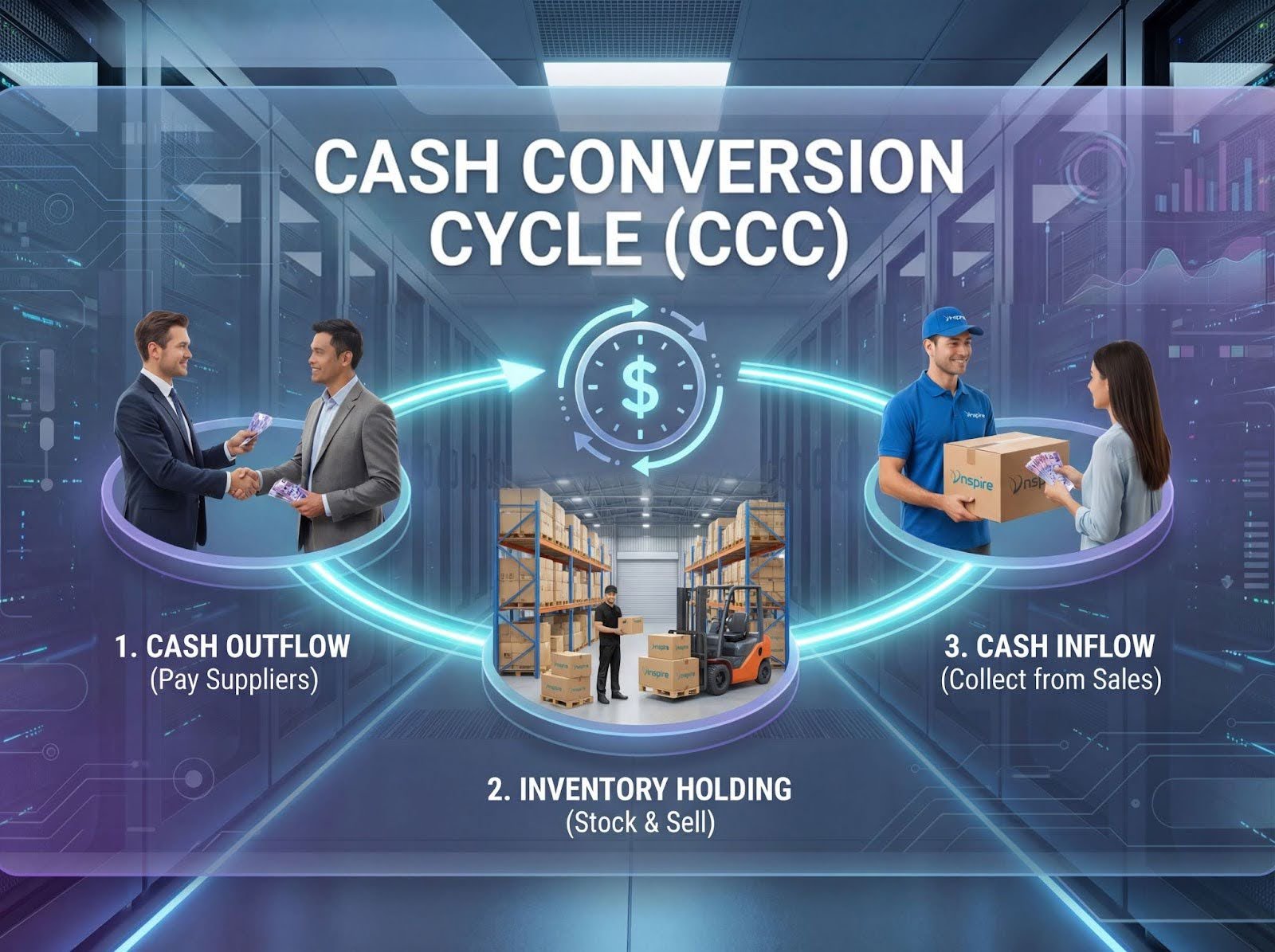
E-commerce businesses in the Philippines face unique financial and operational challenges. Rapid growth, multi-channel sales, and fluctuating demand make cash management a critical concern. The cash conversion cycle (CCC) measures the time between investing in inventory and receiving cash from sales.
A shorter CCC indicates that a company is efficiently turning stock into revenue, enabling faster reinvestment into operations. For online retailers, managing the CCC is not just a financial metric. It directly influences working capital ecommerce effectiveness, determines available resources for stock funding, and ensures the inventory system for ecommerce supports operational decisions.
With an optimized CCC, businesses can reduce dependency on external financing, minimize liquidity bottlenecks, and maintain operational flexibility, even during seasonal spikes like 11.11 and 12.12 e-commerce events.
The CCC is more than a number; it’s a reflection of operational efficiency and financial health. Key reasons it matters include:
For multi-channel sellers, ignoring CCC can create cash shortages, delayed order fulfillment, and misaligned inventory investments.
The CCC is made up of three interconnected metrics:
Optimizing these components improves cash availability and reduces reliance on credit while supporting working capital ecommerce management, and stock funding decisions.

A robust inventory system for ecommerce is critical. Real-time inventory tracking ensures stock availability, accurate forecasting, and minimized cash tied up in unsold goods. Best practices include:
Effective inventory management reduces DIO, shortens CCC, and aligns stock funding with actual operational needs.

Efficient stock funding strategies optimize DPO:
These strategies reduce cash strain while maintaining inventory levels for peak periods.

Faster collection reduces DSO, improving cash flow:
By monitoring receivables closely, businesses can anticipate cash shortfalls and adjust stock funding plans proactively.
Technology integration is essential to managing CCC effectively:
These tools provide actionable insights and prevent manual errors that extend CCC unnecessarily.
Tracking the right KPIs allows businesses to spot inefficiencies early:
Regular analysis of these metrics supports better operational and financial planning.
When CCC is managed properly, online retailers in the Philippines experience:
This translates into higher profitability, stronger customer service, and sustainable growth.
Optimizing the cash conversion cycle is essential for e-commerce businesses in the Philippines. By incorporating strategies for working capital ecommerce, stock funding, and inventory system for ecommerce, businesses can accelerate cash flow, improve operational efficiency, and maintain financial control.
A well-managed CCC ensures that stock is available when needed, cash is collected promptly, and resources are allocated effectively, laying the foundation for scalable, sustainable growth.
Inspire E-Commerce Solutions Inc.
Warehouse 4 & 5, C Teknik Industrial, 143 P. Gregorio Street, Valenzuela,
1442 Metro Manila
inspiresolutions.asia