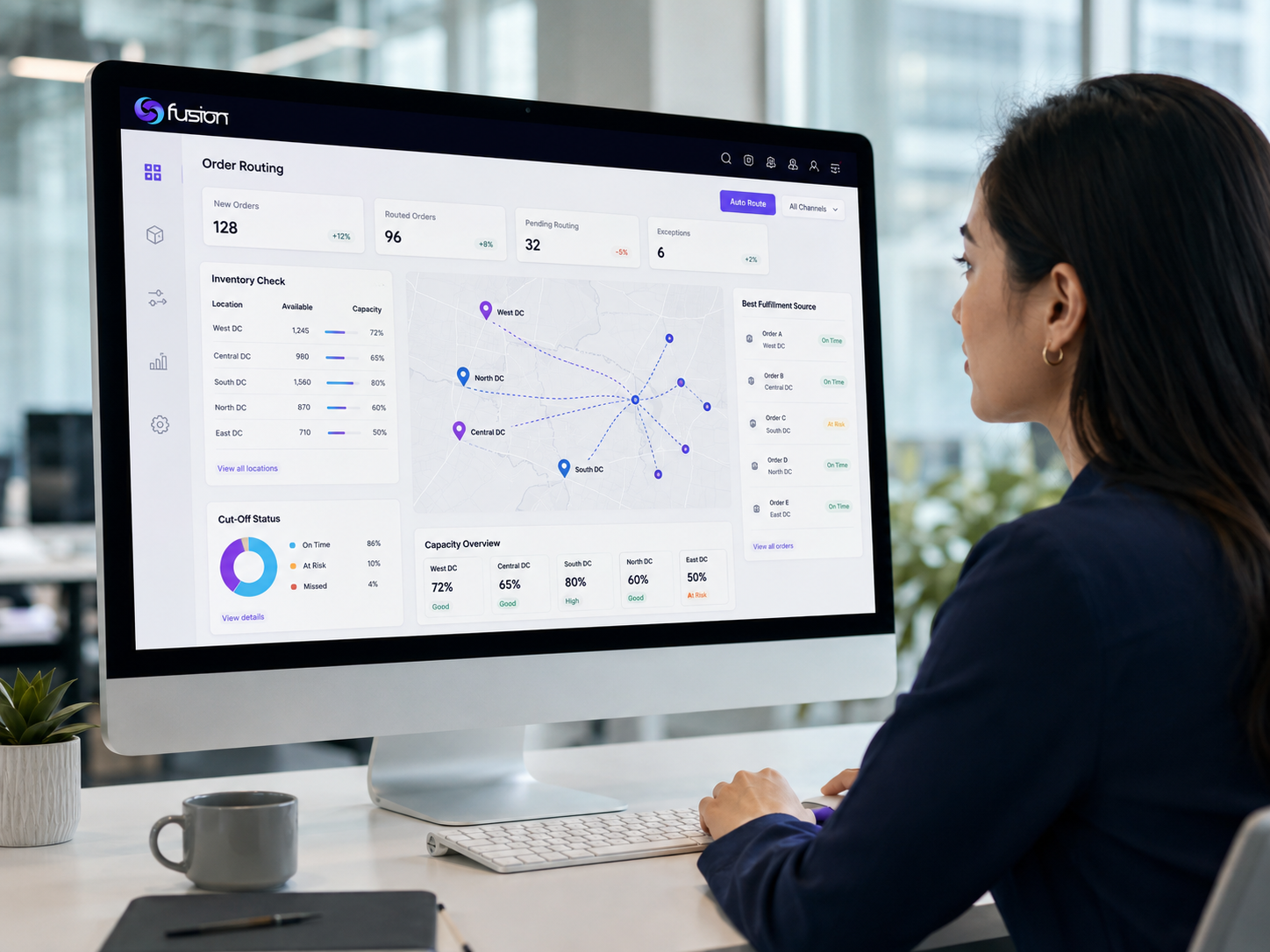
As e-commerce operations grow, fulfilling orders becomes more complex than simply shipping products from a single warehouse. Many businesses now manage inventory across multiple locations, including warehouses, retail stores, distribution centers, and third-party fulfillment providers. While this expansion improves flexibility, it also creates new operational challenges.
When a customer places an order, businesses must determine where the inventory is available, which location can fulfill the order most efficiently, and how to meet delivery expectations while controlling costs. Making these decisions manually can slow down operations and increase the risk of fulfillment errors.
This is where a distributed order management system becomes essential. A distributed order management system helps businesses coordinate inventory, fulfillment locations, and shipping requirements to determine the best route for every order.
By supporting intelligent order orchestration, accounting for operational cut-off times, and improving dispatch performance, distributed order management systems help businesses create faster and more efficient fulfillment processes.
This article explores how distributed order management systems work, why order routing matters, and how these systems support modern e-commerce operations.
A distributed order management system is a software solution that manages and routes customer orders across multiple inventory and fulfillment locations.
Instead of assigning every order to a single warehouse, the system evaluates available resources and determines the most appropriate fulfillment source based on predefined rules and real-time operational data.
A distributed order management system typically considers:
By analyzing these factors, the system can select the most efficient fulfillment path for each order.
This approach helps businesses improve resource utilization while maintaining service quality.
Order routing is the process of determining where and how an order will be fulfilled after it is placed.
In a simple operation with one warehouse, routing decisions are relatively straightforward. However, businesses with multiple fulfillment locations face a much more complex environment.
Without effective routing strategies, businesses may experience:
Order routing ensures that fulfillment decisions align with operational goals and customer expectations.
A distributed order management system automates this process, reducing manual decision-making and improving consistency.
When a customer submits an order, the system immediately begins evaluating fulfillment options.
The process generally includes several steps:
The system receives the order from an online store, marketplace, or sales channel.
Available inventory is checked across all fulfillment locations.
The system reviews routing rules and operational priorities.
The most suitable location is selected to process the order.
The order is forwarded to the selected warehouse or fulfillment center for processing.
This automated workflow enables businesses to manage large order volumes without increasing manual workload.
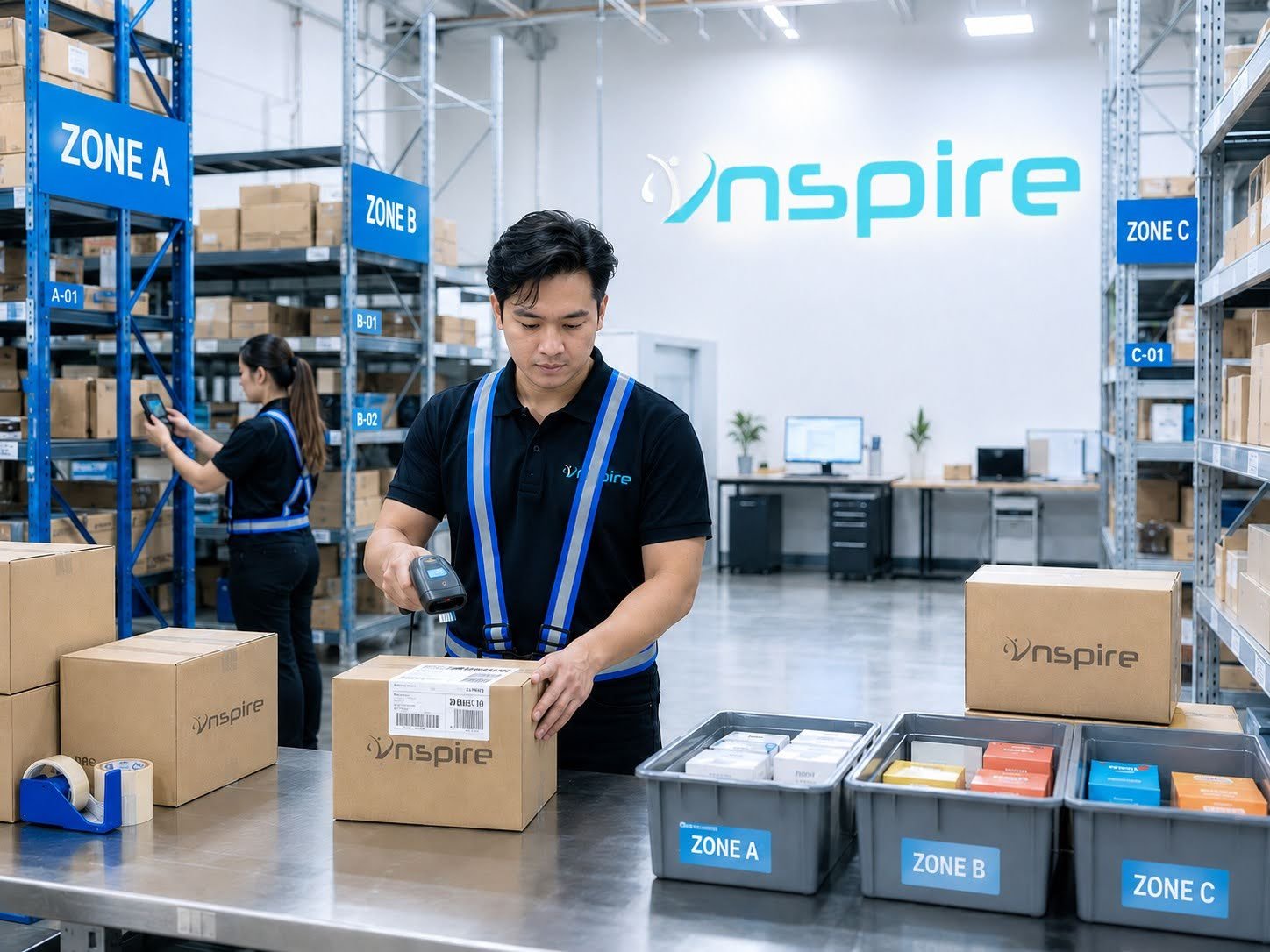
One of the primary functions of a distributed order management system is inventory allocation.
Businesses often store inventory in:
The system evaluates inventory availability across these locations and assigns orders accordingly.
For example, if two warehouses have the same product in stock, the system may choose the location closest to the customer to reduce delivery time and shipping costs.
This allocation strategy improves operational efficiency while maximizing inventory utilization.
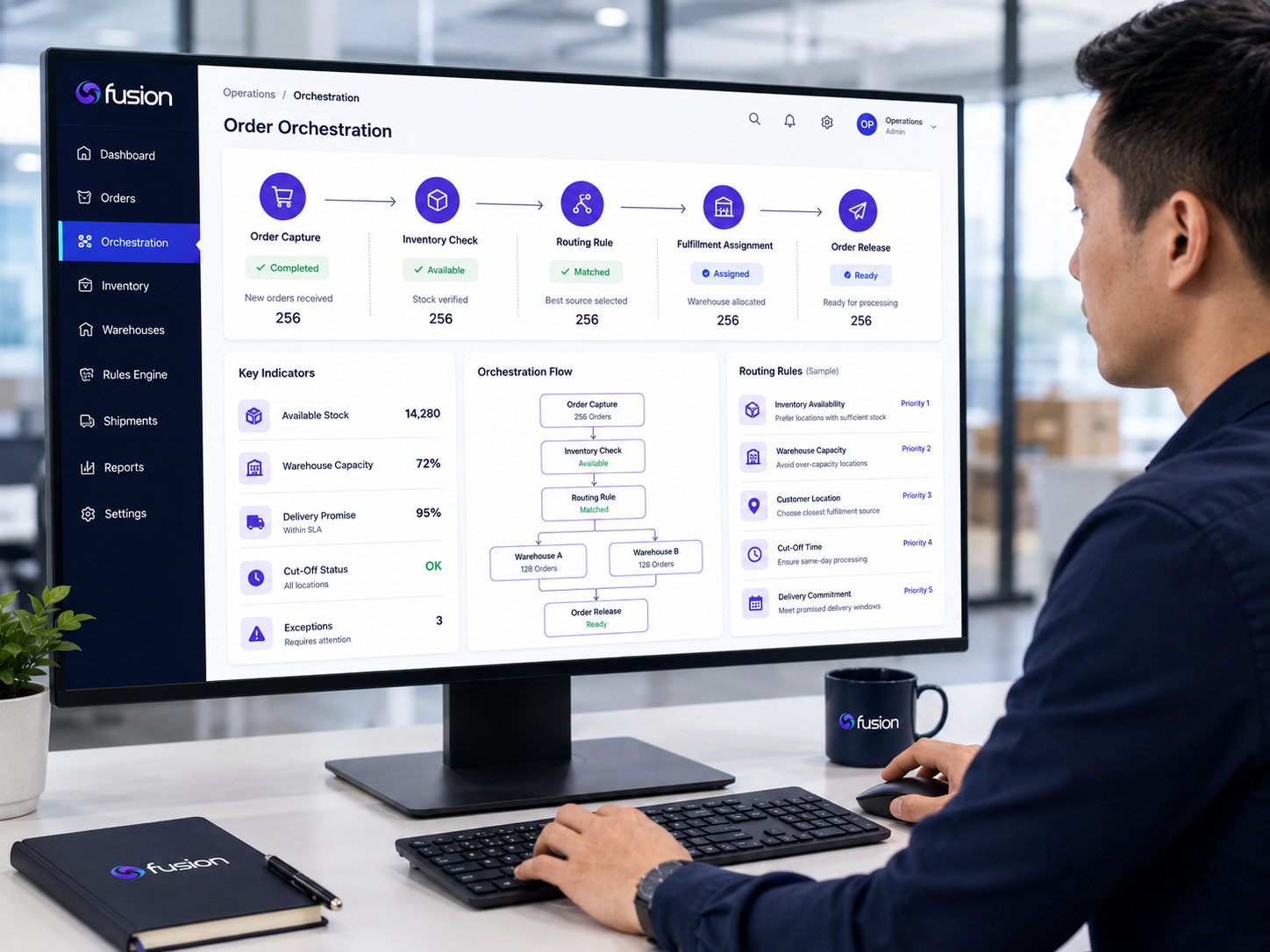
A distributed order management system relies heavily on order orchestration to coordinate fulfillment activities.
Order orchestration refers to the process of managing and coordinating all actions required to fulfill an order successfully.
This includes:
Rather than treating fulfillment as a series of isolated tasks, order orchestration creates a connected workflow that aligns inventory, warehouse operations, and logistics activities.
This coordination allows businesses to manage complex fulfillment environments more effectively.
One of the biggest challenges in order routing is balancing operational efficiency with customer expectations.
Customers increasingly expect:
At the same time, businesses must manage:
A distributed order management system helps achieve this balance by selecting fulfillment paths that support both customer satisfaction and operational objectives.
This allows businesses to maintain service standards without sacrificing efficiency.

Operational cut-off times play an important role in order routing.
Cut-off times establish deadlines for processing orders within a specific fulfillment cycle.
For example:
A distributed order management system incorporates cut-off times into routing decisions.
If one warehouse has already passed its cut-off time, the system may route the order to another location that can still process it within the required timeframe.
This helps businesses maintain delivery commitments while optimizing warehouse operations.
Strong dispatch performance depends on the ability to move orders efficiently from fulfillment centers to logistics providers.
Routing decisions directly affect dispatch outcomes.
A distributed order management system improves dispatch performance by:
When orders are routed effectively, fulfillment teams can process shipments more consistently and meet operational targets more reliably.
This contributes to better delivery performance and improved customer experience.
Implementing a distributed order management system provides several operational advantages.
Orders can be assigned to locations capable of processing them quickly.
Inventory is used more efficiently across the network.
Orders can be fulfilled from locations closer to customers.
Customers benefit from more reliable fulfillment and delivery timelines.
Businesses gain better insight into inventory availability and fulfillment activities.
These benefits support both operational efficiency and long-term scalability.
Although distributed order management systems offer significant advantages, businesses must address several challenges.
Routing decisions depend on accurate inventory information.
The system must connect effectively with:
Poorly configured routing rules can lead to inefficient fulfillment decisions.
As fulfillment networks grow, routing requirements become more sophisticated.
Proper planning and system management are essential for achieving desired outcomes.
Businesses can improve results by following several best practices.
Reliable inventory data supports better routing decisions.
Establish fulfillment objectives before configuring routing rules.
Review routing outcomes regularly and adjust strategies when needed.
Ensure inventory, fulfillment, and logistics systems share accurate data.
Balance operational efficiency with delivery commitments.
These practices help maximize the value of distributed order management systems.
As e-commerce continues to evolve, order routing is becoming increasingly data-driven.
Modern distributed order management systems are incorporating:
These capabilities allow businesses to make more informed routing decisions and respond quickly to changing conditions.
As fulfillment networks become more complex, intelligent routing will play an increasingly important role in maintaining operational efficiency.

A distributed order management system helps businesses coordinate inventory, fulfillment locations, and delivery requirements across complex operational networks. By automating routing decisions, businesses can improve efficiency while maintaining service quality.
Through effective order orchestration, organizations can coordinate fulfillment activities more effectively. By incorporating operational cut-off times, businesses can maintain processing schedules and delivery commitments. Improved routing strategies also contribute to stronger dispatch performance, helping orders move through fulfillment and shipping processes more efficiently.
As e-commerce operations continue to expand, distributed order management systems provide the structure needed to manage complexity, improve fulfillment outcomes, and support scalable growth.
Inspire E-Commerce Solutions Inc.
Warehouse 4 & 5, C Teknik Industrial, 143 P. Gregorio Street, Valenzuela,
1442 Metro Manila
inspiresolutions.asia
