
Dead stock can become a costly problem for ecommerce businesses when products remain in storage without generating sales. Inventory that once supported customer demand can eventually take up valuable warehouse space, tie up working capital, and make it harder to manage products that are still selling.
For growing ecommerce businesses, the challenge is not simply having enough products available. It is also knowing which products are moving, which are slowing down, and which are no longer contributing to sales. Without clear inventory information, businesses may continue purchasing products that are already difficult to sell.
Understanding dead stock can help ecommerce teams make better decisions about purchasing, storage, promotions, and inventory planning. Identifying products that are no longer moving also gives businesses an opportunity to take action before storage costs and tied-up capital continue to increase.
This refers to inventory that remains in storage without generating meaningful sales. These products may have little or no current demand, making them difficult for a business to sell under normal conditions.
A product does not necessarily reach this stage simply because it has been sitting in a warehouse for a short period. Some products naturally sell more slowly than others, while seasonal products may remain in storage until their relevant selling period returns.
The issue becomes more significant when inventory remains unsold for an extended period, and there is little indication that normal customer demand will recover.
For ecommerce businesses, this can create a difficult situation. The products still occupy physical storage space and represent money that has already been spent, but they are not generating the expected return.
Dead stock and slow moving inventory are related, but they represent different inventory situations.
Slow moving inventory still has some level of customer demand. It may take longer to sell, but orders continue to occur occasionally. In contrast, the other category has little to no meaningful sales activity and may have limited potential for future sales.
This distinction matters because the appropriate response can be different.
A slow moving product may only require adjusted purchasing levels, a targeted promotion, or better placement within the warehouse. Products with little or no sales activity may require a more direct strategy, such as discounting, bundling, liquidation, or discontinuation.
Businesses can therefore benefit from monitoring inventory movement before slow-selling products become increasingly difficult to recover.

This situation can develop for several reasons. In many cases, it results from purchasing, forecasting, product, or market decisions that no longer align with actual customer demand.
One of the most common causes is ordering more products than customers are likely to purchase.
A business may expect strong demand based on previous sales, market expectations, or a planned campaign. If the expected demand does not materialize, the remaining units can stay in storage long after the original sales period.
Customer preferences can change quickly, particularly in ecommerce markets where trends and purchasing behavior can shift rapidly.
Products that were popular at one point may become less relevant as customers move toward different designs, features, sizes, or product categories.
Some products have a limited selling window.
Seasonal products can become difficult to sell when the relevant season ends. If too much inventory remains afterward, the business may need to wait for the next season or use promotions to move the remaining stock.
Products can also lose demand when newer versions become available.
For example, a business selling technology accessories may introduce a new product that supports a newer device or standard. Older versions may still be functional, but customer demand can decline significantly.
Without accurate sales and inventory data, purchasing decisions can become disconnected from actual demand.
A business may reorder products based on outdated assumptions instead of current sales patterns. Over time, this can create more inventory than the business can realistically sell.
When businesses cannot easily see how products are moving across channels or locations, it becomes harder to identify which items are accumulating.
A lack of visibility can cause teams to make purchasing decisions without a complete picture of existing stock.
This type of inventory can affect more than the amount of physical space used in a warehouse. It can also create financial and operational costs.
Money spent purchasing inventory remains tied up while products sit unsold.
That capital could otherwise be used for products with stronger demand, marketing activities, business expansion, or other operating needs.
Inventory takes up warehouse space regardless of whether it is selling.
Products that remain in storage for long periods can contribute to ongoing storage costs and reduce the space available for inventory that generates regular sales.
Warehouse space needs to be organized around the movement of products.
When large amounts of inactive stock occupy storage locations, businesses may have less flexibility to position higher-demand products efficiently.
Increased Risk of Product Obsolescence
The longer products remain unsold, the greater the possibility that they will become outdated.
This is particularly relevant for products affected by trends, technology changes, expiration dates, packaging updates, or changing customer preferences.
Inactive inventory may still need to be counted, moved, reorganized, or included in warehouse processes.
This creates operational work without necessarily generating revenue from the products involved.

Excess inventory occurs when a business holds more stock than it reasonably needs based on current or expected demand.
Not all excess inventory becomes inactive for an extended period. Some excess units can still be sold over time. However, holding more products than necessary increases the risk that some of those units will remain unsold for too long.
For example, a business may purchase 1,000 units based on an expected increase in demand but sell only 400 during the planned period. The remaining 600 units may become excess inventory.
If demand continues to decline, those remaining products may eventually become difficult to sell.
This is why businesses should not only focus on whether inventory is available. They should also consider how quickly products are moving and whether current stock levels match actual demand.
Obsolete inventory is inventory that is no longer considered useful or commercially relevant to the business.
A product may become obsolete because of technology changes, discontinued product lines, expired shelf life, changes in regulations, updated packaging, or shifting customer preferences.
Obsolescence can be particularly challenging because the original purchase cost may no longer be recoverable through normal sales.
For ecommerce businesses, identifying products that are approaching obsolescence can create an opportunity to act earlier. Discounts, bundles, promotions, or other sales strategies may help move inventory before it loses even more value.
Businesses should also consider product lifecycle information when planning future purchases. Understanding when products are likely to be replaced or discontinued can reduce unnecessary stock accumulation.
Identifying inactive inventory requires more than looking at the total quantity of products in storage. Businesses need to examine inventory movement and sales activity over time.
Sales history can show whether a product is consistently generating orders or whether its sales have declined significantly.
Products with little or no recent sales activity may require closer review.
Inventory age can help businesses identify products that have remained in storage longer than expected.
Setting internal thresholds can make it easier to flag products for review before they become long-term storage problems.
A product with a large quantity of available stock and consistently low sales may indicate an imbalance between inventory levels and customer demand.
Comparing current stock with recent sales can help teams determine whether purchasing levels are appropriate.
Businesses selling through multiple marketplaces or ecommerce channels should consider product movement across the entire operation.
A product may appear slow on one channel but continue to sell through another. Reviewing information across channels can therefore provide a more accurate picture of overall demand.
Businesses should pay attention to products that are seasonal, discontinued, replaced by newer versions, or affected by changing market preferences.
These factors can help teams identify products that may require action before they become difficult to sell.
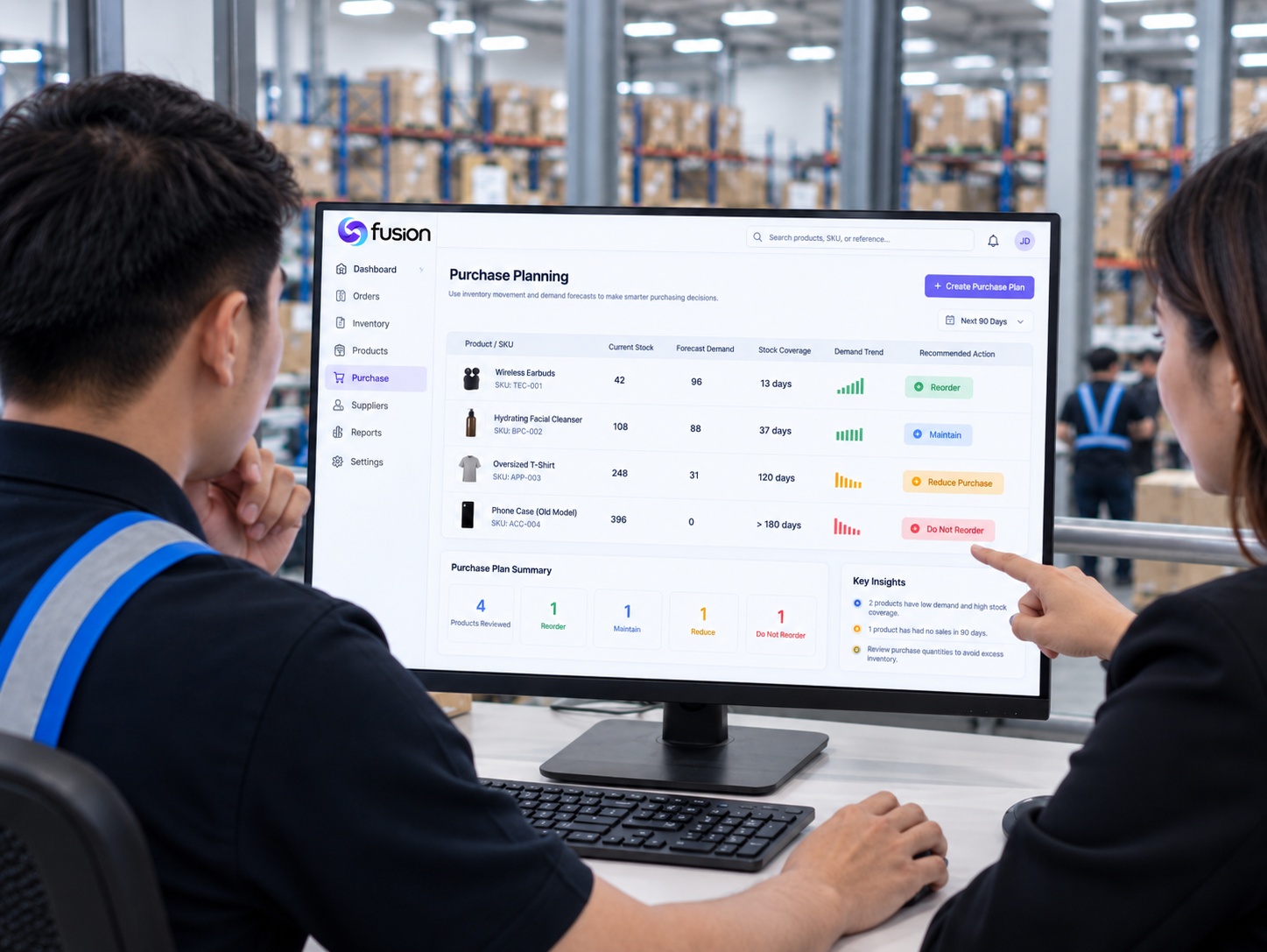
Once inactive inventory has been identified, businesses need to determine the most practical way to handle it.
Discounts and targeted promotions can help attract customers who may not purchase the product at its original price.
The objective is to recover as much value as reasonably possible rather than allowing the inventory to remain inactive indefinitely.
Combining slower-selling products with popular products can provide another way to move inactive inventory.
Bundles can also create additional value for customers when the products are complementary.
Clearance sales can help businesses move products that are unlikely to return to normal sales levels.
The appropriate discount will depend on the product, margin, age, and expected demand.
When inventory has little realistic potential for regular ecommerce sales, liquidation may be an option.
Although liquidation may result in a lower return, it can release warehouse space and recover some value from products that would otherwise continue to sit unused.
Managing existing inactive inventory is only part of the solution. Businesses should also prevent additional units from entering the warehouse unnecessarily.
Purchasing decisions should reflect current sales performance and realistic demand rather than automatically repeating previous order quantities.
Preventing inactive inventory is generally easier than trying to recover value from products after they have remained unsold for an extended period.
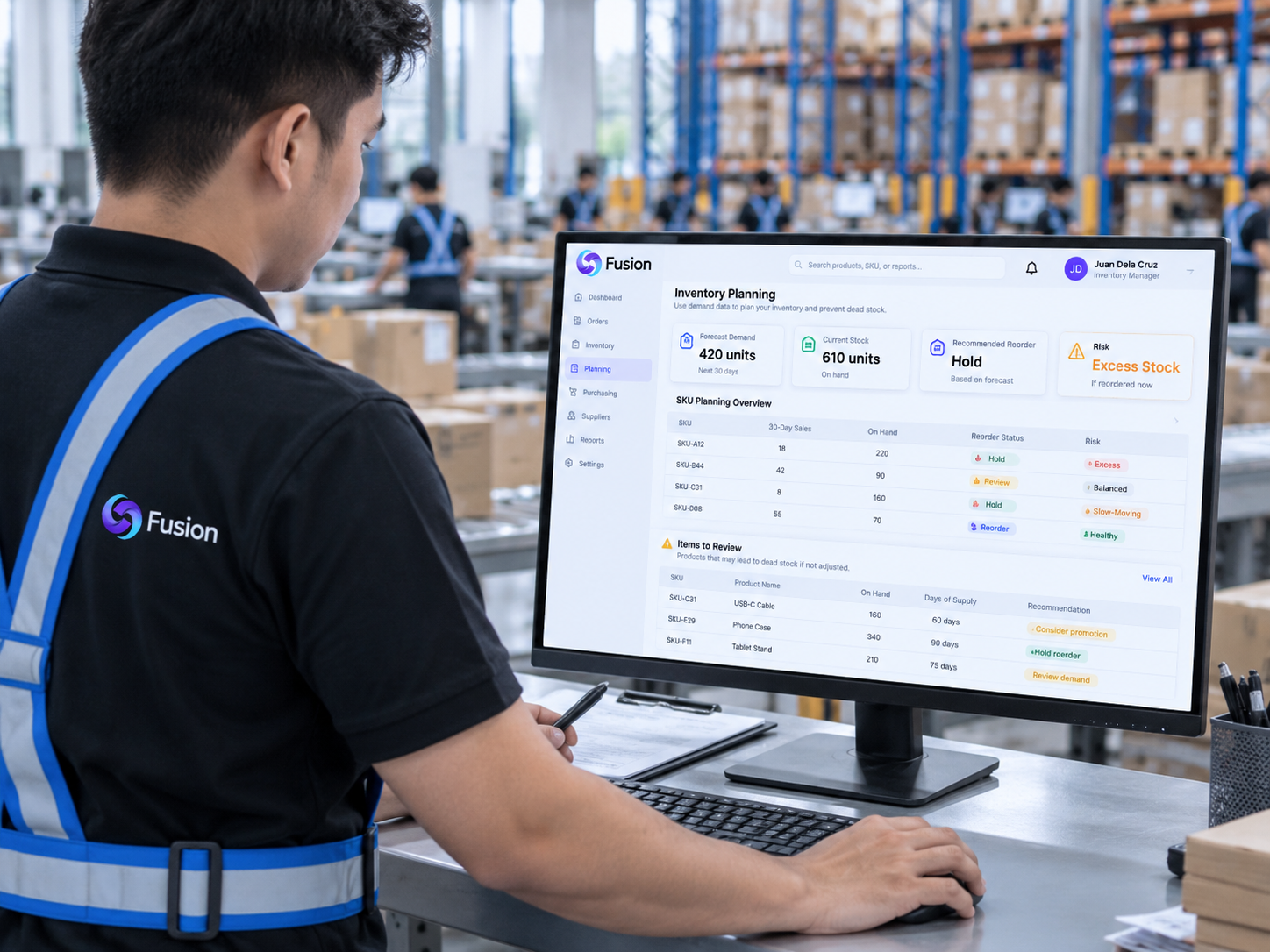
Demand planning should use current sales information, historical patterns, seasonal trends, and known changes in customer behavior.
The goal is to make purchasing decisions based on realistic demand rather than assumptions alone.
Businesses can establish thresholds that indicate when products need additional review.
For example, a product with a certain amount of stock and very low sales activity could be flagged for evaluation.
Regular inventory reviews can help teams identify changes in product movement before they become larger problems.
Reviewing inventory should include both quantity and movement, not just whether the recorded stock count is accurate.
Purchasing decisions should reflect what sales and ecommerce teams are seeing in the market.
Communication between departments can help prevent situations where additional inventory is ordered while existing stock is already difficult to sell.
Reliable inventory data can help businesses understand which products are selling, which are slowing down, and which may require action.
A clearer view of inventory can support better purchasing and storage decisions as the business grows.
Technology can make it easier to monitor inventory movement and identify products that may require attention.
A centralized inventory system can bring together information about stock levels, orders, product movement, and warehouse activity. This gives teams a more consistent view of inventory rather than requiring them to compare information across separate records.
Barcode-based processes can also help businesses maintain accurate product records as items are received, stored, picked, and dispatched.
With better visibility, businesses can review inventory performance more regularly and identify products that are not moving as expected.
Technology does not eliminate the need for inventory planning, but it can give teams better information for making those decisions.
Warehouse operations can also influence how effectively businesses manage inactive inventory.
An organized warehouse makes it easier to identify where products are stored and how much space they occupy. Clear product locations can help teams review inventory without spending unnecessary time searching for specific items.
Warehouse organization can also support better use of available space. Products with higher demand can be positioned for efficient picking, while less active products can be stored in appropriate locations without taking priority over frequently ordered items.
Accurate receiving, storage, picking, and inventory records are important throughout this process. When warehouse information is reliable, businesses have a stronger foundation for identifying and managing inventory that is not moving.
Managing inactive inventory should not be treated as a one-time cleanup exercise. It should form part of a broader inventory strategy.
Businesses need to understand how products move from purchasing through storage and eventually to customers. Reviewing inventory performance regularly can help teams identify changes in demand and adjust purchasing decisions accordingly.
The objective is not to maintain the lowest possible inventory level. Holding too little stock can create availability problems, while holding too much can increase storage costs and tie up working capital.
A balanced inventory strategy considers demand, product lifecycle, storage capacity, purchasing lead times, and the cost of holding stock.
This approach can help ecommerce businesses maintain the products customers want while reducing the amount of capital and warehouse space tied up in products that are unlikely to sell.
For growing ecommerce businesses, managing inventory becomes more complex as product ranges, order volumes, sales channels, and warehouse requirements increase.
Reliable warehousing and fulfillment processes can help businesses maintain accurate inventory records, organize products effectively, and manage stock as it moves through the fulfillment process.
A fulfillment operation should provide clear visibility into inventory levels and product movement while supporting accurate receiving, storage, picking, packing, and dispatch.
When inventory and fulfillment processes work together, businesses have a stronger foundation for identifying products that are slowing down and taking action before they become long-term stock problems.
Dead stock can affect ecommerce businesses through tied-up capital, storage requirements, reduced warehouse efficiency, and the risk of products becoming obsolete.
The best approach is to identify inventory problems early rather than waiting until products have little chance of generating sales. Monitoring sales activity, reviewing inventory age, comparing stock levels with demand, and evaluating product lifecycles can help businesses recognize potential problems sooner.
Managing excess stock may require promotions, product bundles, clearance pricing, or other strategies depending on the product and its remaining value. At the same time, better demand planning and inventory monitoring can help prevent similar situations from developing in the future.
With accurate inventory information and well-organized fulfillment processes, ecommerce businesses can make more informed decisions about what to purchase, store, promote, and discontinue.
Inspire E-Commerce Solutions Inc.
Warehouse 4 & 5, C Teknik Industrial, 143 P. Gregorio Street, Valenzuela,
1442 Metro Manila
inspiresolutions.asia
