
As ecommerce businesses expand across multiple sales channels, managing day-to-day operations becomes increasingly complex. Orders move through different marketplaces, inventory is stored across multiple locations, and customers expect accurate product availability with timely deliveries. Coordinating these activities efficiently requires more than disconnected systems and manual processes.
A digital supply chain helps businesses connect critical operational functions by bringing together inventory management, fulfillment, order processing, and supply chain data into a more unified ecosystem. Instead of relying on separate systems that operate independently, businesses gain better access to operational information that supports faster and more informed decision-making.
For growing ecommerce businesses, adopting a digital supply chain is not simply about implementing new technology. It is about creating connected workflows that improve operational visibility, support efficient ecommerce fulfillment, and help businesses respond more effectively to changing customer demand.
This article explores how digital supply chains support modern ecommerce operations, the benefits of connected supply chain processes, and the practical steps businesses can take to strengthen operational performance.
Traditional supply chain operations often rely on separate systems to manage purchasing, inventory, warehousing, fulfillment, and logistics. While each system may perform its own function effectively, limited communication between them can create operational inefficiencies.
A digital supply chain connects these operational areas through integrated technologies that enable information to move more efficiently across the business.
Instead of relying on manual updates or isolated reports, businesses can monitor operational activities using more accurate and timely information.
A connected supply chain supports better coordination between:
As ecommerce operations continue to grow, connected information becomes increasingly valuable for maintaining efficiency across multiple business functions.
Modern ecommerce businesses manage far more than customer orders.
Every sale requires coordination between inventory availability, warehouse operations, order processing, and delivery activities. When information is delayed or inconsistent, even small operational issues can affect customer satisfaction and overall business performance.
A digital supply chain helps create stronger connections across these operational processes, allowing businesses to respond more effectively to changing business requirements.
Having access to accurate operational information allows businesses to monitor activities across multiple areas of the supply chain.
Greater supply chain visibility helps teams understand:
With better visibility, businesses can identify potential issues earlier and make more informed operational decisions.

Maintaining accurate inventory becomes increasingly important as businesses expand across multiple ecommerce channels.
A connected digital supply chain supports more effective inventory management by helping businesses monitor stock movement, maintain accurate inventory records, and improve replenishment planning.
Better inventory information can help reduce:
Accurate inventory data also supports purchasing decisions while helping businesses maintain consistent product availability.

Efficient ecommerce fulfillment depends on accurate information flowing between inventory, warehouse operations, and order management systems.
When fulfillment teams have access to reliable operational data, they can process orders more efficiently while reducing unnecessary delays.
Connected fulfillment processes help businesses:
As order volumes increase, these operational improvements become even more valuable for maintaining customer satisfaction.
Businesses that rely on disconnected systems often encounter operational challenges that become more noticeable as ecommerce operations grow. When information is spread across multiple platforms or updated manually, teams may spend more time resolving issues than improving overall efficiency.
Many businesses use separate platforms to manage inventory, warehousing, order processing, and customer information. While each system serves a specific purpose, limited integration can create inconsistencies between departments.
Without connected systems, businesses may experience:
Creating stronger connections between business systems helps improve collaboration while reducing manual administrative work.
Operational decisions depend on having access to accurate and timely information.
When teams rely on spreadsheets, manual reports, or disconnected data sources, identifying inventory issues or fulfillment delays can take longer than necessary.
Improving information flow across the supply chain allows businesses to respond more quickly to changing demand and operational challenges.
Inventory discrepancies often occur when stock movements are not updated consistently across business systems.
Differences between recorded inventory and actual stock levels can affect purchasing decisions, delay order fulfillment, and reduce customer confidence.
Maintaining accurate inventory information helps businesses better manage stock availability while supporting more reliable ecommerce operations.
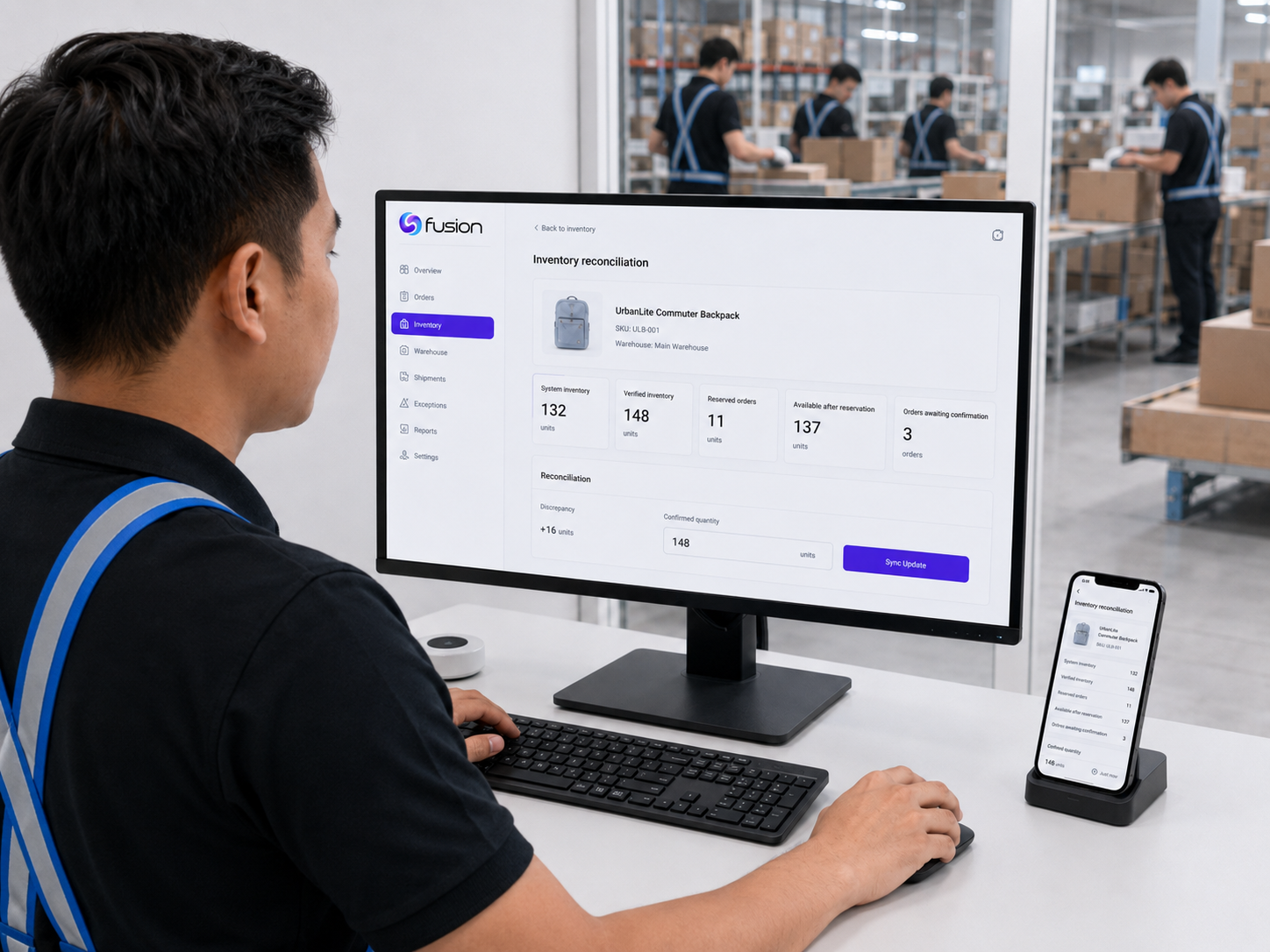
As businesses expand across multiple sales channels and fulfillment locations, communication between teams becomes increasingly important.
Without connected operational data, warehouse teams, inventory managers, customer service representatives, and business leaders may work with different information.
Improving coordination across departments supports more efficient workflows and helps reduce operational bottlenecks.
Developing a more connected digital supply chain involves more than adopting new technology. Businesses also need consistent processes that improve communication, data accuracy, and operational coordination across the organization.
Inventory management, warehouse operations, ecommerce platforms, and order processing systems should exchange information consistently.
Integrated systems help reduce manual updates while providing teams with more reliable operational data.
This supports faster decision-making and improves collaboration across different business functions.
Reliable information is the foundation of every digital supply chain.
Businesses should establish clear processes for updating inventory records, processing customer orders, and monitoring operational activities to maintain data consistency across connected systems.
Accurate information supports better planning while reducing operational errors.
Regularly reviewing operational performance helps businesses identify opportunities to improve efficiency.
Important areas to monitor include:
Performance monitoring allows businesses to make continuous improvements based on operational data rather than assumptions.
As ecommerce businesses grow, operational complexity naturally increases.
Building flexible supply chain processes allows organizations to adapt to higher order volumes, additional sales channels, and changing customer expectations without significantly increasing manual workloads.
Scalable operational practices help businesses maintain consistent performance as they continue expanding.
A digital supply chain is most effective when technology, operational processes, and business teams work together toward the same goals. As ecommerce operations continue to evolve, businesses benefit from creating workflows that support flexibility, accuracy, and collaboration across every stage of the supply chain.
Organizations can strengthen their operations by focusing on:
Connected operational data gives businesses greater confidence when making decisions about inventory, fulfillment, purchasing, and resource allocation.
Access to reliable information helps teams respond more effectively to changes in customer demand while improving day-to-day operational planning.
Warehouse personnel, inventory managers, customer service representatives, and operations teams all rely on accurate information to perform their responsibilities effectively.
A connected supply chain enables departments to work from consistent data, helping reduce communication gaps and improving coordination throughout the fulfillment process.
Customer expectations, ecommerce trends, and operational requirements continue to evolve.
Businesses that establish flexible supply chain processes are better prepared to introduce new sales channels, expand fulfillment capabilities, and manage increasing order volumes while maintaining operational consistency.
Managing ecommerce operations successfully requires visibility across inventory, fulfillment, warehouse activities, and order processing. As businesses grow, disconnected systems and manual workflows can make it more difficult to maintain efficiency and respond quickly to operational changes.
A digital supply chain provides a connected approach that helps businesses improve inventory management, strengthen ecommerce fulfillment, and increase supply chain visibility across daily operations. By integrating information across critical business functions, organizations can reduce operational inefficiencies, improve coordination between teams, and make more informed decisions.
Developing a connected supply chain creates a stronger operational foundation that supports consistent performance, greater flexibility, and long-term ecommerce success.
As ecommerce businesses continue to manage larger inventories, multiple sales channels, and evolving customer expectations, connected operations become increasingly important. A digital supply chain helps bring together inventory, fulfillment, warehouse management, and operational data into a more coordinated environment.
With stronger inventory management, reliable ecommerce fulfillment, and improved supply chain visibility, businesses can streamline workflows, improve operational accuracy, and respond more effectively to changing market demands.
Taking a connected approach to supply chain management allows ecommerce businesses to strengthen daily operations while creating the flexibility needed to support future growth.
Inspire E-Commerce Solutions Inc.
Warehouse 4 & 5, C Teknik Industrial, 143 P. Gregorio Street, Valenzuela,
1442 Metro Manila
inspiresolutions.asia