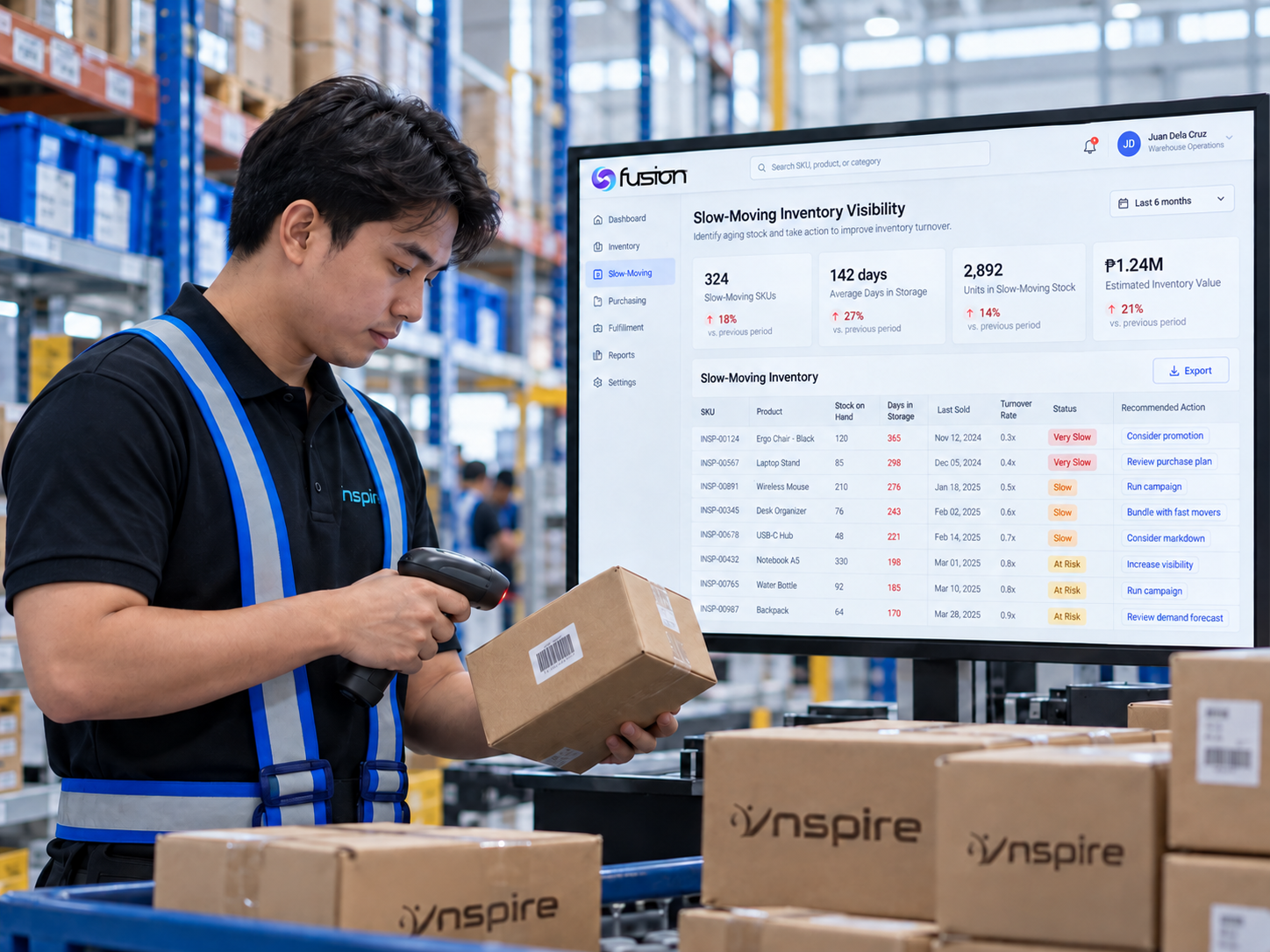
Ecommerce businesses need to maintain enough inventory to meet customer demand while avoiding products that remain in storage for extended periods. Not every product that sells slowly is immediately a problem, but items with declining movement can become difficult to manage if businesses do not identify them early.
Slow moving inventory refers to products that take longer than expected to sell compared with normal sales patterns. These products may still have customer demand, but their slower sales activity can affect warehouse space, inventory turnover, and future purchasing decisions.
The challenge is that slow moving products often develop gradually. A product may begin with strong sales, then experience declining demand due to changing customer preferences, seasonal shifts, market competition, or product updates. Without regular inventory reviews, these items can continue occupying storage space and eventually become dead stock.
For ecommerce businesses, identifying slow moving inventory early can provide more opportunities to adjust purchasing decisions, improve inventory management, and prevent products from becoming long-term storage concerns.
Slow moving inventory refers to products that remain in stock longer than expected because they are selling at a slower rate than normal. These products are not necessarily impossible to sell, but their sales performance may not justify the amount of inventory currently being stored.
For example, an ecommerce business may normally sell 500 units of a product every month. If customer demand decreases and the product begins selling only 100 units monthly, the remaining stock may take significantly longer to move.
Unlike products with consistent demand, slow moving inventory can create uncertainty for businesses. Teams may need to evaluate whether the product still has market demand, whether purchasing quantities should change, or whether additional actions are needed to encourage sales.
Slow moving inventory is different from dead stock. A slow moving product may still generate sales, while dead stock typically refers to inventory that has little or no realistic chance of selling.
Identifying slow moving products before they become dead stock gives businesses more opportunities to make adjustments while the inventory still has value.
Slow moving inventory can develop for many reasons. In most cases, it is caused by changes between expected demand and actual sales performance.
Some common causes include:
Customer interests can change over time. Products that were previously popular may experience lower demand as customers shift toward different features, designs, brands, or alternatives.
When businesses continue purchasing based on previous sales patterns, inventory levels may no longer match current customer interest.
Forecasts help businesses estimate future inventory needs, but predictions do not always match actual buying behavior.
If a business expects stronger demand than what occurs, it may purchase more products than customers are likely to buy. This can leave inventory sitting in storage longer than expected.
Some products perform strongly during specific periods but experience slower sales afterward.
For example, seasonal products may sell quickly during holidays or certain weather conditions but become slower moving once demand decreases.
New product versions, improved alternatives, or changing market trends can reduce interest in older items.
Businesses that continue holding large quantities of products near the end of their lifecycle may face slower inventory movement.
Buying larger quantities can reduce per-unit costs or prepare for expected demand. However, if sales do not meet expectations, excess inventory can accumulate, and some products may begin moving more slowly.

Identifying slow moving inventory early allows ecommerce businesses to take action before products become a larger operational concern. While every business has different sales cycles, several warning signs can indicate that inventory movement is slowing.
One of the clearest signs of slow moving inventory is when products remain stored for longer than expected.
A product that normally sells within weeks but remains available for several months may require closer evaluation. Extended storage time can indicate that current inventory levels no longer match customer demand.
A consistent decrease in sales can indicate that a product is losing momentum.
A temporary sales decline does not always mean a product is becoming slow moving. However, when lower sales continue over time without signs of recovery, businesses may need to review whether current inventory quantities are still appropriate.
Inventory turnover measures how frequently products are sold and replaced during a specific period.
Products with lower turnover compared with similar items may indicate slower movement. Monitoring turnover rates can help businesses identify which products require additional attention.
Products that remain unsold continue taking up warehouse space.
As slow moving inventory accumulates, businesses may need more storage capacity for items that are not generating regular sales. This can make warehouse organization and fulfillment activities more difficult.
Another warning sign occurs when businesses continue ordering products even though existing inventory is not moving as expected.
Without reviewing sales activity before replenishment, businesses may continue increasing inventory levels and create a larger slow moving stock issue.

Inventory turnover is an important measurement for understanding how efficiently products move through an ecommerce operation.
A higher turnover rate generally indicates that products are selling and being replaced regularly. A lower turnover rate may suggest that inventory is staying in storage longer than expected.
However, inventory turnover should not be viewed separately from other factors. A product with lower turnover may still be appropriate if it has seasonal demand, higher profit margins, or longer sales cycles.
For example, a seasonal product may naturally have slower movement outside of its peak period. Meanwhile, a product that consistently shows declining turnover across multiple periods may require closer review.
Businesses can use inventory turnover alongside other information, such as:
By reviewing these factors together, ecommerce businesses can better determine whether slower movement is temporary or a sign of a larger inventory issue.

Slow moving inventory can affect more than product sales. When products remain in storage for extended periods, they can create challenges across purchasing, warehouse operations, and financial planning.
Warehouse space is a limited resource. Products that remain inactive for long periods may occupy locations that could be used for faster-moving items.
This can affect how efficiently teams organize, locate, and process inventory.
Stored inventory requires ongoing management. Businesses may need to account for storage space, handling activities, monitoring, and other operational resources associated with maintaining stock.
The longer products remain inactive, the more resources may be used without generating additional sales activity.
Money invested in slow moving inventory remains tied to products that are not selling quickly.
This can reduce the amount of working capital available for other business needs, such as purchasing new products, investing in marketing activities, or maintaining inventory with stronger demand potential.
Slow moving inventory does not always become dead stock, but the risk increases when businesses do not monitor and address declining movement.
Products may lose relevance as customer preferences change, newer alternatives become available, or market conditions shift.
Slow moving inventory and dead stock are related, but they represent different inventory situations.
Slow moving inventory still has some level of customer demand. Products may continue selling, but at a slower rate than expected.
Dead stock refers to products that have little or no realistic sales activity. These items often remain stored without generating meaningful returns for the business.
The transition from slow moving inventory to dead stock can happen gradually. A product may first experience declining sales, then continue remaining in storage while purchasing decisions remain unchanged.
For example:
A product sells consistently after launch but begins receiving fewer orders over time. If the business continues replenishing the item based on older demand patterns, inventory levels may continue increasing. Eventually, the product may become difficult to sell.
This is why early identification is important. Businesses have more options when products still have demand, including:
Effective inventory management helps ecommerce businesses maintain better control over product movement and stock levels.
Rather than waiting until products become difficult to sell, businesses can use regular reviews to understand which items are performing well and which require attention.
Good inventory management practices may include:
Tracking product performance helps businesses identify changes in demand before inventory levels become difficult to manage.
Purchasing quantities should reflect current demand rather than relying only on previous sales performance.
Reviewing how long products have remained in storage can help businesses identify items that may require action.
Some products naturally move faster than others. Comparing similar products can help businesses recognize which items are underperforming.
Reliable inventory data allows teams to make decisions based on current stock levels, product movement, and sales activity.
A proactive approach helps businesses avoid allowing slower-moving products to accumulate without a clear plan.
Inventory data gives ecommerce businesses a clearer understanding of how products perform over time. Without accurate information, teams may only notice slow moving inventory after products have already occupied storage space for extended periods.
Monitoring product movement allows businesses to evaluate whether inventory levels match actual customer demand.
Important information to review may include:
For example, a product with increasing inventory levels and declining sales activity may require closer attention. Reviewing this information regularly can help businesses determine whether they should adjust purchasing decisions or take action to improve product movement.
Inventory data can also help identify patterns across different products. Businesses may discover that certain categories consistently move slower than others or that specific products require different inventory strategies.
Rather than relying on assumptions, ecommerce teams can use inventory information to make decisions based on actual product performance.
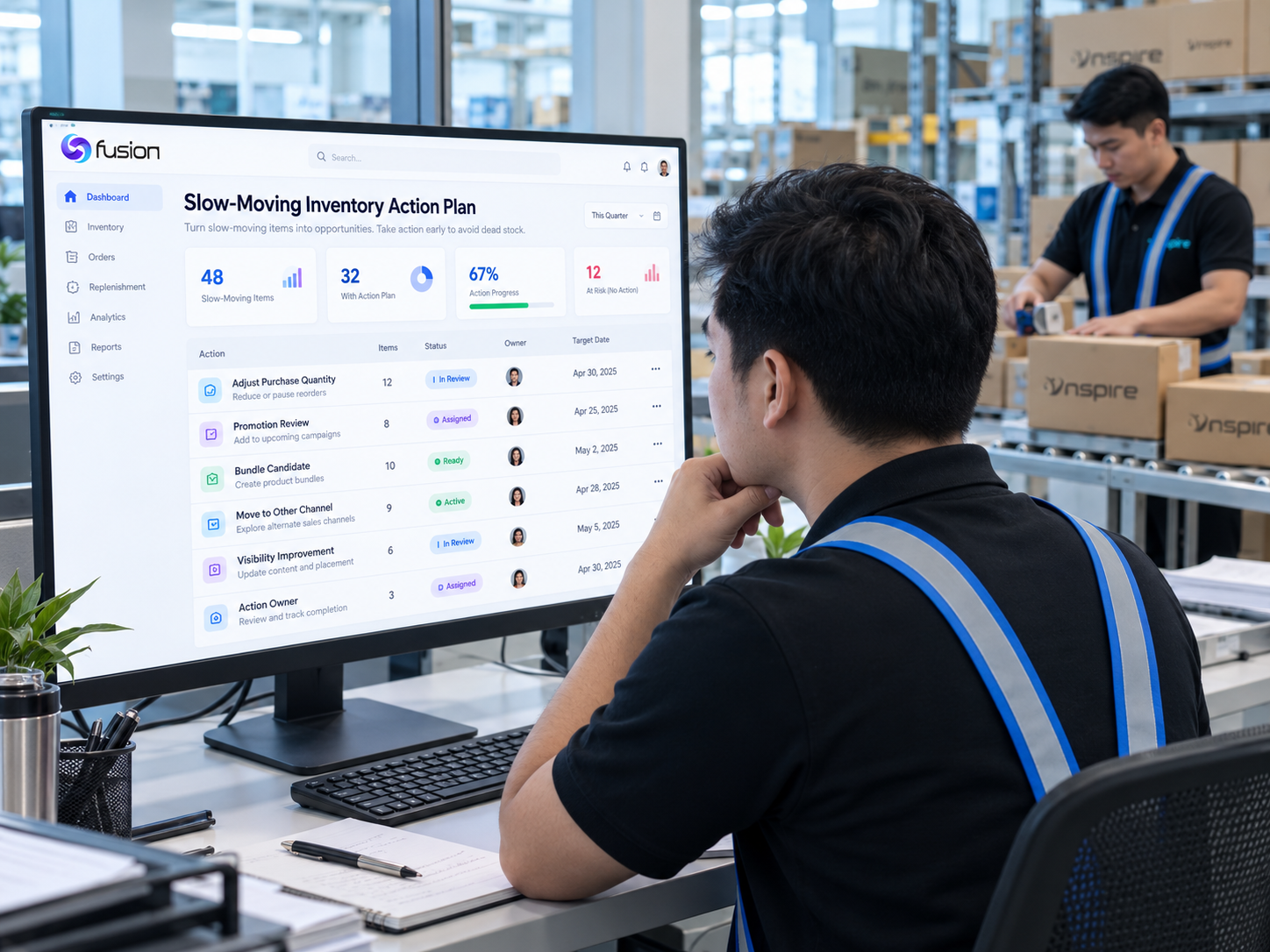
Slow moving inventory does not always need to become a major loss. Businesses can often take action while products still have some level of demand.
The right approach depends on the product, market conditions, and business goals.
Adjusting pricing or creating targeted promotions may help increase customer interest in products that are selling slower than expected.
Businesses may consider discounts, limited-time offers, or promotional campaigns to encourage purchases while the product remains relevant.
Combining slower-moving products with popular items can help businesses increase product visibility and encourage sales.
For example, an ecommerce store may bundle an older product with a frequently purchased item to create additional value for customers.
One of the most important steps is preventing the problem from becoming larger.
If a product is moving slower than expected, businesses should review future purchase quantities and avoid continuing the same replenishment pattern.
Some products may perform differently depending on where they are offered.
Businesses may review whether certain marketplaces, promotional channels, or customer segments provide better opportunities to sell slower-moving products.
Sometimes products move slowly because customers are not discovering them.
Improving product descriptions, images, merchandising, and promotional placement may help increase attention and support additional sales activity.
Managing slow moving inventory early gives businesses more flexibility before products lose relevance or become dead stock.
As ecommerce businesses expand, managing slow moving inventory becomes more challenging.
Growth often introduces:
With more inventory to monitor, businesses may find it harder to identify products that are no longer performing as expected.
A product that receives limited attention may continue occupying warehouse space while purchasing decisions continue based on outdated information.
Growing ecommerce operations benefit from processes that regularly review:
These reviews allow businesses to recognize slower-moving products earlier and make adjustments before inventory becomes difficult to manage.
Better visibility also helps different teams coordinate decisions. Purchasing teams can understand sales trends, warehouse teams can identify storage concerns, and operations teams can evaluate inventory performance more effectively.
Slow moving inventory is often a result of a gap between available stock and actual customer demand.
Businesses may purchase inventory based on expected sales, but customer preferences, market conditions, and product performance can change over time.
Greater inventory visibility helps ecommerce businesses understand what is happening with their products before problems become larger.
By monitoring product movement, reviewing inventory turnover, and maintaining accurate inventory information, businesses can:
The goal is not to eliminate every product that sells slowly. Some products naturally have longer sales cycles or seasonal demand patterns.
Instead, businesses should focus on understanding why products are moving slowly and deciding what action makes sense based on accurate information.
Slow moving inventory is not always a sign of poor performance, but ignoring slower product movement can create larger inventory challenges over time.
By identifying warning signs early, ecommerce businesses can make better decisions about purchasing, replenishment, promotions, and stock management.
Tracking sales activity, reviewing inventory turnover, and maintaining accurate inventory information can help businesses understand which products require attention before they become dead stock.
A proactive approach allows businesses to maintain healthier inventory levels while making better use of warehouse space and operational resources.
Inspire E-Commerce Solutions Inc.
Warehouse 4 & 5, C Teknik Industrial, 143 P. Gregorio Street, Valenzuela,
1442 Metro Manila
inspiresolutions.asia
