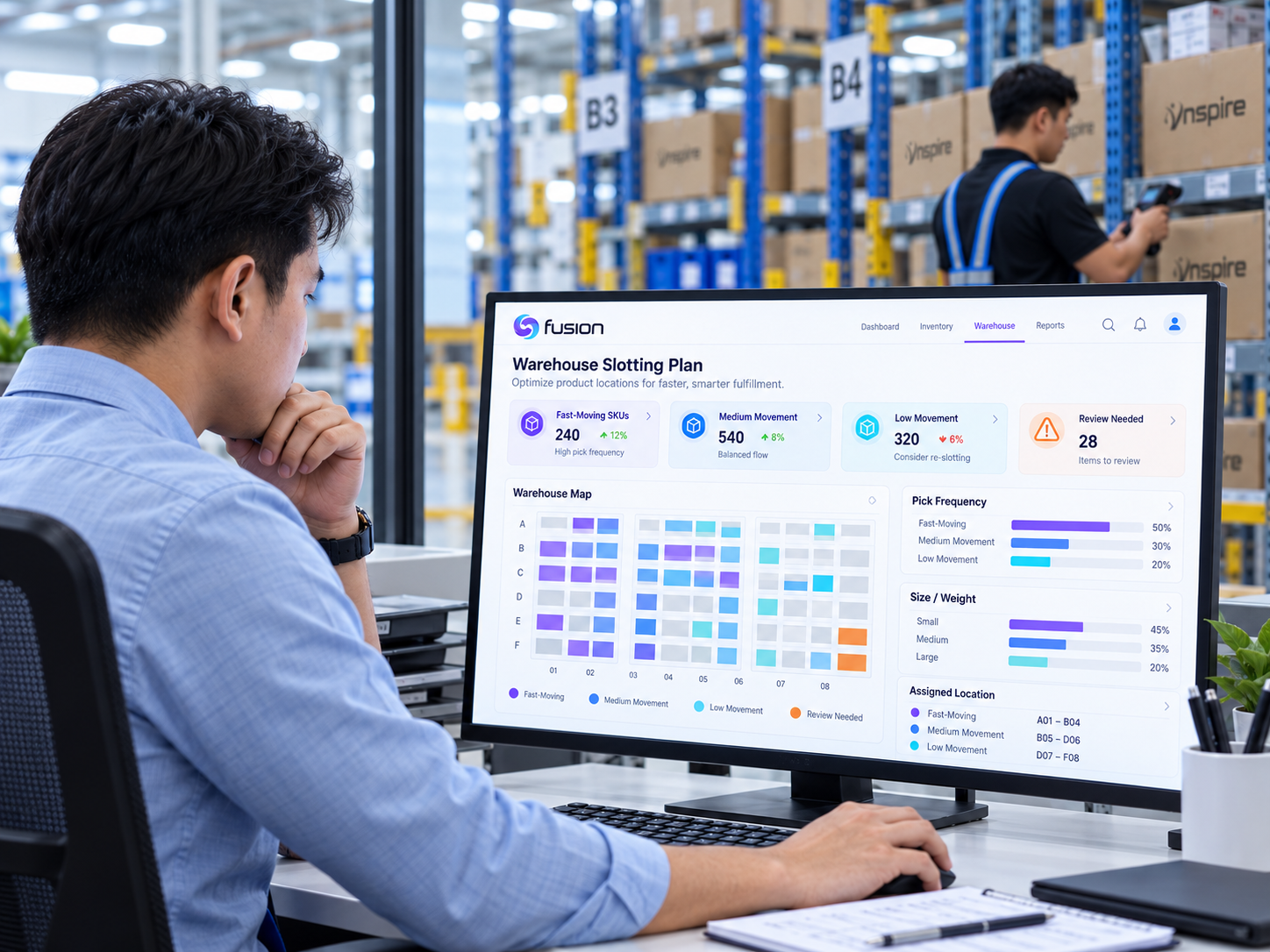
An ecommerce warehouse needs more than enough space to store products. Products also need to be placed where warehouse teams can access them efficiently as orders move through the fulfillment process. Poor product placement can increase unnecessary movement, slow down picking, and make daily warehouse tasks harder to manage.
Warehouse slotting is the process of deciding where products should be stored within a warehouse based on factors such as demand, size, weight, picking frequency, and storage requirements. When products are placed in appropriate locations, warehouse teams can spend less time searching for items and more time processing orders efficiently.
Effective slotting is therefore closely connected to the broader ecommerce warehouse process. From receiving inventory to storing products, picking customer orders, packing shipments, and preparing them for dispatch, product placement can influence how smoothly work moves through the warehouse.
Warehouse slotting refers to the process of determining the most appropriate storage location for each product or SKU within a warehouse. The goal is to position products in locations that support efficient movement, picking, storage, and fulfillment.
Not every product needs to be stored in the same type of location. High-demand products may benefit from accessible locations, while products that are picked less frequently may be placed in areas that are farther from primary picking routes.
Product characteristics also matter. Large or heavy products may require specific storage areas, while smaller items may be easier to store in shelving or bins. Products with special storage requirements may also need designated locations.
Effective slotting considers how products are actually handled rather than simply filling available warehouse space.
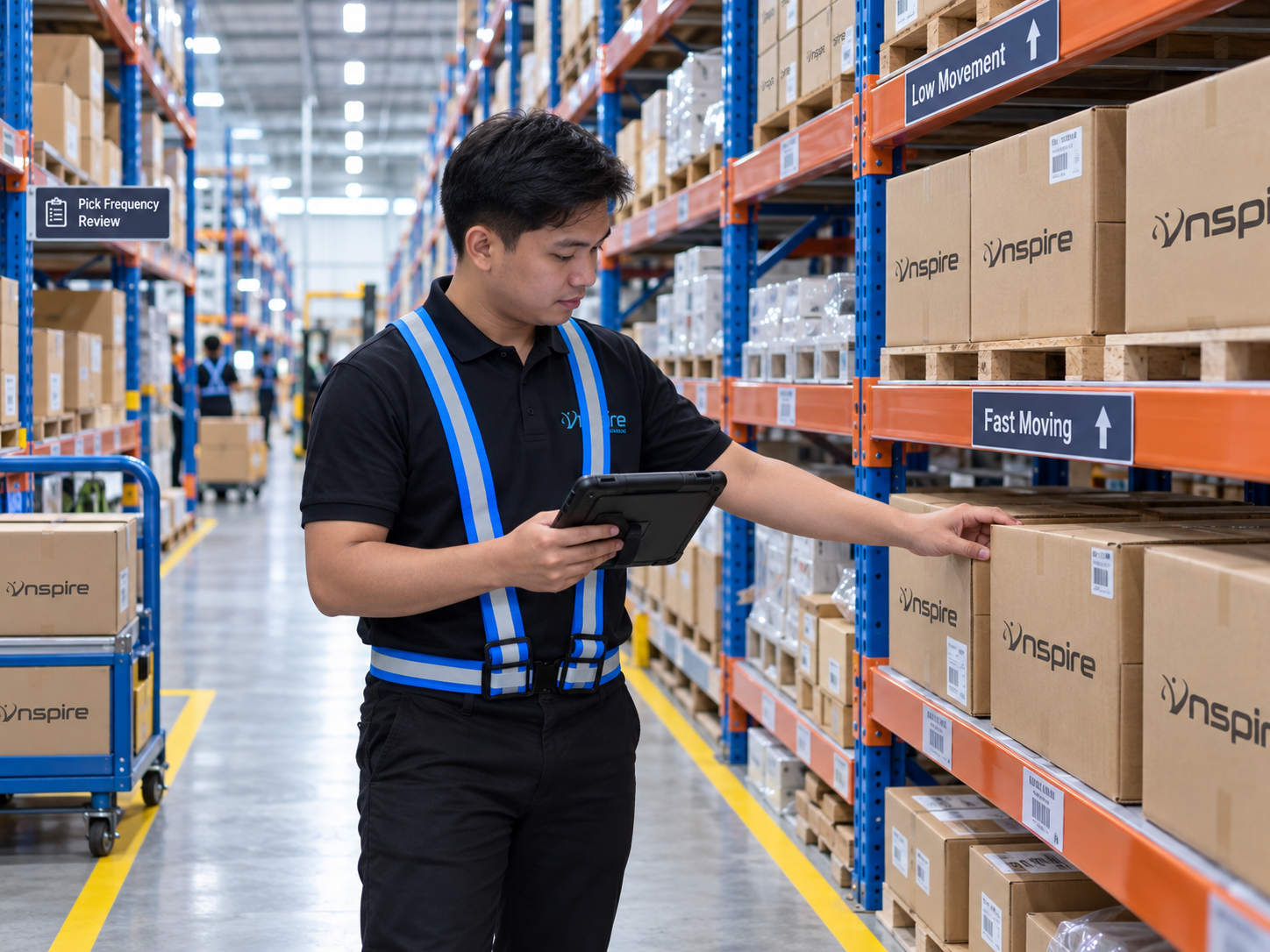
Ecommerce warehouses may process many orders containing different products throughout the day. The amount of time warehouse teams spend locating and moving products can therefore have a direct effect on fulfillment efficiency.
If frequently picked products are stored in inconvenient locations, warehouse workers may need to travel farther for each order. Over time, these additional movements can increase picking time and create unnecessary congestion in busy areas.
Better product placement can help create shorter and more practical picking routes. It can also make commonly handled products easier to access while keeping storage areas organized.
This does not mean every high-demand product should simply be placed closest to the packing area. Warehouse teams also need to consider product size, weight, safety, storage requirements, and the way products are commonly ordered together.
The objective is to create a warehouse layout that supports the actual movement of products and people.
Warehouse slotting affects several stages of the ecommerce warehouse process. Product placement begins to matter once inventory enters the facility and continues as products move through storage and fulfillment.
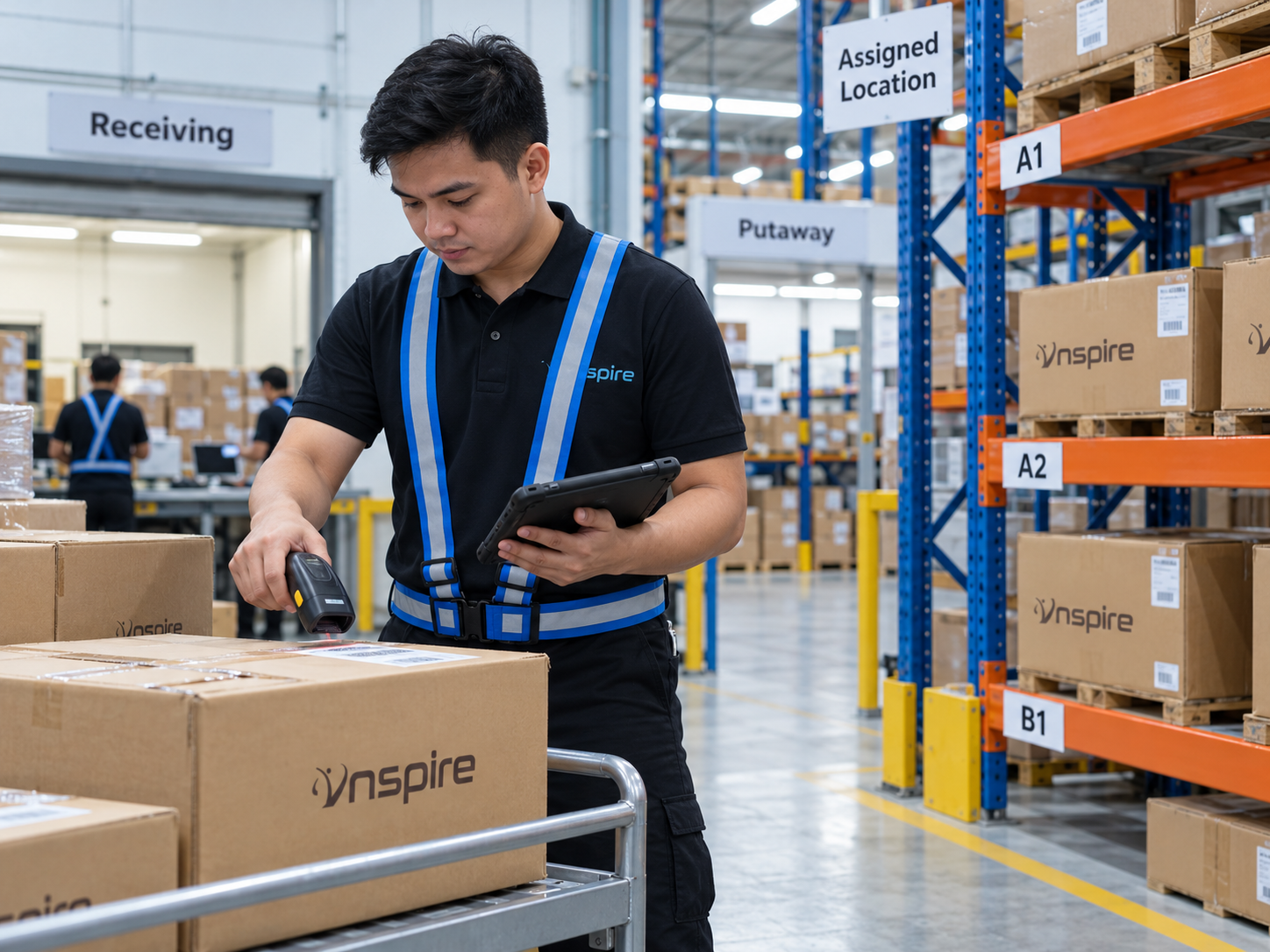
When new inventory arrives, warehouse teams need to identify the products and place them in appropriate storage locations.
A clear slotting plan can help teams determine where products belong instead of placing them wherever space happens to be available. This makes the putaway process more consistent and can make products easier to locate later.
Once products are placed in storage, their locations need to remain accurate. Warehouse teams should be able to determine where a product is stored without relying on memory or manually searching multiple areas.
Clear locations and reliable inventory records can make daily warehouse activities easier to manage.
Picking is one of the areas where product placement can have the most noticeable effect.
When frequently picked products are positioned appropriately, warehouse workers may be able to complete orders with less unnecessary travel. Products that are commonly ordered together can also be considered when planning storage locations.
After picking, products move to packing areas where orders are checked and prepared for dispatch. Efficient product placement can help keep the flow of picked orders moving toward packing without unnecessary delays.
Once orders are packed, they need to be prepared for collection or dispatch. A well-organized warehouse can make it easier to move completed orders through the final stage of the warehouse process.
The composition of warehouse inventory can change over time. Some products may become more popular, while others may be ordered less frequently. New products may also be introduced, creating additional storage requirements.
This means product placement should not always remain fixed.
Warehouse teams can review inventory characteristics such as:
For example, a product that receives hundreds of orders each month may need a more accessible location than a product that is picked only occasionally.
Similarly, products that are frequently ordered together may be positioned in locations that support efficient picking, provided the arrangement works with the overall warehouse layout.
Understanding warehouse inventory in this way allows businesses to make placement decisions based on actual operational requirements.
There is no single placement strategy that works for every ecommerce warehouse. The right approach depends on the products, warehouse layout, order patterns, and available storage space.
Products with consistently high demand may require locations that are easy for warehouse teams to access.
Order frequency can provide another useful indicator. A product that is picked repeatedly throughout the day may benefit from a location that reduces unnecessary movement.
Large or heavy products may require different storage locations from small, lightweight products. Their placement should also consider safe handling and equipment requirements.
Some products may frequently appear in the same orders. Considering these relationships can help warehouse teams evaluate whether certain products should be positioned closer together.
Demand can change during holidays, promotions, or seasonal periods. Products that become more popular at certain times may need temporary placement adjustments.
Some products may require specific temperature, handling, packaging, or safety conditions. These requirements need to take priority over convenience when determining storage locations.
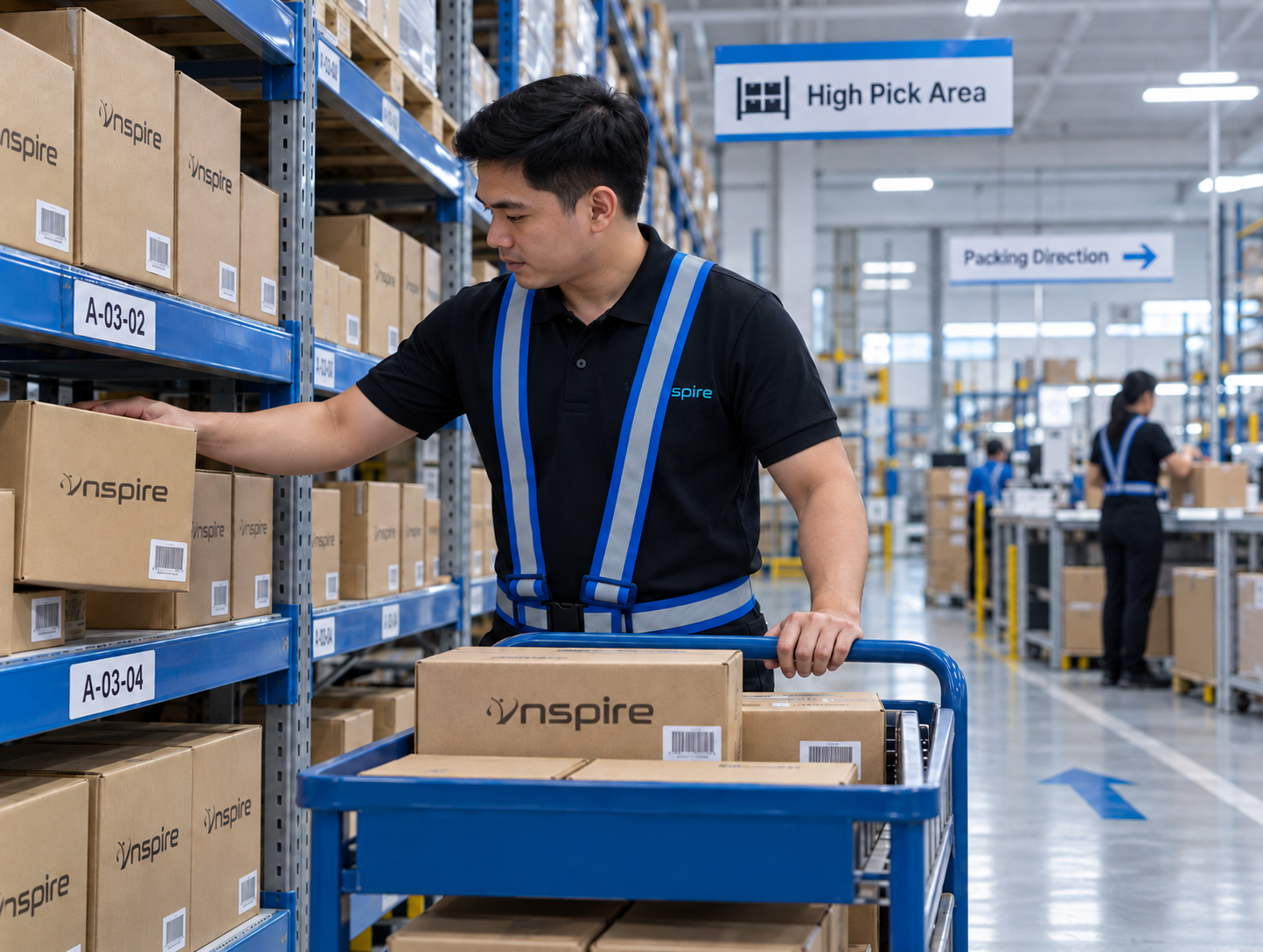
Warehouse slotting is not only about deciding where products sit. It can influence how people, products, and equipment move throughout the facility.
Well-planned product placement can help warehouse operations by:
These benefits can become increasingly important as order volume grows. A warehouse that works well with a small number of daily orders may become less efficient when the same layout has to support significantly more activity.
Poor slotting can create problems that are not always obvious at first. A warehouse may have enough storage space but still experience inefficient movement because products are not positioned appropriately.
When frequently picked products are stored in inconvenient locations, warehouse workers may spend more time traveling between storage and packing areas.
Using available space without considering product movement can result in high-demand products being placed farther away while rarely picked items occupy more accessible locations.
If products are moved without updating their locations, warehouse teams may have difficulty finding inventory. This can slow down picking and create discrepancies between physical stock and warehouse records.
A warehouse layout that was effective several years ago may not work as well after product ranges, customer demand, and order volumes change.
Products with similar packaging, sizes, or descriptions may be easier to confuse when storage locations are not clearly organized. Clear labeling and logical placement can help reduce this risk.
Warehouse slotting should be reviewed when there are meaningful changes in how products move through the facility.
Common reasons include:
Regular reviews can help businesses avoid relying on an outdated layout.
The goal is not necessarily to move products constantly. Frequent unnecessary changes can create additional work. Instead, businesses can review performance and make targeted changes when the operational benefits justify the effort.
Technology can give warehouse teams better information when making product placement and operational decisions.
A connected warehouse management system can provide information about product locations, inventory quantities, order activity, and warehouse movement. This can make it easier to understand how products are being handled and identify areas where the current layout may be creating unnecessary work.
Technology can also help keep storage locations and inventory records aligned. When warehouse teams have reliable information about where products are stored, they can spend less time searching for items and more time completing fulfillment tasks.
For ecommerce businesses operating across multiple sales channels, connected technology can also provide a broader view of order activity. This can help warehouse teams understand which products are moving most frequently and where operational changes may be useful.
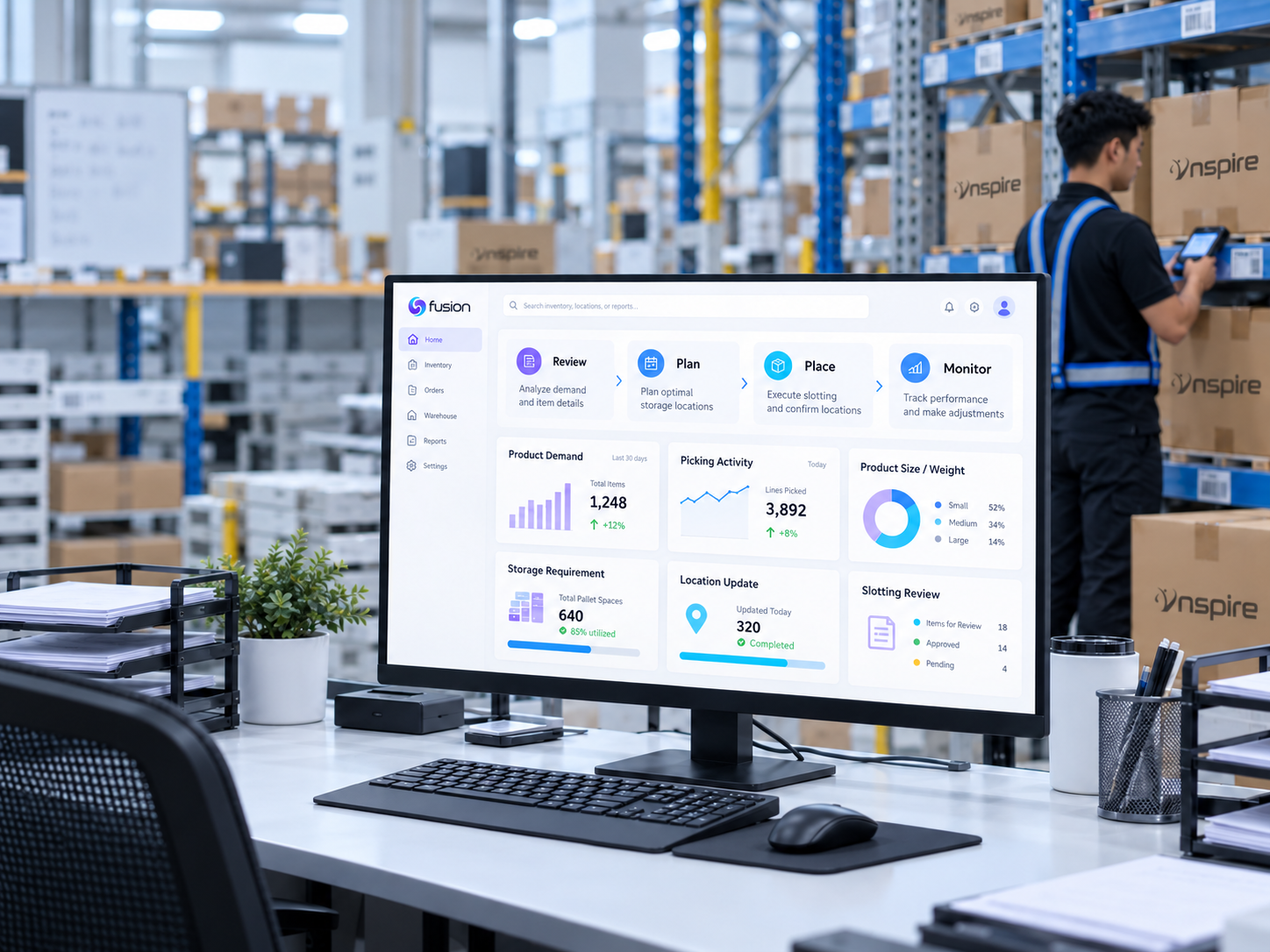
Effective warehouse slotting works best when it is connected to the broader warehouse operation.
A practical process can follow four stages:
Review → Plan → Place → Monitor
First, review product demand, picking activity, product characteristics, and storage requirements. Then plan where products should be located based on those factors. Next, place products in their assigned locations and make sure the relevant warehouse information is updated.
Finally, monitor how the new arrangement performs.
If picking times improve, unnecessary movement decreases, and warehouse teams can locate products more easily, the slotting decisions may be supporting the operation effectively. If problems continue, the warehouse can review the placement again and make targeted adjustments.
This creates a more practical approach than treating product placement as a one-time decision.
A well-organized warehouse can help ecommerce businesses maintain a smoother flow from inventory storage to order fulfillment.
Connected warehousing and fulfillment services can support product storage, inventory organization, picking, packing, dispatch, and returns while helping businesses maintain better visibility across daily operations.
As order volumes and product ranges grow, having organized warehouse operations can become increasingly important. Clear storage locations, reliable inventory information, and practical product placement can help warehouse teams manage fulfillment more consistently.
A connected approach can also make it easier to coordinate warehouse activities with ecommerce orders and support a more efficient fulfillment process.
Inspire E-Commerce Solutions Inc.
Warehouse 4 & 5, C Teknik Industrial, 143 P. Gregorio Street, Valenzuela,
1442 Metro Manila
inspiresolutions.asia
