
In e-commerce, revenue is not fully realized when an order is placed. It only becomes available once payment has been successfully collected and returned to the business. For sellers that rely on cash on delivery, this creates a financial cycle where completed deliveries, payment collection, and fund transfers all directly influence day-to-day liquidity.
In the Philippines, where cash on delivery continues to play a major role in online purchasing behavior, businesses often manage large volumes of transactions that depend on accurate collection and timely settlement. Every completed delivery generates expected revenue, but that revenue cannot support inventory purchases, supplier payments, or operational expenses until the remittance process is completed.
This is where cod remittance becomes a critical financial function. It ensures that payments collected in the field are verified, reconciled, and transferred back to the seller with accuracy and transparency. When remittance cycles are delayed, inconsistent, or affected by issues such as failed cod delivery, the impact can quickly extend beyond accounting and into broader cash flow management.
For growing e-commerce operations, understanding how cod remittance works is no longer just an operational concern. It is a key part of maintaining financial stability, improving working capital, and supporting long-term scalability.
This article explores how cod remittance supports cash flow management, why remittance timing matters, and how businesses can build stronger financial control across modern cash on delivery operations.
COD remittance refers to the process of transferring collected cash payments from logistics providers or courier partners back to the seller after a successful cash on delivery transaction.
When a customer selects cash on delivery as a payment option, the courier collects payment at the time of delivery. Once the payment is received and verified, the courier or logistics provider processes the transfer of funds to the seller based on agreed remittance schedules.
This process typically includes:
COD remittance ensures that businesses receive accurate payment for completed deliveries while maintaining financial transparency.
For many online sellers, COD transactions represent a significant portion of total sales. This makes remittance efficiency critical to day-to-day operations.
A well-managed cod remittance process helps businesses:
Without reliable remittance systems, sellers may face delayed payments, reconciliation issues, and working capital constraints.
In high-volume e-commerce environments, even small remittance delays can impact overall business performance.

To understand cod remittance, it is important to first understand the process of cash on delivery.
A typical COD transaction follows these stages:
1. Customer Places an Order
The customer selects cash on delivery during checkout.
The seller prepares the order through warehouse and fulfillment operations.
3. Shipment and Delivery
The courier receives the shipment and delivers it to the customer.
4. Cash Collection
Upon successful delivery, the courier collects payment directly from the customer.
5. Delivery Confirmation
The delivery is confirmed through proof of delivery and system verification.
6. Remittance Processing
Collected funds are verified, reconciled, and transferred to the seller.
This final stage is where cod remittance becomes essential.
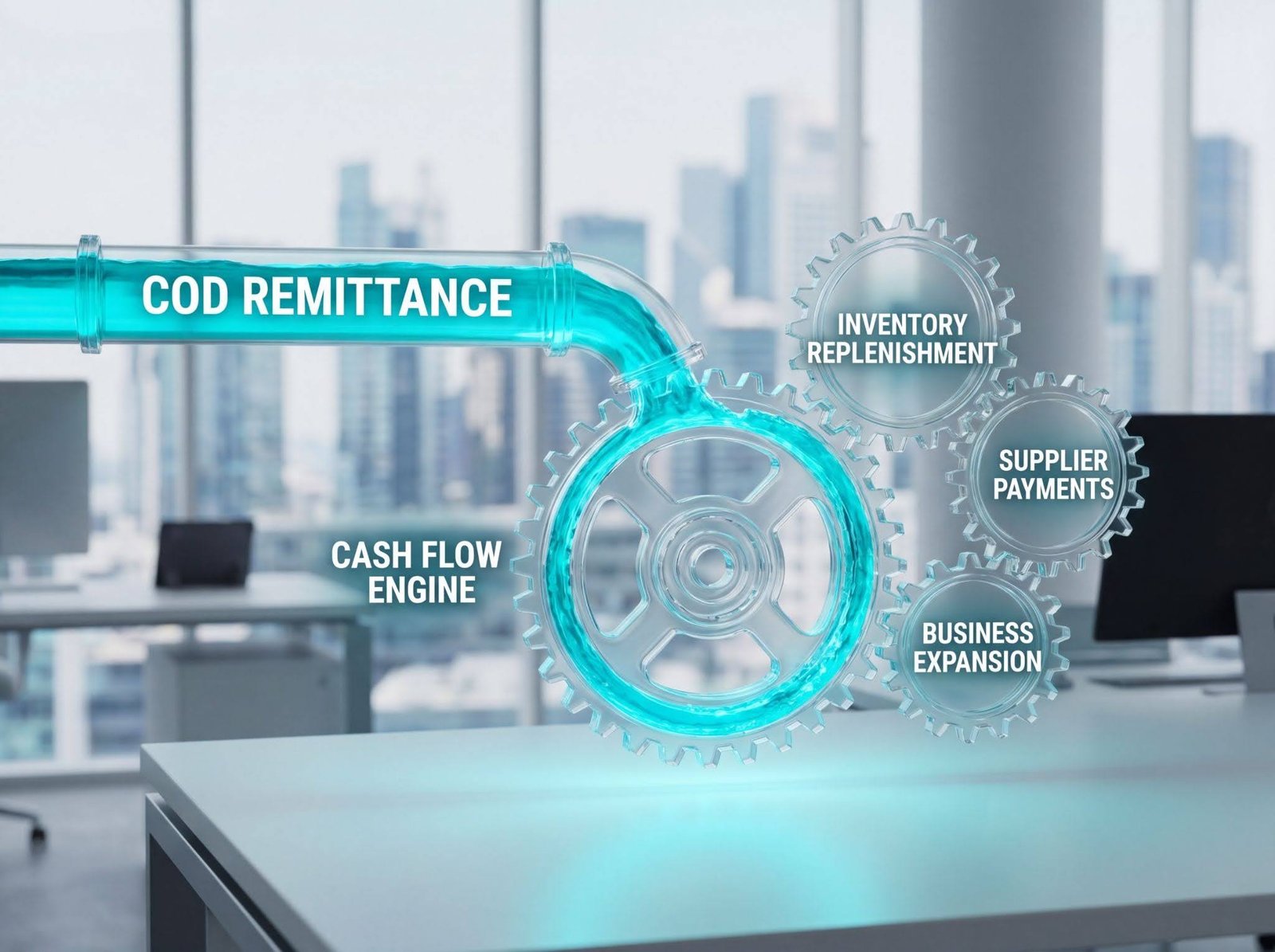
Cash flow is one of the most important indicators of business health. Since COD orders involve delayed payment collection compared to prepaid transactions, remittance timing directly affects liquidity.
Efficient cod remittance helps businesses:
When remittance schedules are inconsistent, businesses may struggle to maintain smooth operations.
For fast-growing e-commerce brands, delayed remittance can slow down expansion and inventory turnover.
Logistics providers typically follow structured remittance schedules based on service agreements.
Common schedules include:
The remittance frequency often depends on:
Choosing the right remittance cycle is important for maintaining stable cash flow.
Despite its importance, cod remittance can face several operational and financial challenges.
Courier processing times may delay fund transfers.
Collected amounts may not match order records.
Missing proof of delivery or payment records can delay reconciliation.
Physical cash collection increases exposure to loss or mismanagement.
Unsuccessful deliveries can disrupt expected remittance cycles.
These challenges can create financial uncertainty if not managed properly.
One major factor affecting remittance accuracy is failed COD delivery.
Failed deliveries may happen due to:
When deliveries fail:
Reducing failed COD delivery rates is essential for improving remittance reliability.

Reconciliation is one of the most critical parts of cod remittance.
This process involves comparing:
Accurate reconciliation helps businesses:
Without proper reconciliation, businesses risk financial inaccuracies and operational inefficiencies.
Modern e-commerce operations use technology to improve remittance transparency.
These systems often include:
Technology helps businesses monitor remittance performance without relying on manual tracking.
This improves financial accuracy and operational control.
Working capital is essential for sustaining business growth.
Since COD transactions create a delay between shipment and payment receipt, remittance efficiency directly impacts available capital.
Efficient cod remittance supports:
Businesses with predictable remittance cycles are better positioned for growth.
To optimize remittance performance, businesses should focus on the following strategies:
Define remittance schedules, responsibilities, and reporting standards.
Use proof of delivery systems to confirm completed transactions.
Reduce manual errors through integrated systems.
Identify recurring causes of failed COD delivery.
Improve visibility across cash collection and remittance cycles.
These practices help reduce financial risks while improving operational efficiency.
As businesses scale, financial complexity increases.
A structured cod remittance process supports long-term growth by:
COD remittance is not just a payment process. It is a strategic financial function that supports scalability.
COD remittance plays a vital role in maintaining financial stability in e-commerce operations. It ensures that payments collected through cash on delivery are verified, reconciled, and transferred accurately, helping businesses maintain healthy cash flow and operational visibility.
When supported by a structured process of cash on delivery and proactive management of failed COD delivery, remittance becomes more predictable, efficient, and scalable.
As e-commerce operations continue to expand, businesses that optimize cod remittance processes gain stronger financial control, improved payment accuracy, and greater confidence in scaling long-term operations.
Inspire E-Commerce Solutions Inc.
Warehouse 4 & 5, C Teknik Industrial, 143 P. Gregorio Street, Valenzuela,
1442 Metro Manila
inspiresolutions.asia